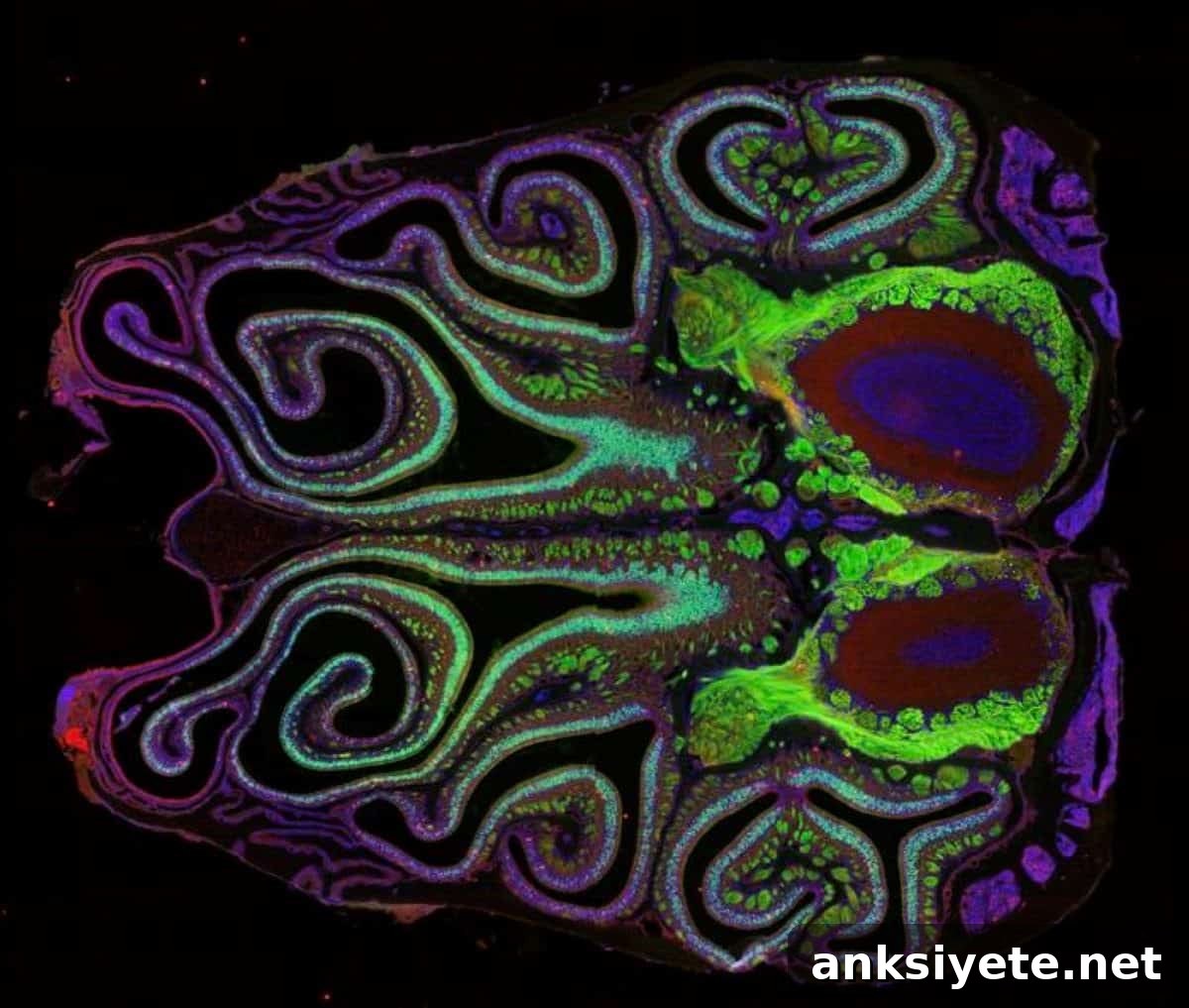
Scientists Decode Brain’s Smell Map

featured 116600

Summary: For more than three decades, the sense of smell has remained neuroscience’s “black box.” While vision, hearing, and touch have clearly defined maps, researchers long believed the olfactory system lacked a precise spatial organization. A major new study overturns that view. By applying large-scale genetic sequencing and spatial transcriptomics, researchers have shown that the … Read more


AI Reads Facial Expressions to Reveal Cognitive Decline

featured 116587 1

Summary: Scientists have long understood that faces communicate emotion, but quantifying the fine-grained link between facial muscle movement and brain state has been difficult. Researchers at Cold Spring Harbor Laboratory (CSHL) now introduce Cheese3D, an AI-driven discovery platform that uses high-speed cameras and machine learning to track mouse facial expressions with extraordinary precision. The system … Read more

Language and Empathy Arise Separately in the Developing Brain

featured 116595

Summary: What makes us human? For decades scientists have debated whether our ability to use language and our capacity to understand other people’s minds—often called Theory of Mind—arise from a single shared cognitive source or from separate systems. A new study using functional MRI (fMRI) in young children finds clear evidence for distinct, non-overlapping brain … Read more

How Positive Feedback Stifles New Ideas

featured 116583 1

Summary: In both social groups and neural circuits, relying on familiar connections feels safe — but it can also trap new information in a self-reinforcing loop. A recent Northwestern University study introduces a theoretical framework showing how Hebbian learning, the principle often summarized as “neurons that fire together, wire together,” can unexpectedly hinder the spread … Read more

Can Abdominal Movement Flush Brain Waste?

featured 116578 1

Summary: New research shows the brain is mechanically linked to the rest of the body through a hydraulic-like system. Small contractions of the abdominal muscles push blood into veins around the spine, producing gentle brain motion that promotes cerebrospinal fluid (CSF) flow and may help clear metabolic waste. Even subtle abdominal tightening—such as the brief … Read more

AI Detects Brain Health from Facial Expressions

featured 116587

Summary: While people naturally “read” emotions on faces, scientists have struggled to quantify how subtle facial muscle movements map to internal brain states. Researchers have now introduced Cheese3D, an AI-powered discovery platform that combines high-speed cameras and machine learning to track minute facial expressions in mice with precision comparable to EEG measurements — without touching … Read more

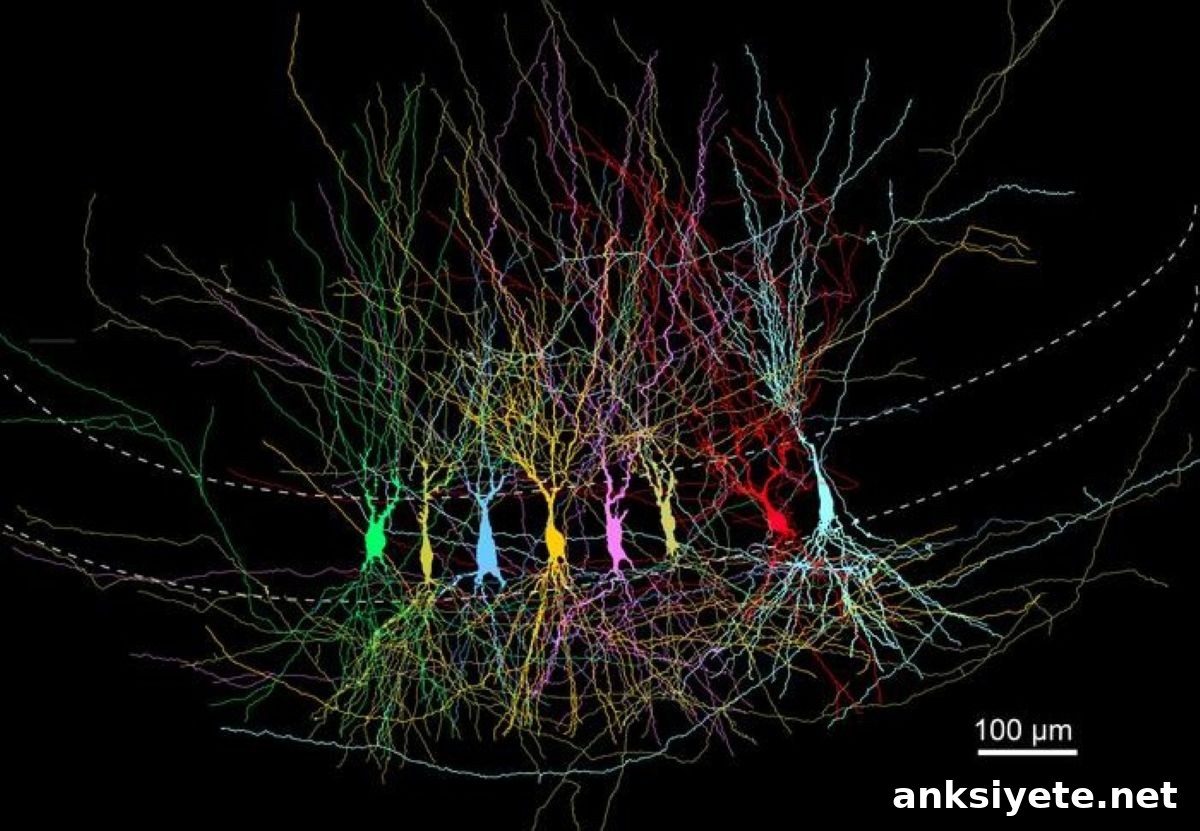
Why the Brain First Overloads to Form Memories

featured 116574 1

Summary: Is the brain born as a blank slate (tabula rasa) or already richly connected (tabula plena)? New research indicates that, at least for the hippocampus—the region responsible for memory and spatial navigation—the brain begins life with abundant connectivity and then refines that circuitry through pruning. The study shows that hippocampal networks are initially extremely … Read more

How Positive Feedback Loops Stifle New Ideas

featured 116583

Summary: Staying within familiar social circles or neural pathways can feel safe, but a new theoretical study shows this habit can create a “death spiral” that prevents new information from spreading. By incorporating simple learning rules into network models, researchers demonstrate that Hebbian learning — the principle often summarized as “neurons that fire together, wire … Read more

How Sleep and Aging Shape Brain Activity While Awake

featured 116570 1

Summary: For decades, clinical electroencephalography (EEG) has been the benchmark for monitoring brain activity in sleep and neurological conditions. However, awake EEG has often been treated as a blunt instrument, based on oversimplified averages. A new study has dissected the waking EEG with unprecedented precision, revealing how age and sleep history shape brain signals while … Read more

Abdominal Movement May Boost Brain Waste Clearance

featured 116578

Summary: New research shows the brain is more mechanically connected to the rest of the body than previously recognized. Scientists describe an abdominal “hydraulic pump” that links routine physical activity to fluid movement around the brain, a process that may help clear metabolic waste and support long-term brain health. When the abdominal muscles contract—even during … Read more