
Emory and Scripps researchers identify a promising strategy to slow Alzheimer’s disease by reducing beta-amyloid production
Scientists from the Emory Alzheimer’s Disease Research Center and the Scripps Research Institute have reported a discovery that may enable development of drugs to slow the progression of Alzheimer’s disease. Their work focuses on reducing production of beta-amyloid, the toxic peptide that accumulates as plaques in the brains of people with Alzheimer’s and is widely believed to play a central role in disease pathology.
Beta-amyloid is created when the amyloid precursor protein (APP) is cleaved by specific enzymes. The rate-limiting enzyme in this process is BACE (beta-site APP cleaving enzyme, also called beta-secretase). Because BACE activity controls how much beta-amyloid brain cells generate, blocking or reducing BACE function is a direct therapeutic goal. However, developing drugs that effectively and safely inhibit BACE has proven challenging.
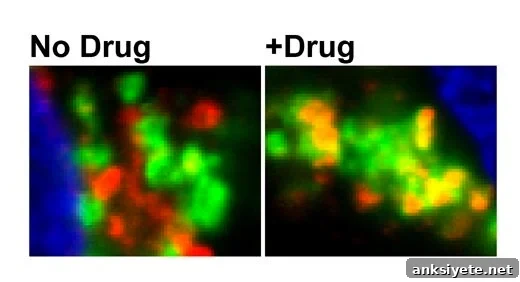
In a new approach reported in the Journal of Neuroscience, the research team describes an indirect but highly effective method: instead of directly blocking BACE’s catalytic site, they redirect the enzyme away from the cellular location where it processes APP, thereby limiting its ability to produce beta-amyloid. This cellular relocalization is achieved by targeting a specific signaling pathway involving the kinase ROCK2.
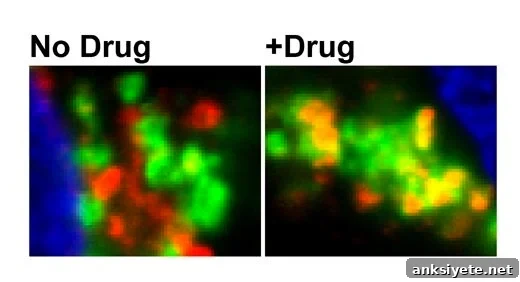
Lead author Jeremy Herskowitz, PhD, an instructor in neurology at Emory’s Alzheimer’s Disease Research Center, explains that diverting BACE to intracellular compartments where it cannot readily access APP offers a potent way to reduce beta-amyloid production. James Lah, MD, PhD, associate professor of neurology and director of the Cognitive Neurology program at Emory University School of Medicine, notes the potential clinical value: drugs that lower production of beta-amyloid may be most useful as preventive therapies, but because amyloid-beta is directly toxic, such agents could also produce more immediate cognitive benefit in some patients.
The investigators tested a compound known as SR3677, a selective inhibitor of ROCK2 discovered earlier by Yangbo Feng, PhD, associate director of medicinal chemistry at Scripps Research Institute in Florida. In cultured brain cells, pharmacologic inhibition of ROCK2 with SR3677 reduced beta-amyloid production by more than 75 percent. Their experiments also showed that genetically lowering ROCK2 expression mimicked the drug’s effect, while lowering ROCK1 produced the opposite outcome.
These contrasting effects of ROCK1 and ROCK2 help explain why prior compounds that inhibited both kinases showed limited benefit: simultaneous inhibition of ROCK1 and ROCK2 can cancel out the desired reduction in beta-amyloid. Because SR3677 preferentially targets ROCK2 over ROCK1, it avoids that canceling effect and thereby achieves a strong suppression of beta-amyloid generation by changing BACE’s intracellular trafficking.
The team also examined human brain tissue and found ROCK2 levels are increased in samples from people with Alzheimer’s disease, including individuals with mild cognitive impairment, a condition often considered an early stage of the disease. Elevated ROCK2 in affected brain regions supports the idea that ROCK2 is a relevant therapeutic target for disease modification.
Animal model experiments show SR3677 can substantially lower beta-amyloid levels when delivered directly into the brain. Important questions remain before this approach can translate into a human therapy: researchers must determine whether SR3677 or related molecules can cross the blood-brain barrier after systemic administration, whether they are safe with acceptable side effect profiles, and whether they provide cognitive benefit in animal models and, ultimately, in clinical trials. ROCK inhibitors are being explored for other indications as well—such as glaucoma, hypertension and multiple sclerosis—which may help guide safety evaluations and formulation strategies.
Notes about this Alzheimer’s disease and neurology research
The work was supported by the National Institute on Aging (grants 5K99AG043552-02, AG025688, P01AG1449 and AG05136), the National Institute of Neurological Disorders and Stroke (P30NS055077) and the BrightFocus Foundation.
Reference: J.H. Herskowitz et al., “Pharmacologic inhibition of ROCK2 suppresses amyloid-beta production in an Alzheimer disease mouse model,” Journal of Neuroscience 33:19086–19098 (2013).
Contact: Quinn Eastman — Emory University
Source: Emory University press release
Image source: Adapted from the Emory University press release
Original research: Abstract for “Pharmacologic Inhibition of ROCK2 Suppresses Amyloid-β Production in an Alzheimer’s Disease Mouse Model” by Jeremy H. Herskowitz, Yangbo Feng, Alexa L. Mattheyses, Chadwick M. Hales, Lenora A. Higginbotham, Duc M. Duong, Thomas J. Montine, Juan C. Troncoso, Madhav Thambisetty, Nicholas T. Seyfried, Allan I. Levey, and James J. Lah. Published online December 4, 2013.
#alzheimers, #neurology, #neurodegeneration