
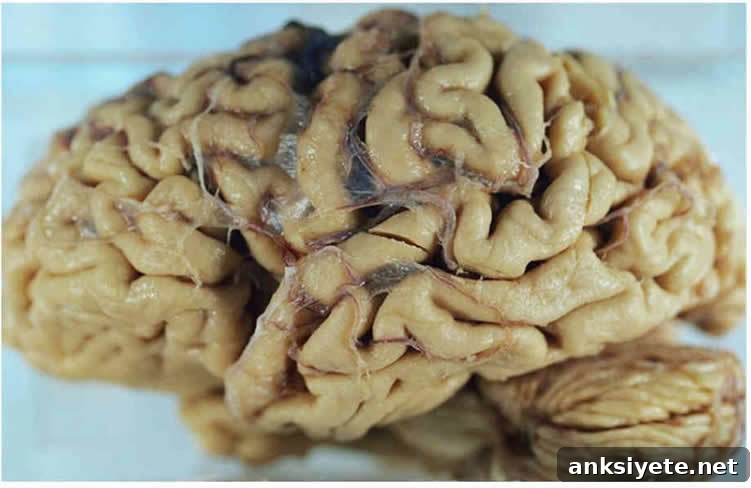
Summary: Researchers report they have pinpointed where the earliest signs of Alzheimer’s disease appear in the brain. Initial accumulation of Alzheimer’s-associated beta-amyloid was found in a core brain functional network known as the default mode network.
Source: Lund University.
Researchers at Lund University in Sweden have for the first time provided convincing evidence identifying the specific brain regions where the earliest signs of Alzheimer’s disease emerge. This discovery could inform future research and improve diagnostic approaches.
Alzheimer’s disease begins long before symptoms are apparent. One of the earliest measurable brain changes is the retention and accumulation of the protein β-amyloid (beta-amyloid). This process may start a decade or two before clinical symptoms become noticeable.
In a paper published in Nature Communications, a team led by Professor Oskar Hansson at Lund University reports that the earliest build-up of β-amyloid occurs in the deeper midline regions of the brain, specifically within several core nodes of the default mode network (DMN). The DMN is a major functional system that becomes active when a person is at rest, daydreaming, or reflecting internally, and it integrates information across other brain systems.
“A large piece of the Alzheimer’s puzzle is now falling into place,” says Sebastian Palmqvist, associate professor at Lund University and physician at Skåne University Hospital. “Until now we lacked clear evidence about where the disease process begins in the brain. Identifying these early sites gives us a focused target for future studies that aim to understand why and how Alzheimer’s develops.”
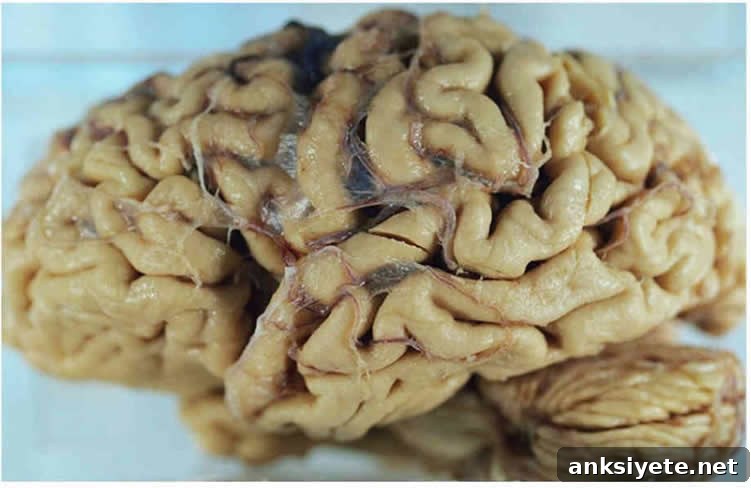
The international study involved collaborators from the University of Gothenburg and the University of California and analyzed longitudinal data from two cohorts: more than 400 individuals in the United States at increased risk for Alzheimer’s and a comparable number of participants from the Swedish BioFINDER study. Brain status for all participants was tracked over two years and compared with a control group that showed no signs of Alzheimer’s pathology.
One major challenge in Alzheimer’s research is identifying which individuals are in the very earliest, preclinical stages of the disease so they can be monitored over time. To address this, the Lund research team developed a method that combines cerebrospinal fluid (CSF) biomarkers with PET (positron emission tomography) brain imaging. This combined approach improves sensitivity for detecting the brain’s tendency to accumulate β-amyloid before large-scale plaques are visible on standard imaging.
Using this method, the researchers identified the earliest pattern of β-amyloid accumulation in the precuneus, medial orbitofrontal and posterior cingulate cortices—regions that form central hubs of the default mode network. Importantly, this early accumulation was detectable even in individuals who initially had normal CSF Aβ42 levels and normal amyloid PET scans but later converted to abnormal CSF Aβ42.
Beyond local deposition of β-amyloid, the study found that these earliest changes are already associated with altered brain connectivity. Specifically, early β-amyloid accumulation was linked to reduced connectivity within the default mode network and between the default mode network and the frontoparietal network. These connectivity changes occurred before detectable brain atrophy or reduced glucose metabolism, suggesting functional network disruption is an early consequence of amyloid deposition.
“Now that we know where Alzheimer’s disease begins, we can refine diagnostic imaging by focusing more precisely on these brain regions, for example with targeted PET examinations,” says Oskar Hansson. Improved localization of early pathology could enhance early detection and help select appropriate participants for clinical trials aimed at preventing or slowing disease progression.
Although the first observable symptoms of Alzheimer’s typically appear much later, this study shows that measurable changes in brain communication already occur during the initial retention of β-amyloid. The research team plans further studies to investigate how these early connectivity alterations evolve and what functional consequences they may have for cognition over time.
Funding: The study received support from the European Research Council (ERC), the Swedish Research Council (VR), the Swedish Alzheimer’s Foundation and the Region of Skåne (ALF funding).
Source: Oskar Hansson – Lund University
Publisher: Organized by NeuroscienceNews.com.
Image Source: NeuroscienceNews.com image is in the public domain.
Original Research: Full open-access research: “Earliest accumulation of β-amyloid occurs within the default-mode network and concurrently affects brain connectivity” by Sebastian Palmqvist, Michael Schöll, Olof Strandberg, Niklas Mattsson, Erik Stomrud, Henrik Zetterberg, Kaj Blennow, Susan Landau, William Jagust & Oskar Hansson in Nature Communications. Published online October 31, 2017. doi:10.1038/s41467-017-01150-x
Earliest accumulation of β-amyloid occurs within the default-mode network and concurrently affects brain connectivity
Where amyloid-β (Aβ) first aggregates in Alzheimer’s disease has been unclear. Previous work showed that abnormal levels of Aβ42 in cerebrospinal fluid (CSF) can be detected before amyloid is visible by PET imaging in preclinical Alzheimer’s disease. Using these biomarker approaches in subjects from the ADNI and BioFINDER cohorts, the study identifies the earliest preclinical AD stage. The results indicate that Aβ accumulation preferentially begins in the precuneus, medial orbitofrontal and posterior cingulate cortices—core regions of the default mode network (DMN). This early Aβ pattern is evident even in individuals with initially normal CSF Aβ42 and normal amyloid PET who later develop abnormal CSF Aβ42. The first Aβ accumulation is associated with reduced connectivity within the DMN and between the DMN and the frontoparietal network, but not with brain atrophy or glucose hypometabolism. These findings suggest that Aβ fibrils start to accumulate predominantly within specific DMN regions in preclinical AD and that this accumulation already affects brain network connectivity.