
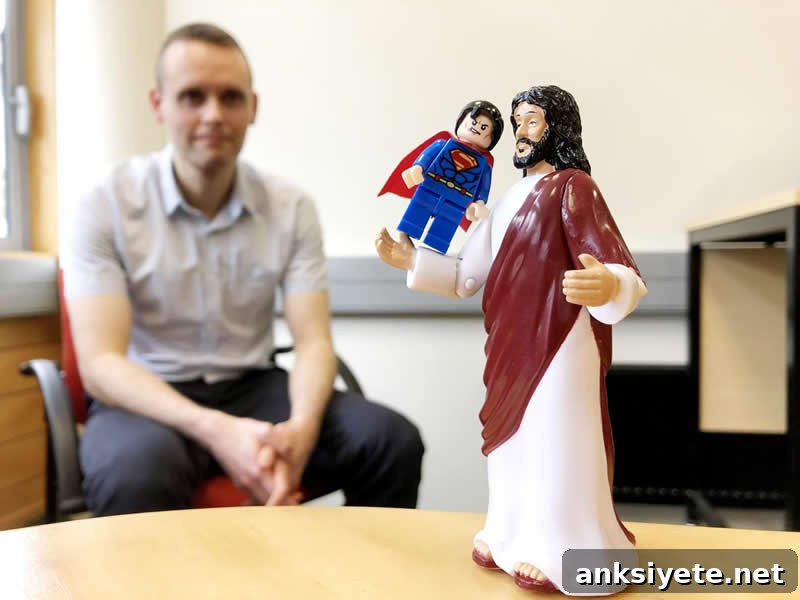
Summary: A new “god template” distinguishes religious from secular supernatural beings by examining the qualities people associate with each. Religious figures were more often ascribed mind-based traits, judged more ambiguous in their powers, and seen as potentially helpful yet ambivalent. Fictional characters—like superheroes—were described with clearer, less ambivalent abilities. The results suggest religious agents may be psychologically appealing because people are motivated to believe in them.
Source: University of Otago
New study explores why some supernatural beings inspire belief
A psychological study by researchers at the University of Otago addresses a long-standing question in the psychology of religion: which supernatural beings attract belief and religious devotion, and why? The study directly tackles what scholars call the “Mickey Mouse problem”—the challenge of explaining why some counterintuitive agents become objects of genuine belief while others remain merely fictional.
Design: Creating a “god template”
Published in the journal PLOS ONE, the research led by Dr. Thomas Swan introduces a cognitive template that differentiates religious from fictional supernatural beings by the kinds of attributes people spontaneously assign to them. More than three hundred participants were asked to invent either a religious or a fictional being and to give that being five supernatural abilities.
Analyses focused on the types of violations these abilities represented relative to ordinary human expectations: violations of folk psychology (mind-related abilities), folk physics (violations of physical laws like passing through walls), and folk biology (changes to living processes, such as immortality). The study also measured perceived helpfulness, potential for harm, and the degree of ambiguity in an agent’s powers.
Key findings
Participants tended to assign religious beings a higher proportion of mind-based or folk-psychology violations—powers that involve unusual mental capacities such as omniscience or mind-reading. Religious agents were also more likely to be described with ambiguous or nonspecific abilities: traits that violate multiple domains of folk knowledge or are less precisely defined.
By contrast, fictional beings were more likely to display clear violations of folk physics and biology—concrete abilities like flying, passing through walls, or living forever. Fictional agents were often cast as heroes or villains with well-defined moral direction, while religious agents showed greater ambivalence, eliciting similar ratings for potential benefit and potential harm. This ambivalence could make religious figures capable of inspiring both reverence and fear.
Importantly, these differences persisted whether participants invented novel agents or described well-known religious or fictional figures. The pattern suggests consistent cognitive and motivational factors shape how people perceive and respond to supernatural agents.
Interpretation and implications
The authors interpret their findings as supporting a motivational account of religious belief formation. In this view, religious agents are attractive in part because people are motivated to believe in them: their ambiguous, mind-related qualities allow individuals to interpret the agent’s intentions and abilities in appealing, personally meaningful ways. Ambiguity gives believers latitude to project desirable features onto religious figures, while mind-related powers foster social and moral relevance.
Dr. Swan and colleagues suggest that these cognitive and motivational biases help explain why certain supernatural beings become objects of devotion while others remain purely fictional. Religious beings’ combination of perceived mental powers, helpful potential, and ambivalence appears especially well suited to engaging belief and commitment.
About the lead author
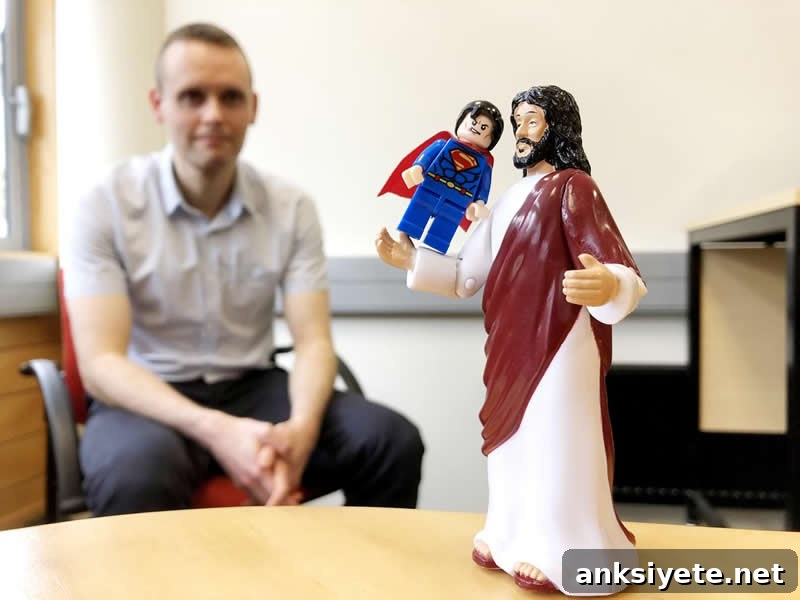
Dr. Thomas Swan earned his first PhD in nuclear physics from the University of Surrey in 2011. His interest in the psychology of belief was sparked in adolescence by Carl Sagan’s Cosmos, which inspired questions about the relationship between scientific cultures and religious institutions. Dr. Swan continued his research under the supervision of Professor Jamin Halberstadt in Otago’s Department of Psychology, and this “god template” work is part of a broader cognitive-motivational model he is developing in pursuit of a second doctorate.
Source: University of Otago
Media contact: Thomas Swan – University of Otago
Image source: Image credited to University of Otago.
Original research: “The Mickey Mouse problem: Distinguishing religious and fictional counterintuitive agents.” Dr. Thomas Swan and Professor Jamin Halberstadt. PLOS ONE. DOI: 10.1371/journal.pone.0220886.
Abstract (summary): The study asked participants to invent religious or fictional agents with five supernatural abilities. Compared to fictional agents, religious agents were assigned more violations of folk psychology and more ambiguous abilities that could cross multiple domains of folk knowledge. Fictional agents displayed clearer violations of folk physics and biology. Religious agents were rated as more potentially beneficial and more ambivalent (similar ratings of benefit and harm) than fictional agents. These patterns support the idea that motivational factors and cognitive biases contribute to the formation and persistence of religious belief.