Brain Treatment That Mimics Exercise May Slow Cognitive Decline
featured 111276

Summary: Physical activity is known to slow cognitive decline in Alzheimer’s disease, but many patients cannot maintain regular exercise because of frailty or advanced symptoms. New research identifies a metabolic gene, ATPPIF1, that exercise reactivates and that supports neuroplasticity in the hippocampus. These findings point to molecular targets that could be used to reproduce the … Read more
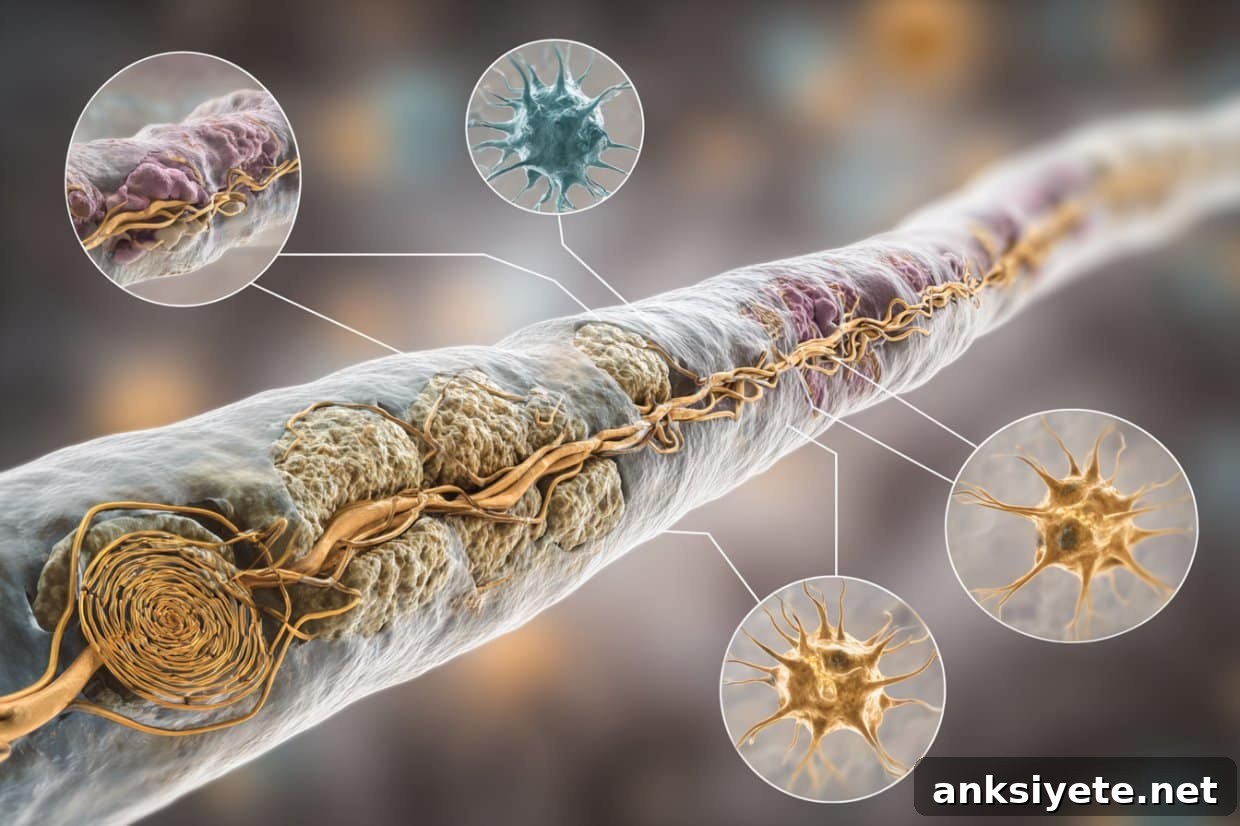
Alzheimer’s May Impair Nerve Insulation Despite Unchanged Myelin

featured 111272

Summary: New research from Yale indicates that Alzheimer’s disease may disrupt nerve function not by wholesale loss of myelin but by changing the protein composition at the critical interface where myelin meets the axon. Researchers identified structural changes in the paranodal region—where myelin adheres to axons—including accumulation of spiral-shaped amyloid deposits that appear to block … Read more

Brain Criticality Could Unlock Learning, Memory, and Alzheimer’s

featured 111268

Summary: New research presents a unified theory of brain function centered on the idea of criticality — a balanced state between order and chaos that optimizes learning, adaptation, and information processing. When the brain drifts away from this delicate equilibrium, cognitive performance declines and neurological disorders, including Alzheimer’s disease, can emerge. The researchers report that … Read more

Single Gene Rewires Brain Fear Circuits and Drives Anxiety

featured 111264

Summary: Researchers have mapped how loss of the autism-linked gene PTEN in a specific set of inhibitory neurons reshapes amygdala microcircuits that regulate fear and anxiety. Using high-resolution circuit mapping combined with targeted genetic deletion, the team found that removing PTEN from somatostatin-expressing interneurons in the central lateral amygdala (CeL) weakens local inhibition by roughly … Read more

Proven Exercises to Boost Kids’ Mental Health

featured 111260

Summary: A comprehensive analysis of 375 randomized trials involving more than 38,000 children and adolescents found that structured exercise programs significantly reduce symptoms of depression and anxiety. Low-intensity resistance activities—such as light weights and gentle circuit work—were most effective for easing anxiety, while moderate-intensity mixed aerobic and strength programs produced the strongest improvements in depression. … Read more

How Regular Sex Can Relieve Menopause Pain

featured 111252

Summary: A new study finds that women who maintain regular sexual activity report fewer symptoms of genitourinary syndrome of menopause (GSM)—including vaginal dryness, irritation, and pain. In a survey of more than 900 women aged 40 to 79, researchers observed that sexual desire and lubrication tend to decline with age, while orgasm and overall sexual … Read more

How the Brain Links Distant Ideas to Guide Complex Decisions

featured 111244

Summary: A new study shows that the brain can base choices not only on direct experiences but also on indirect links between stimuli that initially seem unrelated. In experiments with mice, researchers found that a sweet taste could be rejected after it became indirectly associated with an aversive event through a shared scent. This sophisticated … Read more

Mental Fatigue: How Your Brain Decides to Push or Quit

featured 111240

Summary: A recent study used functional MRI to examine how the brain responds to cognitive fatigue, pinpointing two regions—the right insula and the dorsolateral prefrontal cortex (DLPFC)—that grow more active as mental exhaustion increases. Researchers tracked volunteers performing demanding memory tasks and measured how internal fatigue and external monetary incentives influenced their decisions to keep … Read more

How AI Restores Voices of Deceased Loved Ones

featured 111235

Summary: A recent study examines how generative AI is changing the ways we can interact with those who have passed away — from virtual reality reunions to highly realistic digital avatars. These so-called “generative ghosts” can remember, plan, and even adapt over time, enabling real-time conversations that go far beyond static, pre-recorded memorials. While these … Read more

Can a Brain Injury Explain Sudden Criminal Behavior?

featured 111227

Summary: A new study of people who began committing crimes after suffering strokes, tumors, or traumatic brain injuries found a consistent association with damage to a specific white matter pathway in the right hemisphere of the brain: the right uncinate fasciculus. The researchers report that disruption of this tract—which connects regions that process emotion and … Read more