
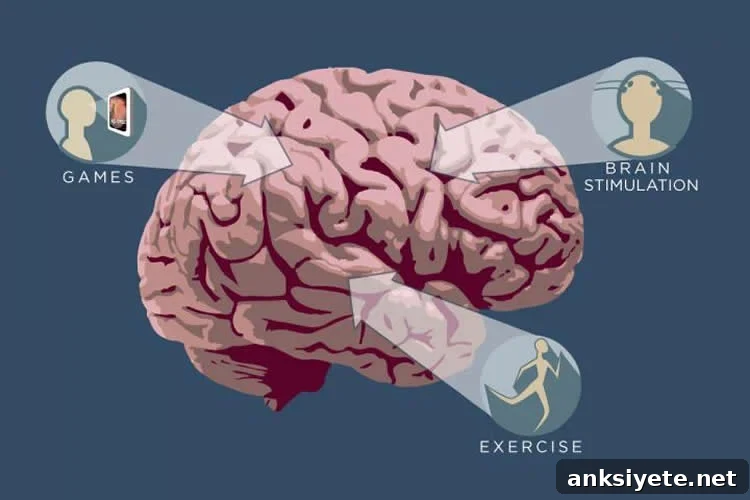
Summary: Researchers report that combining computer-based cognitive training with physical exercise and mild noninvasive brain stimulation produced greater gains in specific skill learning than cognitive training alone.
Source: University of Illinois.
Multimodal cognitive cross-training—combining computer exercises, aerobic fitness, and scalp-delivered brain stimulation—boosted skill learning in a large controlled trial, researchers report.
An 18-week randomized study at the University of Illinois involving 318 healthy young adults found that multimodal training enhanced the acquisition of targeted cognitive skills more than computer-based cognitive training by itself. The research, the largest and most comprehensive trial of its kind reported to date, appears in the journal Scientific Reports.
“Learning is the foundation for acquiring new skills and for updating what we know as circumstances change,” said study lead Aron Barbey, professor of psychology. “Our results show that cognitive training benefits can be substantially increased by adding physical fitness and noninvasive brain stimulation as part of a multimodal intervention.”
Most previous work on brain training has focused narrowly on computerized tasks. Studies that combined other approaches—like aerobic exercise or brain stimulation—tended to be smaller, shorter, or limited in scope. This Illinois study addressed those gaps by testing multiple intervention combinations across a large sample and a sustained training period.
The trial divided participants into five groups: three experimental arms and two control conditions. One experimental arm received only computer-based cognitive training. A second arm combined cognitive training with regular physical exercise. The third experimental arm combined cognitive training, supervised physical exercise, and mild noninvasive brain stimulation delivered through electrodes on the scalp. An active control group completed a different set of computer-based tasks for the same number and duration of sessions, while a passive control group did not undergo the training regimen.
The intervention lasted 18 weeks in total. All participants completed a pretest in the first week and a post-test in the final week. Between those assessments, the active and experimental groups attended 90-minute training sessions three times per week for 16 weeks. The cognitive training used six adaptive tasks designed to challenge executive functions, working memory, attention, and task switching.
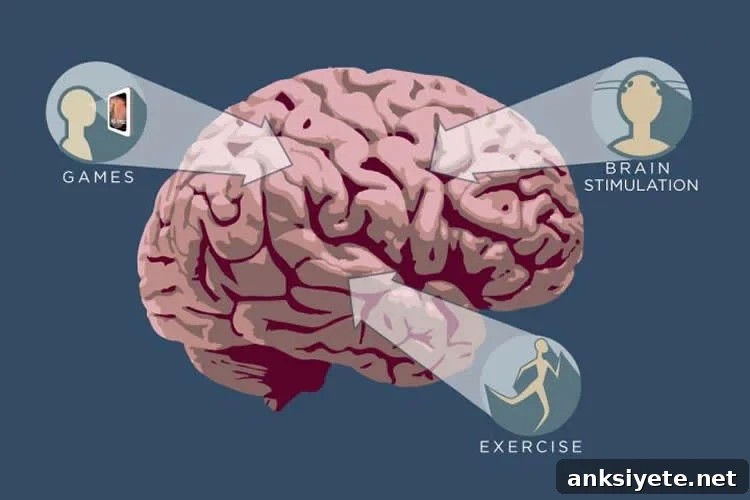
At post-test, participants who received cognitive training together with exercise, and those who received the full multimodal package (cognitive training, exercise, and brain stimulation), outperformed the group that completed cognitive training alone. The group that received all three interventions showed the largest and most consistent improvements, with particularly notable gains on two of the trained tasks compared with the group that combined cognitive training and exercise without brain stimulation.
Importantly, improved performance was task-specific. When researchers tested participants on different untrained cognitive tasks, the gains did not generalize to those new tasks. In other words, the multimodal intervention enhanced skill learning for the specific abilities that were trained, rather than producing a broad increase in general intelligence.
“These findings suggest a promising path forward for developing personalized, targeted interventions,” Barbey said. “By tailoring multimodal programs to an individual’s needs, we may be able to optimize training effects and strengthen particular cognitive abilities important for daily life, education, or occupational performance.”
Funding: This work was supported by the Office of the Director of National Intelligence, Intelligence Advanced Research Projects Activity.
Source: University of Illinois.
Image Source: Julie McMahon (image credit).
Original Research: The full open-access study is titled “Enhanced Learning through Multimodal Training: Evidence from a Comprehensive Cognitive, Physical Fitness, and Neuroscience Intervention” by N. Ward, E. Paul, P. Watson, G. E. Cooke, C. H. Hillman, N. J. Cohen, A. F. Kramer & A. K. Barbey, published in Scientific Reports (published online July 19).
MLA: University of Illinois. “Cognitive Cross Training Enhances Learning.” Neuroscience News, 25 July 2017.
APA: University of Illinois (2017, July 25). Cognitive Cross Training Enhances Learning. Neuroscience News. Retrieved July 25, 2017.
Chicago: University of Illinois. “Cognitive Cross Training Enhances Learning.” Neuroscience News (accessed July 25, 2017).
Abstract
Enhanced Learning through Multimodal Training: Evidence from a Comprehensive Cognitive, Physical Fitness, and Neuroscience Intervention
The promise of brain training to improve cognition in healthy populations and clinical groups has driven public interest and scientific research. This study evaluated whether intervention modalities—computer-based cognitive training, physical exercise, and noninvasive brain stimulation—can work together to produce greater cognitive gains than single-modality training. In a four-month randomized controlled trial, 318 healthy young adults were assigned to one of five conditions: (1) computer-based adaptive cognitive training focused on executive function; (2) cognitive training plus physical exercise; (3) cognitive training combined with physical exercise and noninvasive brain stimulation; (4) an active control using adaptive visual search and change-detection tasks; and (5) a passive control. Results show that multimodal training produced significantly larger learning gains than computer-based cognitive training alone, enhancing skill acquisition across executive function, working memory, and planning/problem-solving tasks. The findings support the value of multimodal approaches for promoting targeted cognitive skill learning and highlight directions for future research aimed at improving human cognitive performance.
Study authors: N. Ward, E. Paul, P. Watson, G. E. Cooke, C. H. Hillman, N. J. Cohen, A. F. Kramer & A. K. Barbey. Published in Scientific Reports.