
Summary: Researchers describe a complex molecular interaction between alpha-synuclein and the cellular prion protein PrPC.
Source: SISSA.
New research demonstrates a significant molecular connection between Parkinson’s-related synucleinopathies and prion diseases.
Parkinson’s disease and prion disorders differ dramatically in their causes and clinical progression, yet a team led by Professor Giuseppe Legname has uncovered an unexpected molecular link between the two. Their findings illuminate how two distinct proteins in neurons—aggregated α-synuclein and the cellular prion protein (PrPC)—interact in ways that influence both types of pathology.
α-Synuclein is the principal protein that aggregates in synucleinopathies, a group of neurodegenerative diseases that includes Parkinson’s disease, dementia with Lewy bodies, and multiple system atrophy. The mechanisms by which α-synuclein aggregates form, enter cells, and spread through neural networks have long been unclear. The study published in Scientific Reports shows that α-synuclein amyloid fibrils exploit PrPC to gain entry into cells and to propagate from cell to cell.
Experimental evidence from both cell models and animal studies indicates that the presence of PrPC significantly enhances uptake of α-synuclein fibrils. Wild-type mice expressing PrPC show greater internalization and spreading of α-synuclein amyloids compared with PrP knockout animals. These results point to PrPC as an important mediator of α-synuclein cell entry and intercellular transmission, suggesting a direct molecular route by which synuclein pathology can propagate through the brain.
Interestingly, the interaction appears to be bidirectional in its pathological consequences. While PrPC facilitates α-synuclein spreading, the presence of α-synuclein fibrils interferes with replication of misfolded prion protein (PrPSc). In vitro and ex vivo experiments demonstrate that α-synuclein amyloids reduce prion deposition and block PrPSc replication in nerve cells. This inhibitory effect on prion propagation aligns with clinical observations: some patients diagnosed with prion disease who also present neuronal α-synuclein deposits tend to experience a slower progression of prion pathology.
The study was a collaborative effort that included researchers from SISSA, Fondazione Carlo Besta in Milan, ELETTRA Sincrotrone in Trieste, and the University of Trieste. The research team examined the molecular interplay between α-synuclein amyloids and PrPC to clarify mechanisms of uptake, spread, and reciprocal interference between the two misfolded protein species.
Source: Donato Ramani – SISSA
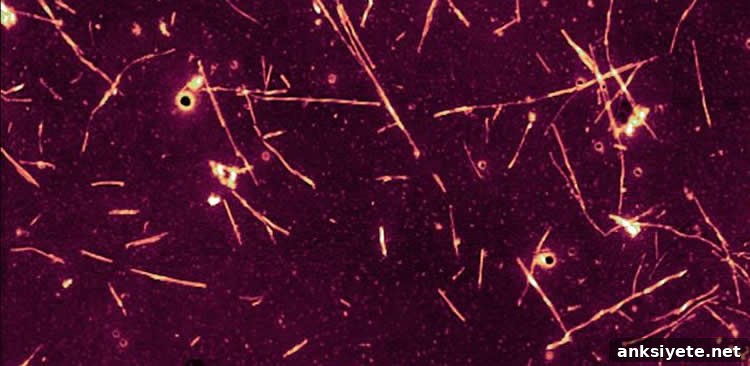
Image Source: Image credited to Denis Scaini.
Original Research: A study titled “α-Synuclein Amyloids Hijack Prion Protein to Gain Cell Entry, Facilitate Cell-to-Cell Spreading and Block Prion Replication” by Suzana Aulić and colleagues, published in Scientific Reports (published online August 30, 2017).
MLA: SISSA. “Molecular Link Between Parkinson’s and Prion Diseases Discovered.” Neuroscience News, 14 September 2017.
APA: SISSA (2017, September 14). Molecular Link Between Parkinson’s and Prion Diseases Discovered. Neuroscience News.
Chicago: SISSA. “Molecular Link Between Parkinson’s and Prion Diseases Discovered.” Neuroscience News. Accessed September 14, 2017.
Abstract
α-Synuclein Amyloids Hijack Prion Protein to Gain Cell Entry, Facilitate Cell-to-Cell Spreading and Block Prion Replication
The detailed molecular mechanism that governs how misfolded α-synuclein (α-Syn) accumulates and propagates in synucleinopathies remains incompletely understood. The present work demonstrates a role for the cellular prion protein (PrPC) in mediating the neuronal uptake and intercellular spread of recombinant α-synuclein amyloids. In vitro assays show that cells expressing PrPC internalize α-synuclein fibrils more efficiently than cells lacking PrPC; this observation is supported by in vivo comparisons between wild-type (Prnp+/+) and PrP knockout (Prnp−/−) mice. Notably, α-synuclein amyloids also inhibit replication of scrapie prions (PrPSc) in vitro and ex vivo, establishing a functional link between the two proteins. While PrPC promotes the internalization of α-synuclein fibrils, PrPSc replication is impaired when these fibrils are present. This interaction has potential clinical relevance because neuropathological reports indicate that Creutzfeldt–Jakob disease patients with concurrent α-synuclein deposits often show a more protracted disease course.
Authors: Suzana Aulić, Lara Masperone, Joanna Narkiewicz, Elisa Isopi, Edoardo Bistaffa, Elena Ambrosetti, Beatrice Pastore, Elena De Cecco, Denis Scaini, Paola Zago, Fabio Moda, Fabrizio Tagliavini & Giuseppe Legname. Published in Scientific Reports, August 30, 2017.