
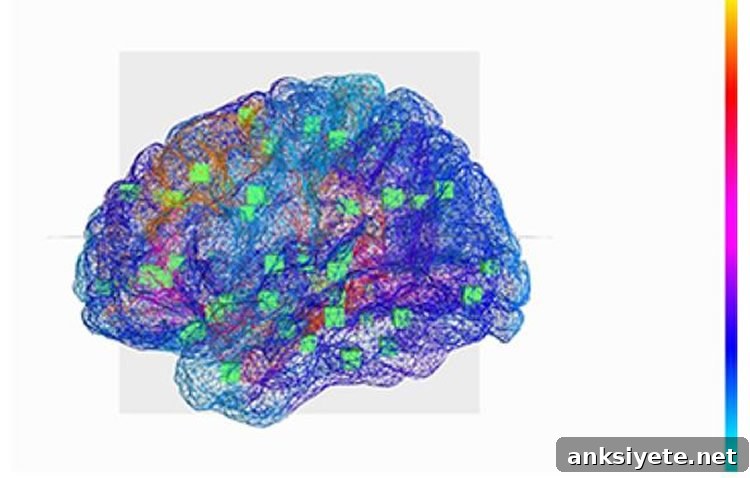
Summary: Scientists have built a personalized virtual brain that can replicate the brain activity of someone with epilepsy. This model improves understanding of the condition and may help clinicians plan treatment and surgery.
Source: CNRS.
Researchers from CNRS, INSERM, Aix‑Marseille University and AP‑HM have created, for the first time, a personalized virtual brain capable of reconstructing the brain of a person with epilepsy. This work sheds new light on how seizures originate and spread, and offers practical value for pre-surgical planning. The findings were published in NeuroImage on July 28, 2016.
Epilepsy affects roughly 1% of people worldwide, and its manifestations vary greatly from patient to patient. That variability means diagnosis and treatment must be as individualized as possible. Until now, clinicians have relied largely on visual interpretation of MRI scans and electroencephalography (EEG) to locate seizure sources and guide therapy. Those techniques can be limited: about half of patients show no lesions on MRI, leaving the origin of their seizures uncertain.
To address this gap, the research team developed a personalized virtual brain by starting with a detailed anatomical template and layering in patient-specific data, including the unique layout and connectivity of their brain regions. On that individualized scaffold, mathematical models of neuronal activity can be tested to reproduce how seizures start and propagate across the network. Using this approach, the researchers were able to pinpoint where seizures originate in a given patient and to simulate their spread across connected regions. That predictive capacity promises more accurate, individualized diagnoses and better-targeted treatment plans.
Treatment options for epilepsy include medication, but about 30% of patients have seizures that are resistant to drugs. For these patients, surgery to remove or disconnect the seizure focus can be a highly effective option—if the surgical team can accurately identify the epileptogenic region. The virtual brain acts as a planning platform: surgeons can test virtual resections and simulated interventions to evaluate which approach offers the best chance of stopping seizures while minimizing harm. This lets clinicians explore multiple strategies before considering invasive procedures on the patient.
Beyond surgical planning, the long-term objective of the research team is to enable personalized neuromedicine by offering virtual, patient-specific therapeutic solutions. The investigators are conducting clinical trials to verify the model’s predictive power and its clinical utility. They are also extending the technology to other brain disorders—such as stroke, Alzheimer’s disease, various neurodegenerative conditions, and multiple sclerosis—where individualized network models could improve diagnosis and treatment.
Source: CNRS
Image source: Image adapted from the CNRS press release.
Original research: Full open-access article “The Virtual Epileptic Patient: Individualized whole‑brain models of epilepsy spread” by Jirsa VK, Proix T, Perdikis D, Woodman MM, Wang H, Gonzalez‑Martinez J, Bernard C, Bénar C, Guye M, Chauvel P, and Bartolomei F, published in NeuroImage. Published online July 29, 2016. doi:10.1016/j.neuroimage.2016.04.049
CNRS. “Virtual Brain Helps Decrypt Epilepsy.” NeuroscienceNews. 29 July 2016.
Abstract
The Virtual Epileptic Patient: Individualized whole‑brain models of epilepsy spread
Individual differences strongly influence the outcomes of therapies and interventions. Tailoring healthcare to an individual patient should therefore improve treatment success. The authors propose a new approach to brain interventions based on personalized brain‑network models built from noninvasive structural data. Using a case of bitemporal epilepsy as an example, they outline how to construct a Virtual Epileptic Patient (VEP): integrate patient‑specific information such as structural connectivity, the epileptogenic zone and MRI lesions; explore the model’s parameter space using high‑performance computing; fit and validate the model against the patient’s stereotactic EEG (SEEG) recordings; and use the validated model to design personalized therapeutic strategies and interventions.
“The Virtual Epileptic Patient: Individualized whole‑brain models of epilepsy spread” by Jirsa VK, Proix T, Perdikis D, Woodman MM, Wang H, Gonzalez‑Martinez J, Bernard C, Bénar C, Guye M, Chauvel P, and Bartolomei F in NeuroImage. Published online July 29, 2016. doi:10.1016/j.neuroimage.2016.04.049