
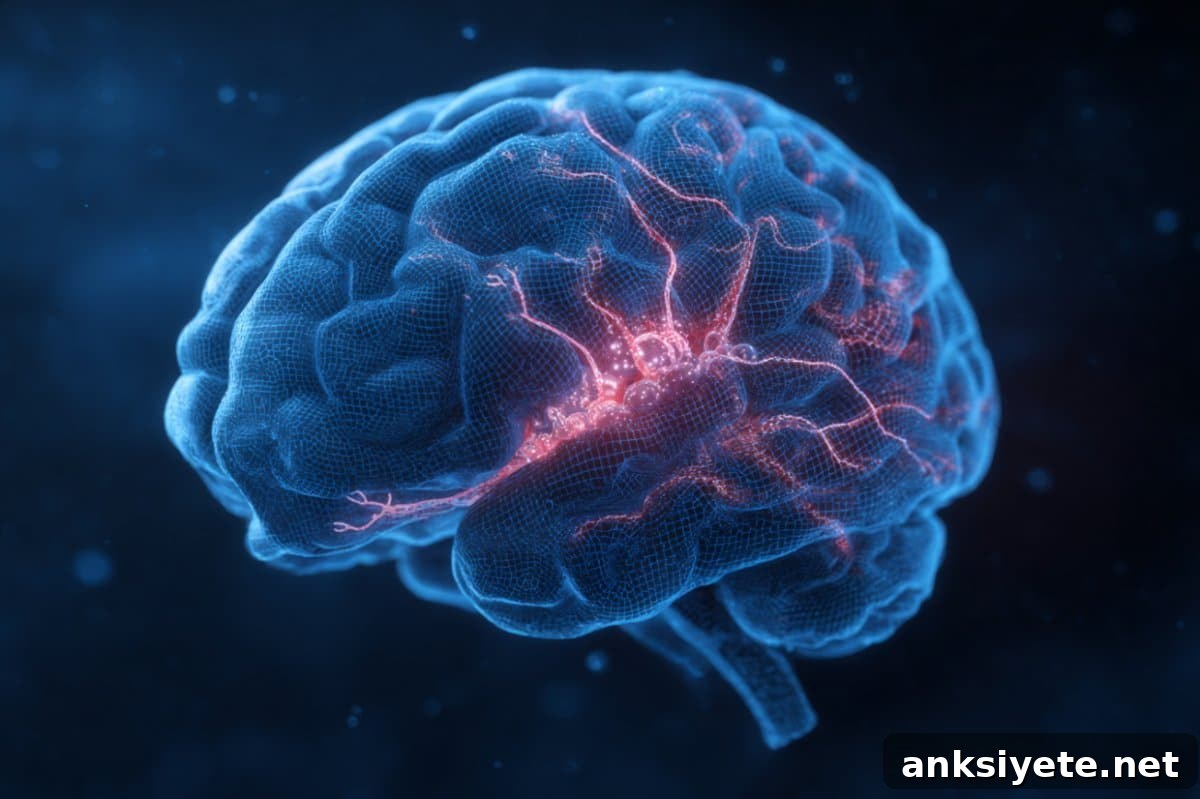
Summary: Researchers have mapped how loss of the autism-linked gene PTEN in a specific set of inhibitory neurons reshapes amygdala microcircuits that regulate fear and anxiety. Using high-resolution circuit mapping combined with targeted genetic deletion, the team found that removing PTEN from somatostatin-expressing interneurons in the central lateral amygdala (CeL) weakens local inhibition by roughly 50% while increasing excitatory drive from the basolateral amygdala (BLA).
This shift in balance—reduced local inhibitory connectivity together with strengthened excitatory input—corresponded with elevated anxiety and enhanced fear learning in animal models, but did not produce changes in social interaction or repetitive behaviors commonly associated with autism spectrum disorder (ASD). The study offers one of the most detailed microcircuit maps to date linking a specific genetic risk factor to distinct behavioral outcomes, with implications for targeted therapeutic strategies.
Key Facts:
- Circuit-specific effect: PTEN loss in somatostatin (SOM+) interneurons reduces local inhibitory connections within the central amygdala and strengthens excitatory input from the basolateral amygdala.
- Behavioral impact: The altered microcircuit produces heightened anxiety and stronger fear learning, without affecting social or repetitive behaviors in the tested models.
- Precision mapping: Investigators combined cell-type-specific genetics with an optogenetic two-photon mapping approach to measure connectivity and synaptic strength at single-cell resolution across hundreds of neurons.
Source: Max Planck Florida
Overview: Researchers at the Max Planck Florida Institute for Neuroscience studied how loss of PTEN—a gene strongly associated with autism and brain overgrowth—changes neural circuits and behavior. Their results, reported in Frontiers in Cellular Neuroscience, identify precise circuit alterations in the CeL that likely drive anxiety and exaggerated fear responses when PTEN is removed from somatostatin-expressing inhibitory neurons.
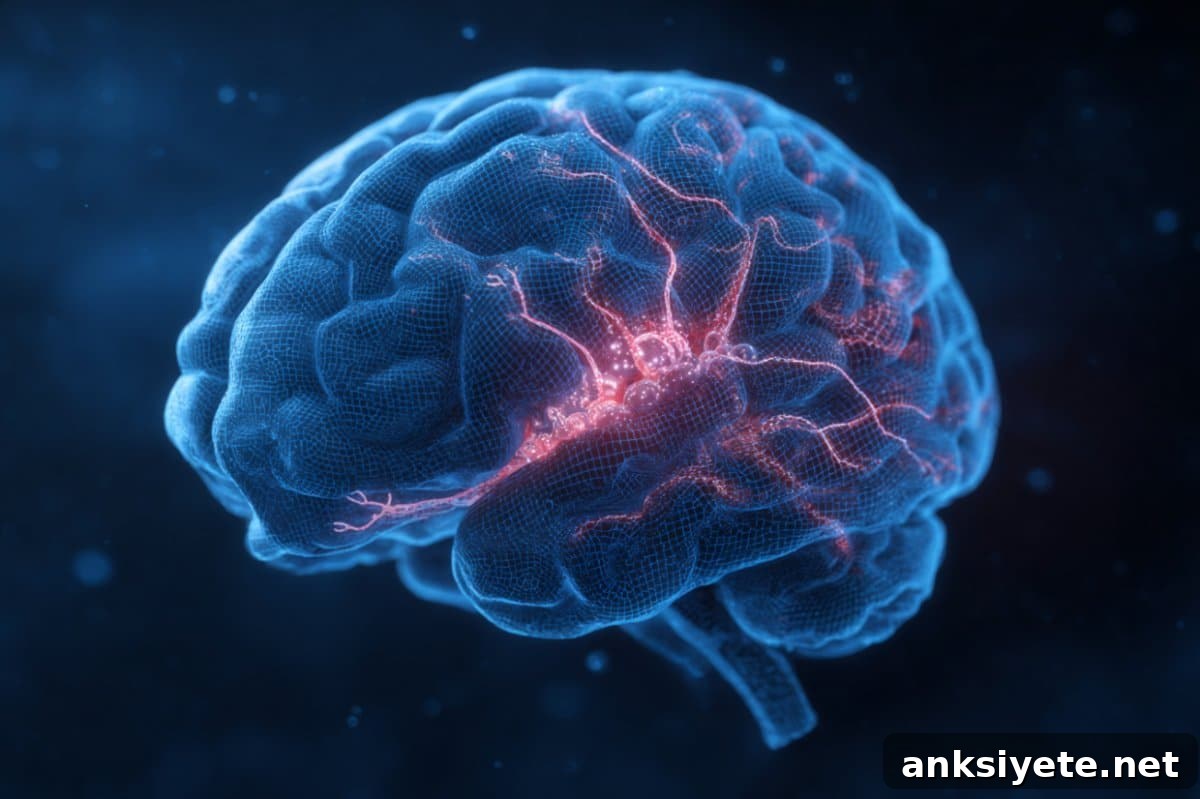
PTEN is a critical regulator of the mTOR signaling pathway and one of the most significant genes linked to ASD, especially among individuals with macrocephaly. Prior work shows that global reduction or mutation of PTEN in animal models can produce ASD-like traits including social differences, repetitive behaviors, and increased anxiety. However, global manipulations make it difficult to pinpoint which changes at the cell and circuit level underlie particular behaviors.
To address this, the research team led by Dr. McLean Bolton and Dr. Tim Holford restricted PTEN deletion to somatostatin-positive inhibitory neurons. This cell-type-specific approach allowed them to isolate the effects of PTEN loss within a defined microcircuit known to control fear output. Somatostatin and other GABAergic interneurons have been implicated in ASD development in both human tissue studies and genetic mouse models, and PTEN has known roles in inhibitory neuron development.
The experimental strategy combined a genetic PTEN knockout selectively in SOM+ neurons with an advanced optogenetic two-photon mapping technique developed in the lab. This method records electrical responses from individual neurons while sequentially stimulating hundreds of neighboring neurons, enabling fast, high-resolution maps of connectivity and synaptic strength that pair the precision of electrophysiology with the throughput of imaging.
Deleting PTEN specifically in SOM+ interneurons produced two complementary changes in the CeL: a roughly 50% reduction in local inhibitory connectivity, along with weaker remaining inhibitory synapses; and, conversely, an increase in excitatory input strength arising from the BLA. These opposing shifts—diminished inhibition together with enhanced excitation—are consistent with a circuit-level mechanism for the increased fear learning and anxiety observed in the PTEN-SOM knockout animals.
Behavioral testing confirmed that the genetic manipulation selectively affected fear- and anxiety-related measures while leaving social behavior and stereotyped actions largely unchanged. These findings indicate that PTEN-dependent changes in SOM+ microcircuits can generate a subset of ASD-related traits, emphasizing that different neural circuits may underlie distinct behavioral features of neurodevelopmental disorders.
Dr. Holford noted that dissecting microcircuit contributions to specific symptoms is an important step toward targeted therapies: by identifying the local circuitry that produces severe anxiety, researchers can begin to explore interventions aimed at those precise networks. Future work will examine whether similar microcircuit alterations arise across other genetic models, testing whether convergent circuit changes account for heightened fear and anxiety across diverse risk factors.
About this genetics, autism, and anxiety research news
Author: Lesley Colgan
Source: Max Planck Florida
Contact: Lesley Colgan – Max Planck Florida
Image: Image credited to Neuroscience News
Original Research: Open access. “PTEN in somatostatin neurons regulates fear and anxiety and is required for inhibitory synaptic connectivity within central amygdala” by McLean Bolton et al., Frontiers in Cellular Neuroscience.
Abstract
PTEN in somatostatin neurons regulates fear and anxiety and is required for inhibitory synaptic connectivity within central amygdala
Introduction: PTEN is a negative regulator of the mTOR pathway and is strongly associated with ASD; a substantial fraction of ASD individuals with macrocephaly carry PTEN mutations. Mouse models with germline or conditional PTEN disruption show ASD-like behavioral traits, and evidence points to dysfunction of GABAergic interneurons in ASD etiology. PTEN influences the development and maturation of inhibitory neurons, affecting balances between parvalbumin- and somatostatin-expressing populations.
Methods: The study examined how PTEN regulates SOM+ interneurons in the CeL using behavioral assays, electrophysiology, and two-photon local circuit mapping to quantify synaptic connectivity and strength.
Results: Selective PTEN knockout in SOM+ neurons increased fear and anxiety and reduced local CeL inhibitory connectivity. Individual inhibitory synapses were weaker and the pattern of local connections shifted; by contrast, excitatory input from the BLA was enhanced.
Discussion: The combination of diminished local inhibition and heightened external excitation likely explains the exaggerated fear learning and anxiety observed in the PTEN-SOM knockout mice, illustrating how cell-type-specific genetic changes produce distinct circuit and behavioral outcomes.