
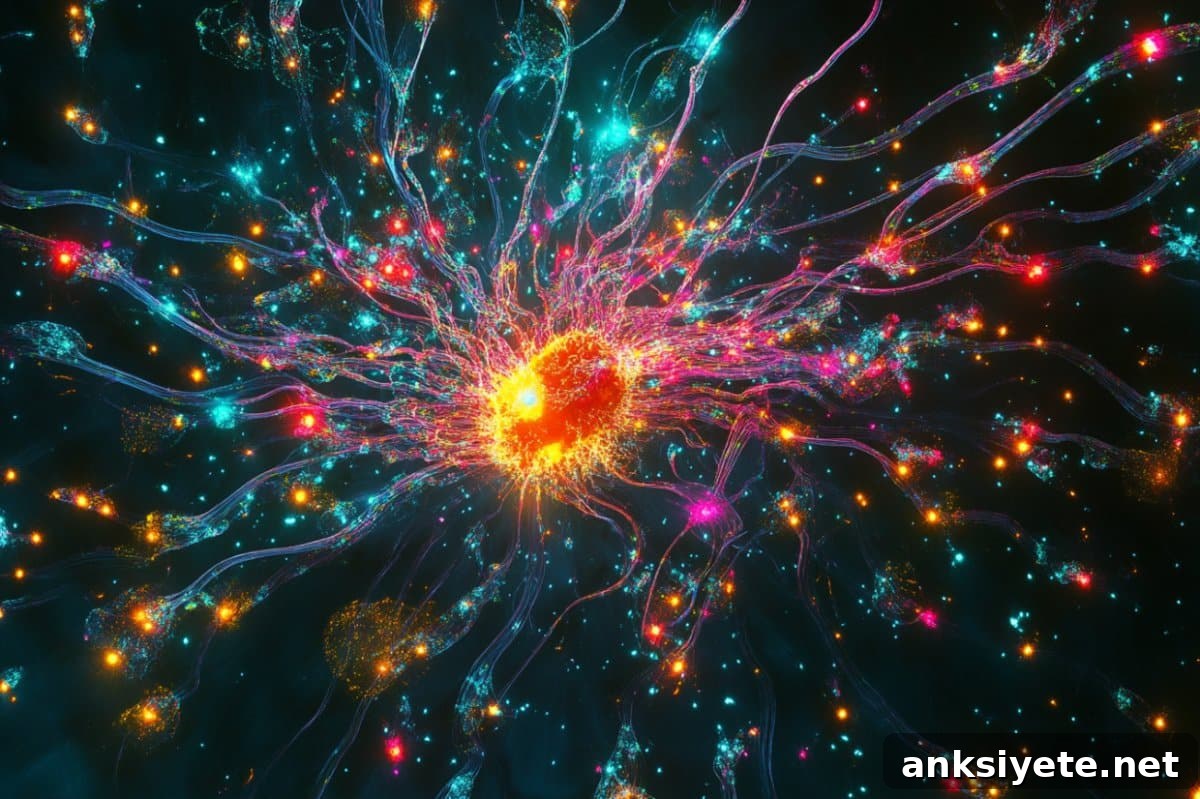
Summary: Once considered merely supportive cells, astrocytes are now recognized as active, flexible regulators of brain function and behavior. New research in fruit flies and rodents shows that astrocytes selectively respond to neurotransmitters and gate neuronal signals, helping the brain prioritize information in real time.
Astrocytes—glial cells that account for roughly a third of brain cells—are able to filter synaptic input and influence which neural signals dominate. By manipulating this astrocyte-driven signaling in fruit flies, researchers altered animal behavior, highlighting the cells’ powerful role in neural circuit control.
Key Facts:
- Dynamic Modulators: Astrocytes can open or close responsiveness to specific neuronal inputs, effectively filtering brain activity in real time.
- Behavioral Effects: Experimental changes to astrocyte signaling disrupted behavior in fruit flies, demonstrating functional consequences for the whole organism.
- Therapeutic Potential: Understanding astrocyte gating could inform treatments for attention, mood disorders, and neurodegenerative diseases.
Source: Oregon Health and Sciences University
Overview
New findings from Oregon Health & Science University reframe astrocytes—not as passive support cells—but as active participants that shape neural circuit activity. Published in the journal Science, the study uses in vivo experiments in Drosophila and complementary work in rodents to reveal how astrocytes dynamically regulate their sensitivity to neurotransmitters and thereby control downstream neuronal activity.
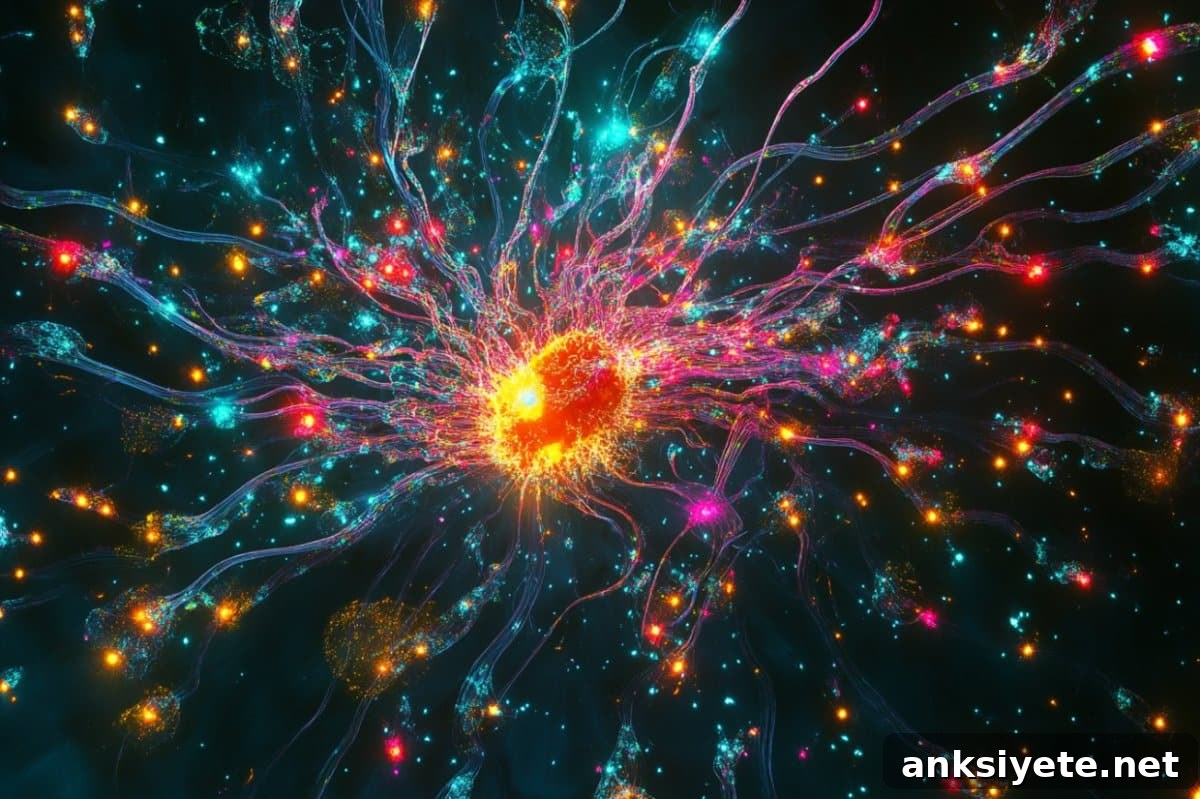
Astrocytes represent a major cell population in the brain—about 35% of human brain cells—and the study positions them as key coordinators in the complex networks that govern cognition and behavior.
“We hope this work will change how researchers think about astrocytes and their role in brain physiology and behavior,” said senior author Marc Freeman, Ph.D., director of the OHSU Vollum Institute. He and colleagues argue that a better understanding of astrocyte function could ultimately influence therapeutic strategies for attention, anxiety, and mood regulation.
Lead author Kevin Guttenplan, Ph.D., emphasized the evolutionary value of rapid network reconfiguration: when immediate survival demands arise, astrocytes can help redirect brain resources so behavior focuses on escape or defense rather than unrelated thoughts.
Mechanisms and prior work
Historically, researchers viewed astrocytes mainly as cells that support neurons by supplying nutrients and clearing waste. In 2016, Freeman’s lab first showed astrocytes also communicate signals to neurons. The current study extends that work by identifying specific mechanisms: astrocytes use G protein–coupled receptor (GPCR) signaling to gate their responsiveness to neurotransmitters like dopamine and glutamate.
A single astrocyte contacts tens of thousands of synapses, and this gating mechanism enables the cell to select which neuronal inputs to monitor. By toggling that responsiveness on or off, astrocytes reduce competing neural activity so circuits can operate more coherently in different behavioral states.
The researchers demonstrated that manipulating the astrocyte gating pathway changes neuronal circuit activity and disrupts behavior in fruit flies, providing direct evidence that even subtle astrocyte modifications produce meaningful organism-level effects.
Implications for neuroscience and medicine
This work challenges the long-standing notion of astrocytes as passive support cells and positions them as powerful regulators of neural computation and behavior. Miriam Leenders, Ph.D., program director at the National Institute of Neurological Disorders and Stroke, noted that model systems like the fruit fly can reveal fundamental mechanisms relevant across species.
The study found that astrocyte responses vary with brain state, enabling them to orchestrate which neuronal ensembles take precedence during tasks that require attention or rapid behavioral shifts. Because astrocytes also figure in outcomes of brain injury and in neurodegenerative diseases such as Alzheimer’s and Parkinson’s, understanding their signaling could suggest new avenues for preventing or treating cognitive and attentional impairments.
“These cells actively control neuronal activity—and they do so powerfully,” said Guttenplan. At the same time, he acknowledged the complexity: each astrocyte integrates thousands of synapses whose gating states can change, and millions of astrocytes across the brain create an intricately regulated system.
The authors propose that astrocyte gating is an evolutionarily conserved feature, supported by parallel observations in cultured mammalian astrocytes, and that this mechanism allows brains to flexibly reconfigure circuits across behavioral contexts.
Co-authors include Isa Maxwell, Erin Santos, Luke A. Borchardt, Ernesto Manzo, Leire Abalde-Atristain of OHSU, and Rachel D. Kim of NYU Grossman School of Medicine.
Funding: This research was supported by the Helen Hay Whitney Foundation and the National Institute of Neurological Disorders and Stroke (NIH) under awards F32NS119352, T32NS007466, R01NS053538 and R01NS124146. The content reflects the authors’ conclusions and not necessarily the official views of the NIH.
About this astrocytes and neuroscience research news
Author: Erik Robinson
Source: Oregon Health and Sciences University
Contact: Erik Robinson – Oregon Health and Sciences University
Image: The image is credited to Neuroscience News
Original Research: Closed access.
“GPCR signaling gates astrocyte responsiveness to neurotransmitters and control of neuronal activity” by Marc Freeman et al., Science
Abstract
GPCR signaling gates astrocyte responsiveness to neurotransmitters and control of neuronal activity
How astrocytes influence neuronal circuits is a central question in neurobiology. This study describes a mechanism in Drosophila where G protein–coupled adrenergic signaling in astrocytes gates their responses to other neurotransmitters. Manipulating this pathway robustly altered neuronal circuit activity and animal behavior. The gating mechanism was also observed in cultured mammalian astrocytes, suggesting it is evolutionarily conserved. These results establish how astrocytes dynamically tune and modulate neuronal activity across brain regions and behavioral states.