
Summary: Researchers at the Max Planck Institute report that variation in mood, sleep patterns, smoking behavior, and how easily people tan can be traced in part to Neanderthal DNA.
Source: Max Planck Institute.
Neanderthal DNA contributes to variation in skin tone, hair color, sleep patterns, mood and other traits in people today
When modern humans and Neanderthals met and interbred tens of thousands of years ago, genetic material passed from Neanderthals into the ancestors of many non-African populations. Although Neanderthals are extinct, roughly two percent of the genome in present-day non-African people is derived from them. Prior research has linked some of these inherited Neanderthal sequences to immune function and disease risk. New work from researchers at the Max Planck Institute for Evolutionary Anthropology shows that this Neanderthal heritage also contributes to differences in physical appearance and behavior, including skin tone, hair color, sleep timing, mood and even the likelihood of smoking.
Motivated by earlier studies that associated Neanderthal-derived genetic regions with signs of positive selection, Janet Kelso and colleagues set out to test associations between Neanderthal alleles and a broad set of non-disease traits. Because alleles of Neanderthal origin are relatively uncommon in the modern human gene pool, the team analyzed data from a very large cohort to detect meaningful signals. They used baseline phenotypes and genetic data from more than 112,000 participants in the UK Biobank pilot study, a dataset that links genomic information to many traits that include physical appearance, sun exposure, behavior and health-related measures.
The analysis revealed multiple Neanderthal-derived alleles that associate with variation in skin pigmentation and hair color among present-day Europeans. Interestingly, the Neanderthal alleles identified are associated with both lighter and darker skin tones and a range of hair colors. These contrasting associations suggest that Neanderthal populations themselves may have been variable in skin and hair pigmentation, much like modern humans. Michael Dannemann, first author of the study, notes that these findings point to diversity among Neanderthals in traits that affect appearance.
Beyond pigmentation and appearance, the researchers also found Neanderthal-derived alleles associated with behavioral and physiological traits. Certain Neanderthal variants were more frequent among individuals who reported being smokers, while other variants were associated with a tendency toward evening activity, the so-called “night people” or delayed sleep phase. Many of the traits tied to Neanderthal DNA—skin and hair pigmentation, circadian preferences and mood—have known links to sunlight exposure and photoperiod. The authors suggest that because Neanderthals had lived for many generations in Eurasia before modern humans arrived from Africa, they were likely adapted to lower and more variable ultraviolet radiation levels, and some of those adaptations may have been transferred to modern humans through gene flow.
“Skin and hair color, circadian rhythms and mood are all influenced by light exposure,” the authors write. They propose that the identification of Neanderthal-derived contributions to these traits supports the idea that sun exposure shaped Neanderthal phenotypes, and that historical gene flow from Neanderthals continues to contribute to variation in these traits among people today.
Source: Sandra Jacob – Max Planck Institute
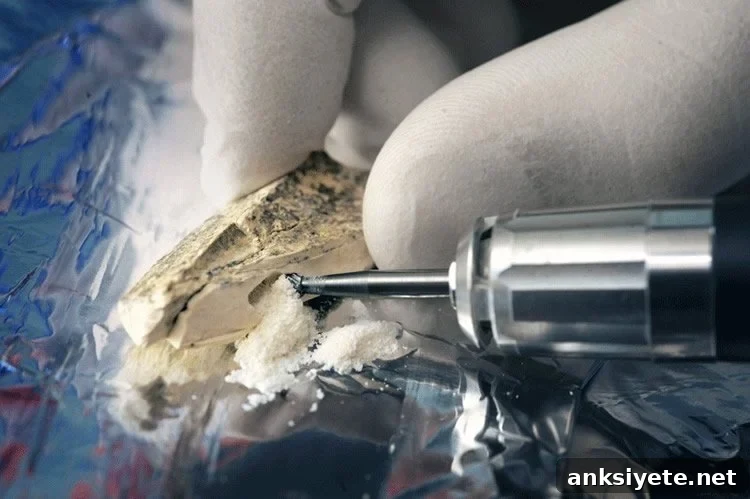
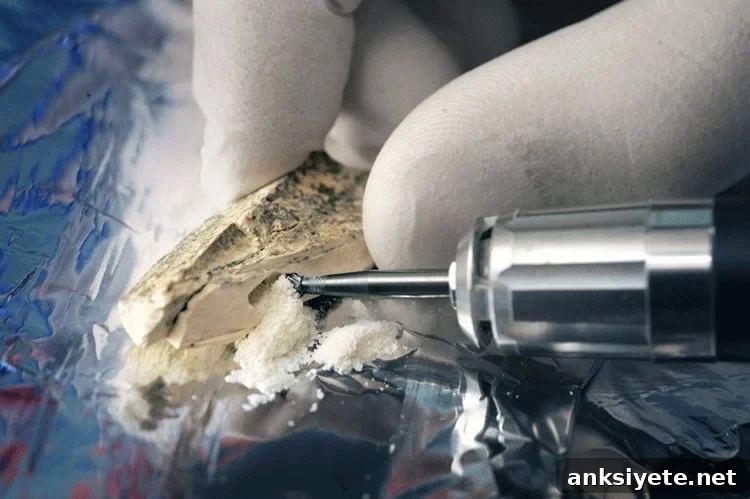
Image credit: Frank Vinken.
Original research: “The Contribution of Neanderthals to Phenotypic Variation in Modern Humans” by Michael Dannemann and Janet Kelso, published in The American Journal of Human Genetics. Published online October 5, 2017. DOI: 10.1016/j.ajhg.2017.09.010
Abstract
The Contribution of Neanderthals to Phenotypic Variation in Modern Humans
Assessing the genetic contribution of Neanderthals to non-disease traits in modern humans has been challenging because large cohorts with comparable phenotype information have been scarce. Using baseline phenotypes collected for over 112,000 individuals by the UK Biobank, this study expands on previous observations that signatures of positive selection on Neanderthal DNA correspond to differences in a variety of traits. The authors report that Neanderthal-derived genetic variation influences skin tone and hair color, height, sleep patterns, mood and smoking status in present-day Europeans. Multiple Neanderthal alleles at different genomic locations contribute to pigmentation traits, and these alleles are associated with both lighter and darker skin and hair, implying that Neanderthals themselves likely displayed variation in these phenotypes.
Paper: “The Contribution of Neanderthals to Phenotypic Variation in Modern Humans” by Michael Dannemann and Janet Kelso. The American Journal of Human Genetics. Published online October 5, 2017. DOI: 10.1016/j.ajhg.2017.09.010