Summary: Researchers at the Max Planck Institute report that deaf children fitted with cochlear implants can learn words faster after implantation than children with normal hearing of the same auditory age.
Source: Max Planck Institute.
Cochlear implants provide auditory input to children born deaf or with severe inner-ear damage by converting sound into electrical signals delivered to the auditory nerve. These devices offer many children the first consistent access to spoken language and the sounds of their environment.
Until recently, it was commonly believed that children who receive cochlear implants acquire language milestones more slowly than children with normal hearing. Earlier studies found that milestones such as distinguishing the rhythm and intonation of a native language may take longer after implantation, suggesting potential delays in the early stages of language development that are important for later school readiness.
A new study conducted by researchers at the Max Planck Institute for Human Cognitive and Brain Sciences (MPI CBS) in Leipzig, in collaboration with the University Medical Centre Dresden, presents a different perspective. The team observed that, once exposed to spoken language via a cochlear implant, many deaf children form word-object associations faster than peers with natural hearing. “When deaf children receive implants and begin hearing spoken words, they often learn specific words more rapidly,” explains Niki Vavatzanidis, the study’s first author and a scientist at MPI CBS and the University Medical Centre Dresden. Whereas children with normal hearing typically take about fourteen months of auditory experience to reliably notice when a familiar object is named incorrectly, many children with cochlear implants showed that ability after roughly twelve months of implant use.
The researchers suggest that this accelerated word learning may result from the children’s greater cognitive maturity at the time they first encounter spoken language. Infants with normal hearing begin to absorb prosody, rhythm and other language cues from birth and even during late pregnancy. In contrast, many children who receive implants hear speech for the first time between about one and four years of age. By that age they have already developed broader conceptual knowledge about the world—non-linguistic semantic categories and experiences—that supports rapid mapping of words to meanings. As Vavatzanidis notes, these children may already understand, for example, that some objects can be hot or that heat can be dangerous, even before they have the spoken label for those concepts.
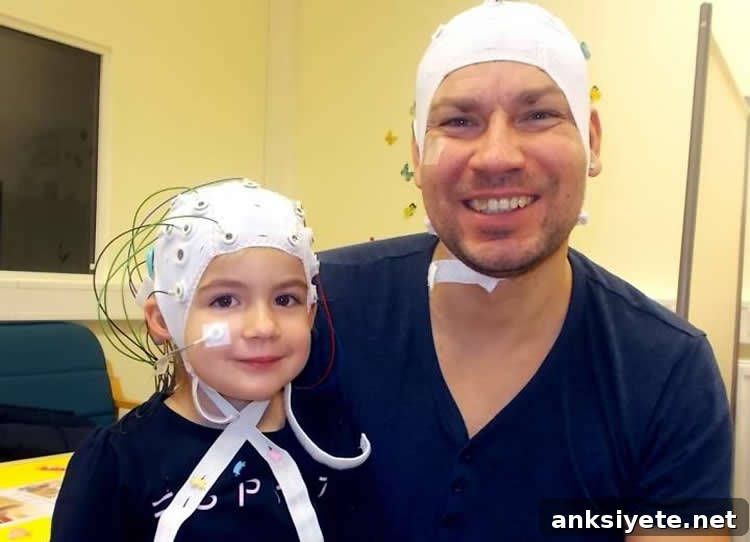
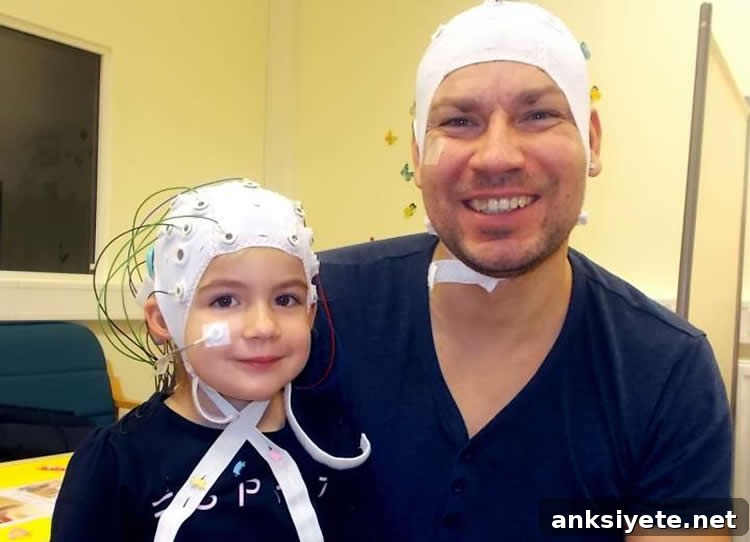
The research team tested thirty-two children who had bilateral cochlear implants. They evaluated word learning and semantic processing twelve, eighteen, and twenty-four months after implantation. In each test session the children viewed pictures of objects while hearing spoken words that either matched or did not match the pictured item. The investigators recorded electroencephalographic (EEG) activity to identify the presence of the N400 effect, an established brain response that indicates the brain has detected a semantic mismatch between a word and its referent. Detecting an N400 response showed that a stable link between an object and its spoken label had been formed—evidence that the child had learned that word.
Findings revealed a clear split among participants. A subset of children showed little or no semantic processing during their second year of implant experience and tended to have poorer language outcomes overall. However, the majority demonstrated an N400 response after twelve months of cochlear implant use—slightly earlier than is commonly observed in normal hearing children of comparable auditory age. The authors interpret this as evidence that older cognitive and experiential maturity at the onset of auditory input can support faster semantic learning, even when earlier auditory experience was absent.
Angela D. Friederici, lead author and director at MPI CBS, emphasizes that cochlear-implanted children can illuminate general principles of language acquisition and help researchers identify which steps are tied to chronological age and which depend on auditory experience. “Our results indicate that age at first exposure to spoken language does not necessarily slow word learning; in many cases, children catch up rapidly despite earlier sensory deprivation,” she says. The authors note that follow-up research should investigate why some implanted children still lag behind peers with normal hearing, to better understand individual differences in outcomes and to improve interventions.
Source: Verena Mueller — Max Planck Institute
Publisher: NeuroscienceNews.com (organized content)
Image Source: Image credited to MPI CBS.
Original Research: Open access research published in Scientific Reports.
DOI: 10.1038/s41598-017-18852-3
MLA: Max Planck Institute. “Deaf Children Learn Words Faster Than Hearing Children.” NeuroscienceNews, 23 January 2018.
APA: Max Planck Institute (2018, January 23). Deaf Children Learn Words Faster Than Hearing Children. NeuroscienceNews.
Chicago: Max Planck Institute. “Deaf Children Learn Words Faster Than Hearing Children.” NeuroscienceNews. (accessed January 23, 2018).
Abstract
Establishing a mental lexicon with cochlear implants: an ERP study with young children
This study examines language acquisition when auditory input is provided primarily or exclusively via a cochlear implant (CI). Focusing on the critical period corresponding to the second year of auditory experience—when vocabulary typically expands rapidly—the study tested 32 young bilaterally implanted children who viewed pictures paired with matching or non-matching spoken words. EEG recordings taken after 12, 18 and 24 months of implant use revealed two distinct patterns. A minority of children showed little semantic processing during this period and subsequently had poorer language outcomes. The majority, however, displayed an N400 semantic effect after just 12 months of CI use, indicating successful word learning even when prior auditory experience was lacking. The findings suggest that greater cognitive maturity at the onset of language exposure can accelerate semantic learning.