
Summary: Findings could lead to new treatments for asthma.
Source: RUB.
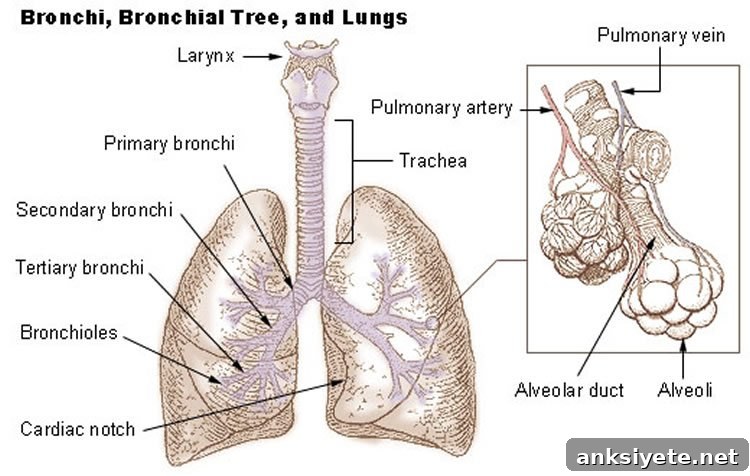
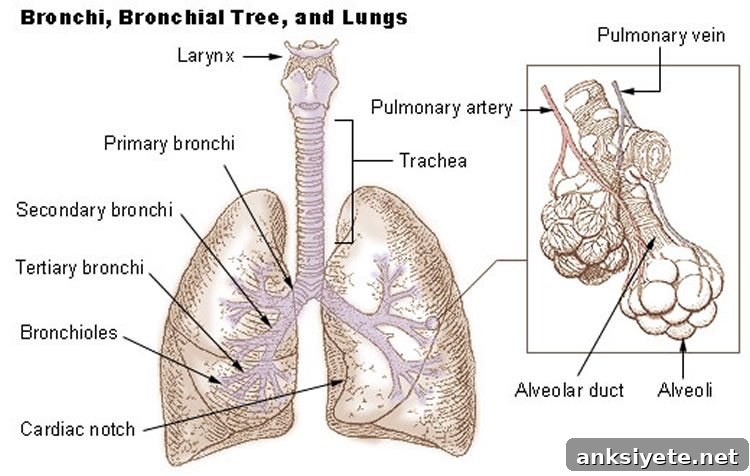
Researchers identified two types of olfactory receptors in human bronchial smooth muscle cells. Activating these receptors with specific odorants causes the bronchi to either dilate or contract, revealing a potential new approach for asthma and other airway disease therapies.
A research team led by Prof. Dr. Dr. Dr. habil. Hanns Hatt and Dr. Benjamin Kalbe at the Department of Cell Physiology in Bochum, together with clinical colleagues in Bochum, Cologne and Herne, published these findings in the journal Frontiers in Physiology.
Banana‑apricot scent dilates bronchioles
The study reports the presence of two olfactory receptors in human airway smooth muscle cells (HASMCs): OR2AG1 and OR1D2. The researchers identified the odorant molecules that activate these receptors and mapped key signaling pathways inside the muscle cells.
Amyl butyrate, a fruity odorant with banana and apricot notes, selectively activates OR2AG1. When amyl butyrate binds to OR2AG1 on bronchial smooth muscle cells, it triggers intracellular signaling that leads to muscle relaxation and bronchiole dilation. In experimental tests, this relaxation was strong enough to reverse the constrictive effect caused by histamine, a mediator released during allergic asthma that narrows the airways and reduces airflow.
Approach for asthma therapy
“Amyl butyrate may help improve airflow in people with asthma,” says Hanns Hatt. The receptor’s ability to counteract histamine-induced contraction suggests it could be useful not only against allergic triggers but potentially against other factors that provoke airway narrowing. Because airway obstruction and chronic inflammation are central problems in conditions such as severe asthma and chronic obstructive pulmonary disease (COPD), targeting these olfactory receptors could provide new therapeutic avenues.
The researchers demonstrated that OR2AG1 activation in bronchial smooth muscle cells uses the same intracellular signaling cascade known from nose olfactory neurons: a cAMP-dependent pathway that produces transient increases in intracellular calcium (Ca2+), measurable by fluorometric calcium imaging. This conserved signaling architecture supports the functional relevance of these receptors outside the nose.
Second receptor produces the opposite effect
The other receptor, OR1D2, responds to floral or synthetic floral odorants with oily notes, such as bourgeonal and lilial. Activation of OR1D2 causes bronchial smooth muscle contraction rather than relaxation, and it also promotes the release of pro-inflammatory mediators from the cells, including cytokines measured in the study. That pro-inflammatory response and increased contractility were both blocked by a specific OR1D2 antagonist, undecanal, indicating that the effects are receptor dependent.
These opposing actions—OR2AG1-mediated relaxation versus OR1D2-mediated contraction and inflammatory signaling—highlight a nuanced role for ectopic olfactory receptors in airway physiology. Depending on which receptor and ligand are present or activated, the airway response can be protective or harmful. Understanding this balance could be important in designing therapies that promote bronchodilation while avoiding pro-inflammatory signaling.
Methods and experimental model
The investigators worked with primary human airway smooth muscle cell cultures provided by the team led by PD Dr. Jürgen Knobloch at the University Clinic Bergmannsheil in Bochum. Unlike skeletal (striated) muscle, airway smooth muscle contracts involuntarily and plays a central role in regulating airway caliber. The study combined molecular analyses showing RNA and protein expression of OR1D2 and OR2AG1 in HASMCs with functional assays—fluorometric calcium imaging, contractility measurements, and assays for cytokine release—to establish receptor activity and downstream effects.
Funding: Research funding provided by the German Research Foundation and the Ruhr-University Research School.
Source: Hanns Hatt, Ruhr-University Bochum (RUB).
Research implications and next steps
This research provides the first functional evidence that olfactory receptors are expressed and active in human airway smooth muscle cells, modulating both contractility and inflammatory signaling. By identifying specific receptor‑ligand pairs and the intracellular pathways they engage, the study points to olfactory receptors as new potential therapeutic targets for chronic inflammatory airway diseases. Pharmacological activation of OR2AG1 or selective blockade of OR1D2 could, in principle, be explored as strategies to improve airflow and reduce inflammation in early stages of asthma and possibly in COPD.
Original research
The findings are reported in the open‑access article “Olfactory Receptors Modulate Physiological Processes in Human Airway Smooth Muscle Cells” by Benjamin Kalbe et al., Frontiers in Physiology, published online August 4, 2016. DOI: 10.3389/fphys.2016.00339.