
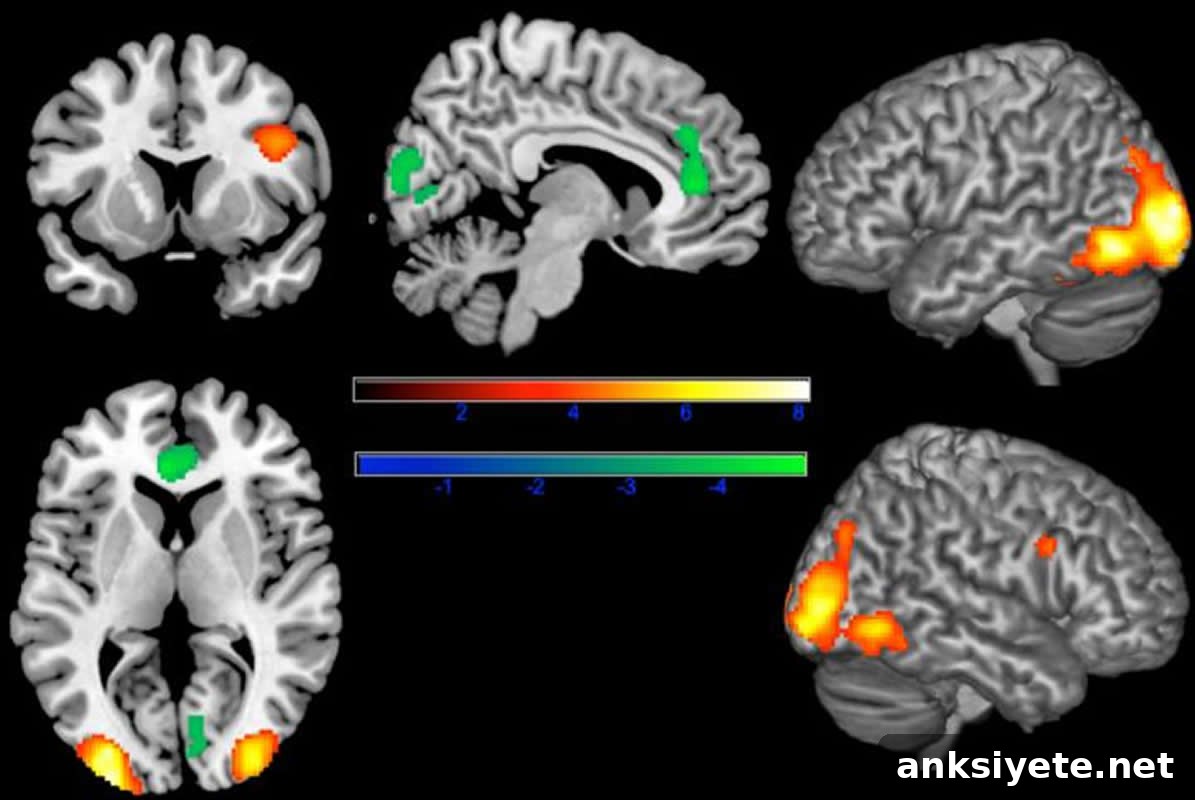
Summary: Neuroimaging shows that people display a reduced neural response in the anterior cingulate cortex when viewing images of others with facial disfigurements. A comparable reduction is seen when observers view other stigmatized groups, such as people experiencing homelessness. This decreased activity may help explain reduced empathy toward people with facial disfigurements and point to a neural mechanism involved in dehumanization.
Source: University of Pennsylvania
People with conventionally attractive faces are often perceived as more trustworthy, socially skilled, well adjusted, and competent in academic and professional settings. This link between appearance and perceived character is known as the “beautiful is good” stereotype. By contrast, far less is known about how people respond behaviorally and neurally to faces with visible abnormalities—scars, skin cancers, birthmarks, and other disfigurements. A new study led by researchers at Penn Medicine, published in Scientific Reports, documents an automatic “disfigured is bad” bias that appears alongside the well-known bias in favor of attractiveness.
“Judgments about attractiveness and trustworthiness form rapidly and are remarkably consistent across cultures. People with facial differences frequently face discrimination that extends beyond reduced attractiveness and shares patterns seen with other stigmatized groups,” said the study’s lead author, Anjan Chatterjee, MD, Professor of Neurology and Director of the Penn Center for Neuroaesthetics. “To reduce discrimination we must first understand how and why these biases form, which motivated our investigation of neural responses to disfigured faces.”
Previous neuroimaging research has shown that viewing attractive faces activates brain regions linked to reward, emotion, and high-level visual processing more strongly than viewing faces of average attractiveness. Attractive faces produce heightened responses in ventral occipito‑temporal cortex—an area specialized for processing faces and objects—and also correlate with increased activity in regions such as the anterior cingulate cortex and medial prefrontal cortex that are associated with reward, empathy, and social cognition.
The Penn researchers designed two complementary experiments to probe behavioral and brain responses to facial disfigurement and to ask whether surgical correction changes those responses. They used paired photographs of patients taken before and after surgical treatment for facial anomalies to test for implicit bias and to measure neural activity.
In the first experiment, a behavioral study with 79 participants, the team examined both implicit and explicit attitudes. Implicit preferences were assessed with an Implicit Association Test (IAT) that used the before-and-after photos as stimuli, while explicit attitudes were measured with an 11-item questionnaire asking directly about conscious beliefs and feelings toward people with facial disfigurements. Participants showed no consistent explicit negative attitudes on the questionnaire, but the IAT revealed a robust implicit preference for the non-disfigured faces. This implicit bias was stronger among male participants.
In a follow-up functional MRI (fMRI) experiment with 31 participants, observers viewed the same photograph pairs while performing a simple gender-judgment task to ensure attention to the faces without explicitly evaluating them. Neuroimaging results revealed increased activation in ventral occipito‑temporal visual regions when participants viewed disfigured faces, consistent with heightened attentional processing to visually salient cues. Importantly, viewing disfigured faces produced decreased activity in the anterior cingulate cortex and medial prefrontal cortex—areas implicated in empathy and social cognition.
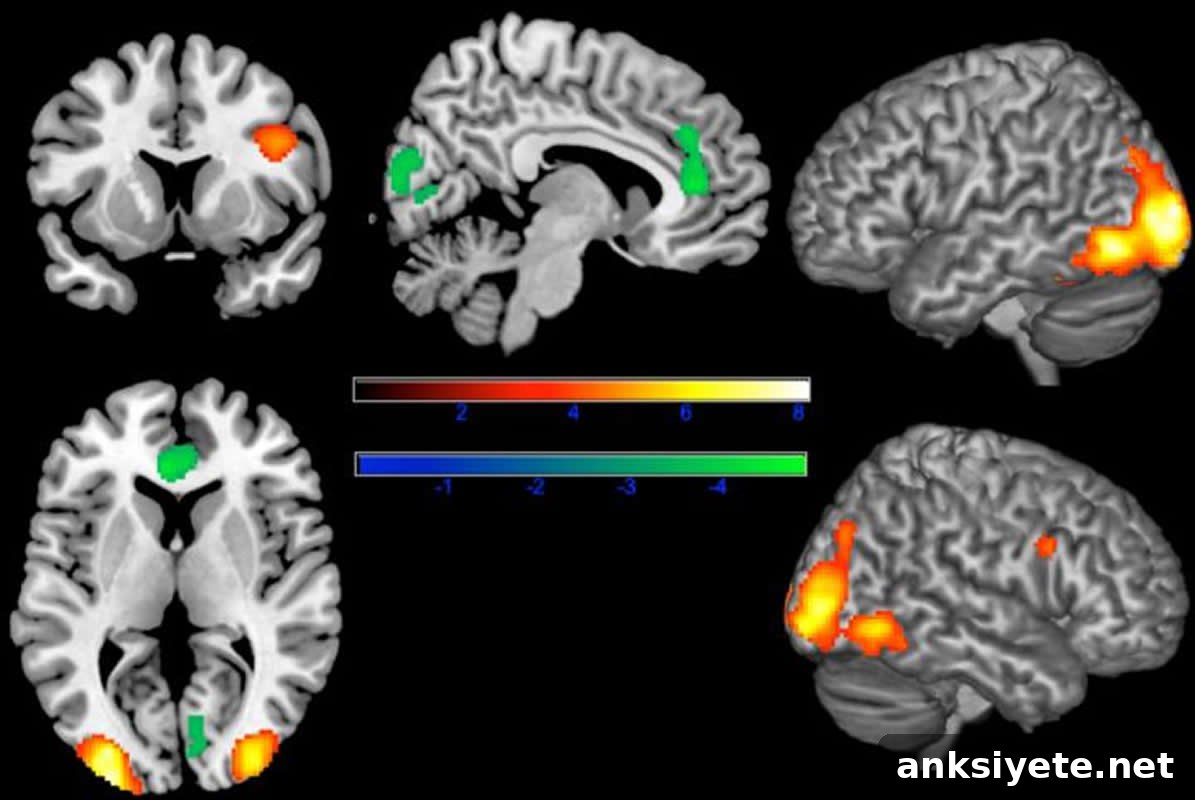
Overall, the combined behavioral and imaging findings indicate that people commonly hold an implicit “disfigured is bad” bias even when they do not report explicit negative attitudes. The observed reduction of activity in anterior cingulate cortex and medial prefrontal cortex when viewing disfigured faces suggests diminished empathy or suppressed social cognition toward those individuals. Because similar neural reductions are present when observers view other stigmatized groups—such as people who are homeless or struggling with addiction—these neural patterns may reflect a general mechanism that contributes to dehumanization.
These results also help clarify the role of visual and social brain systems in processing facial differences. The increased occipito‑temporal responses likely reflect heightened attention to salient visual features, whereas the relative deactivation in anterior cingulate and medial prefrontal regions appears linked to reduced empathic engagement and social appraisal. The investigators note that corrective surgery reduces some of the negative social and psychological responses to facial anomalies, but they are also exploring non-surgical strategies to decrease bias and improve social inclusion for people with facial conditions.
Funding: This research was supported by the Penn Center for Human Appearance and the Global Wellness Institute.
Source:
University of Pennsylvania
Media Contacts:
Hannah Messinger – University of Pennsylvania
Image Source:
The image is credited to Penn Medicine.
Original Research: Open access
“Behavioural and Neural Responses to Facial Disfigurement.” Franziska Hartung, Anja Jamrozik, Miriam E. Rosen, Geoffrey Aguirre, David B. Sarwer & Anjan Chatterjee. Scientific Reports. DOI: 10.1038/s41598-019-44408-8
Abstract
Behavioural and Neural Responses to Facial Disfigurement
Faces are among the most salient social stimuli humans encounter. Attractive faces are linked with positive personality traits and elicit stronger neural responses than average faces in ventral occipito‑temporal cortical areas. Little is known about responses to disfigured faces. In two experiments, the authors tested whether an implicit “disfigured is bad” bias exists and whether ventral visual responses reflect attention to salient facial features rather than reward. In the behavioral study (N = 79), an implicit bias against disfigured faces was confirmed. In the fMRI study (N = 31), photographs of disfigured faces before treatment elicited greater ventral occipito‑temporal activation but reduced anterior cingulate cortex activation. The occipito‑temporal activity supports the idea that these areas respond to visual salience, while the reduction in anterior cingulate activity may reflect suppressed empathy and social cognition, offering evidence of a possible neural mechanism underlying dehumanization.