
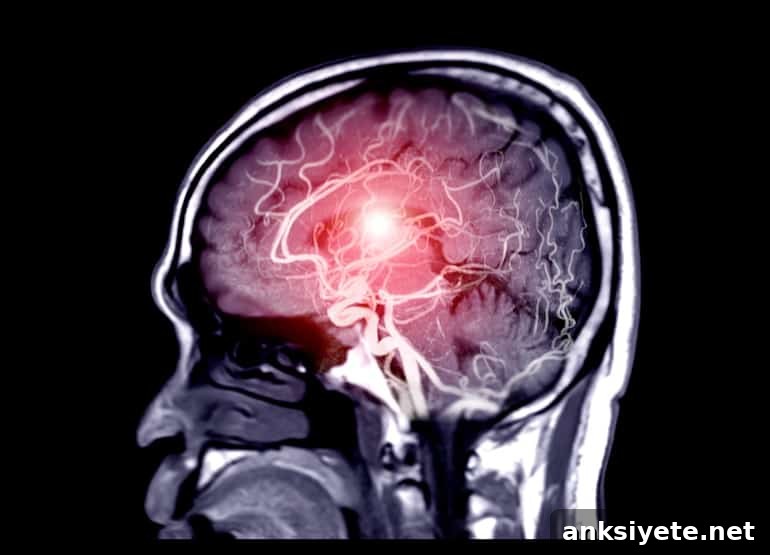
Summary: New research shows that salt intake can reduce blood flow in the hypothalamus as specific neurons become active, revealing an unexpected pattern of neurovascular response deep in the brain.
Source: Georgia State University
Researchers at Georgia State University have led a first-of-its-kind study that uncovers how neuron activity and local blood flow interact in the hypothalamus, and how that interaction is altered by salt consumption.
Typically, when neurons activate they trigger a quick increase in blood flow to meet metabolic demands. This process, called neurovascular coupling or functional hyperemia, depends on dilation of small brain arterioles. Functional magnetic resonance imaging (fMRI) relies on this principle: changes in blood flow are used as indicators of neural activity and to help diagnose brain disorders. Most prior studies of neurovascular coupling focused on the brain’s surface regions, such as the cerebral cortex, and examined responses to external sensory inputs like sights or sounds.
Far less is known about how neurovascular coupling operates in deep brain regions that respond to internal bodily signals—so-called interoceptive cues. To study these deeper circuits, an interdisciplinary team led by Dr. Javier Stern, professor of neuroscience and director of Georgia State’s Center for Neuroinflammation and Cardiometabolic Diseases, developed a novel experimental approach combining advanced surgical access and in vivo neuroimaging. Their work concentrated on the hypothalamus, a deep brain center that regulates essential functions including thirst, food intake, temperature control and reproduction.
Published in Cell Reports, the study investigated how hypothalamic blood flow responds to salt intake. “We chose salt because sodium levels must be tightly regulated, and the body contains specialized cells that detect blood sodium,” said Stern. “When you consume salty food, the brain senses the change and activates compensatory systems to restore sodium balance.”
One of those compensatory responses is activation of neurons that release vasopressin, an antidiuretic hormone crucial for maintaining proper salt concentration. Contrary to the well-known cortical response—where neuronal activation typically increases local blood flow—the Georgia State team observed a decrease in blood flow in the hypothalamus as vasopressin neurons activated.
Stern described the result as surprising: “We observed vasoconstriction in the hypothalamus, the opposite of the rapid dilation usually seen in the cortex in response to sensory stimuli. Reduced blood flow in the cortex is commonly associated with disease states like Alzheimer’s or stroke, so this pattern in the hypothalamus was unexpected.”
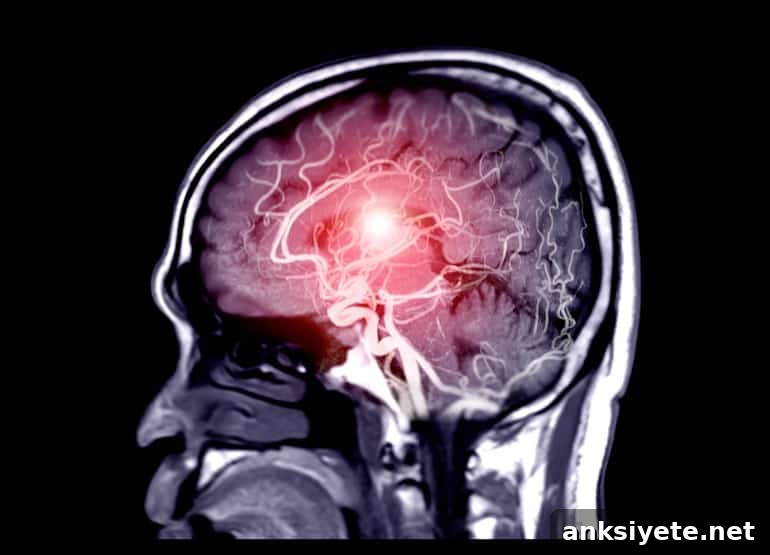
The researchers coined the term “inverse neurovascular coupling” to describe this phenomenon: activity-dependent vasoconstriction that lowers blood supply and creates a localized hypoxic environment. They noted additional differences from cortical responses: cortical vascular changes tend to be rapid and highly localized, while the hypothalamic vasoconstriction was diffuse and developed slowly, persisting over a longer timescale.
“Salt intake keeps blood sodium elevated for extended periods,” Stern explained. “We propose that the resulting hypoxia enhances the ability of vasopressin neurons to remain active during sustained stimulation, effectively supporting prolonged neural responses to systemic salt challenges.”
These findings have potential implications for understanding hypertension. An estimated 50 to 60 percent of high blood pressure cases are thought to be salt-dependent, driven by excess dietary sodium. The team plans to investigate whether inverse neurovascular coupling contributes to the development or progression of salt-dependent hypertension in animal models. They also intend to apply their imaging and surgical approach to study other brain regions and conditions, including depression, obesity and neurodegenerative diseases.
“Chronic high salt intake could chronically overactivate vasopressin neurons,” Stern added. “If that process causes prolonged hypoxia it might lead to tissue damage. Understanding this mechanism could reveal new therapeutic targets to prevent hypoxia-driven neural overactivation and improve outcomes for people with salt-sensitive high blood pressure.”
Contributors to the study include postdoctoral researchers Ranjan Roy and Ferdinand Althammer from the Center for Neuroinflammation and Cardiometabolic Diseases, Jordan Hamm, assistant professor of neuroscience at Georgia State, and collaborators at the University of Otago, Augusta University and Auburn University.
Funding: The study was supported by the National Institute of Neurological Disorders and Stroke.
About this neuroscience research news
Author: Jennifer Rainey Marquez
Source: Georgia State University
Contact: Jennifer Rainey Marquez – Georgia State University
Image: Image credit: Georgia State University
Original Research: Open access. “Inverse neurovascular coupling contributes to positive feedback excitation of vasopressin neurons during a systemic homeostatic challenge” by Javier Stern et al., Cell Reports
Abstract
Inverse neurovascular coupling contributes to positive feedback excitation of vasopressin neurons during a systemic homeostatic challenge
Highlights
- Salt loading triggers activity-dependent vasoconstrictions in the supraoptic nucleus (SON) of the hypothalamus
- These vasoconstrictions are mediated by dendritically released vasopressin (VP) and depend on neuronal activity
- The resulting constrictions reduce local blood flow and create a hypoxic microenvironment
- Salt-induced vasoconstriction produces positive feedback excitation of vasopressin neurons
Summary
Neurovascular coupling, the mechanism linking neuronal activity to changes in cerebral blood flow, has been characterized primarily in superficial brain regions like the neocortex. Whether the typical rapid and spatially restricted neurovascular responses also occur in deeper, functionally distinct regions has been unclear.
Using an in vivo two-photon imaging approach from the ventral brain surface, the authors show that an acute systemic challenge—salt loading—gradually increases firing of hypothalamic vasopressin neurons and induces vasoconstriction that lowers local blood flow. These constrictions are blocked by topical application of a vasopressin receptor antagonist or by tetrodotoxin, indicating mediation by activity-dependent dendritic release of vasopressin. The induced hypoxic microenvironment, in turn, evokes positive feedback excitation of vasopressin neurons.
The results reveal a physiological mechanism in which inverse neurovascular coupling helps regulate systemic homeostasis and highlight important heterogeneity in neurovascular responses across different brain regions, with implications for blood pressure regulation and brain health.