
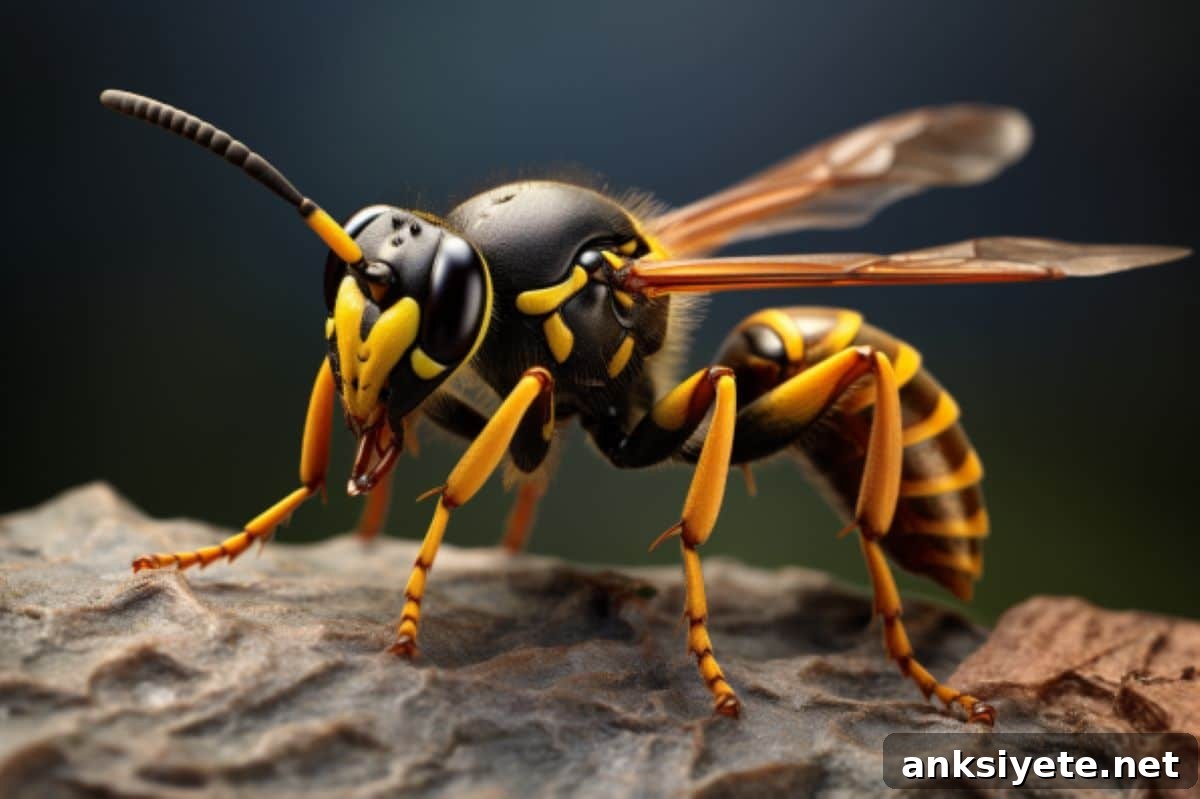
Summary: Neuroscientists have completed a landmark mapping of the early visual system in one of the smallest known brains — that of the parasitic wasp Megaphragma viggianii, an insect smaller than a grain of table salt. Using high-resolution imaging, the team reconstructed the entire visual pathway at the synaptic level from a single specimen, revealing surprising complexity despite extreme miniaturization.
Combining focused ion-beam milling and serial electron microscopy, researchers traced signals from the compound eyes through the first stages of neural processing. This complete, same-specimen reconstruction of an early visual system is a first in animal neuroscience and provides a clear, detailed view of how a very small brain supports sophisticated behaviors, including flight and target-seeking.
Key Facts:
- This is the first complete synaptic-level reconstruction of an animal’s early visual system from a single specimen.
- Megaphragma viggianii has an extremely compact brain of roughly 8,600 cells yet performs complex behaviors like flying and locating host eggs.
- Findings reveal simplified but conserved circuit motifs that could inform computational models and inspire improvements in artificial intelligence.
Source: Simons Foundation
Research teams at the Flatiron Institute’s Center for Computational Neuroscience in New York, collaborating with groups at other institutions, have produced this unprecedented visual-system map.
To image the wasp’s tiny head and brain, the team used an ion beam to peel away ultrathin layers while an electron microscope recorded how electrons scattered through each layer. Those images were assembled into a three-dimensional volume, and researchers manually annotated neurons and synapses to build the connectome for the lamina—the first visual neuropil that receives signals from the compound eye.
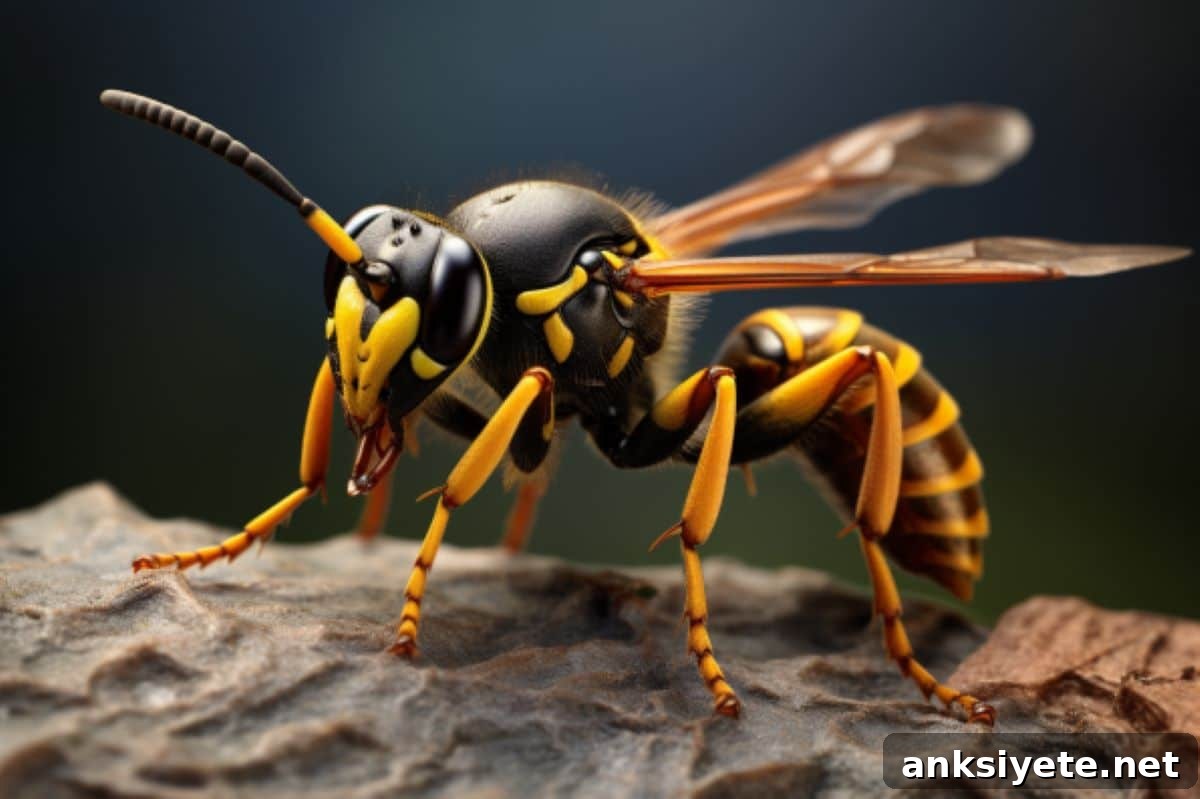
Though minuscule compared with human brains (the wasp’s roughly 8,600 cells versus roughly 171 billion in humans), Megaphragma’s nervous system retains circuit motifs familiar from larger insects. “It’s remarkable how much functional complexity is preserved at this scale,” says study lead author Nicholas Chua, formerly of the Flatiron Institute’s CCN and now a graduate student at Columbia University.
Senior author Dmitri Chklovskii, group leader at the CCN, emphasizes that the wasp’s visual circuitry is effectively a streamlined version of larger insect systems. Mapping these simplified, conserved circuits helps identify core principles of neural organization that likely generalize across species.
Studying compact systems like Megaphragma makes it easier to parse the fundamental rules governing perception and behavior. The wasp, only about 200 micrometers long, can fly and locate the eggs of thrips to deposit its own offspring. To achieve such a small body size, some of its neurons even lack nuclei, an extreme adaptation that reduces cell volume.
Prior connectomic studies often combined multiple specimens to build circuit maps, which introduced variability and limited precision. By reconstructing the entire early visual pathway from a single individual, the team avoided cross-animal differences and produced a coherent, high-fidelity map of synaptic connections from photoreceptors to lamina neurons.
Most of the manual tracing work was painstaking and time-consuming, although the group has begun to integrate AI-assisted tools to accelerate annotation in future projects. The reconstruction clarified how different regions of the compound eye contribute to the wasp’s vision and revealed that Megaphragma can detect polarized light—an unexpected capability for this species.
The researchers are extending their efforts to map the remainder of the wasp’s brain so they can assemble the full wiring diagram that underlies its behaviors. Chklovskii notes that extracting general-purpose principles from these minimal circuits may help improve artificial intelligence. Early artificial neural networks were inspired by biological neurons, and re-examining efficient, biology-tested wiring strategies could point toward more capable, efficient AI architectures.
About this brain mapping research news
Author: Anastasia Greenebaum
Source: Simons Foundation
Contact: Anastasia Greenebaum – Simons Foundation
Image: The image is credited to Neuroscience News
Original Research: Open access. “A complete reconstruction of the early visual system of an adult insect” by Nicholas Chua et al., published in Current Biology.
Abstract
A complete reconstruction of the early visual system of an adult insect
Highlights
- Megaphragma’s lamina connectome mirrors larger insects’ architectures but in a simplified form.
- Denucleation (loss of nuclei) in some Megaphragma neurons occurs by neuron class and may serve a functional role in compacting circuitry.
- Variation among lamina cartridge connectomes corresponds to specialization in the dorsal rim ommatidia, reflecting regional adaptations in the eye.
Summary
High-resolution maps of complete neural circuits are rare for many model organisms, limiting our understanding of visual processing. The microinsect Megaphragma viggianii, with its tiny size and surprisingly rich behavior, offers a unique opportunity for tractable whole-organism connectomics.
The team imaged the wasp’s entire head with serial electron microscopy, reconstructed the compound eye’s structure, analyzed ommatidial optics, and assembled the complete connectome of the lamina. Compared with well-studied insects like the fruit fly and honeybee, Megaphragma’s visual system is highly reduced: each eye has only 29 ommatidia and the lamina contains six neuron types. Despite this simplicity, the system features both stereotyped circuit elements and region-specific specializations.
By revealing the barebones circuits that support flight and other core insect behaviors, this work provides a compact, experimentally tractable blueprint for computational models of vision. These simplified, conserved principles can guide future studies of more complex brains and may offer new ideas for building efficient, biologically informed artificial neural networks.