Study in mice may lead to better understanding of aggression in other animals, including humans.
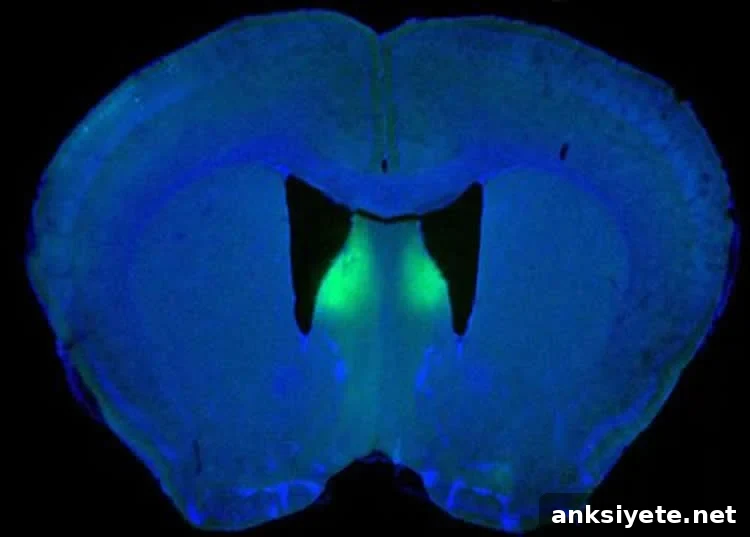
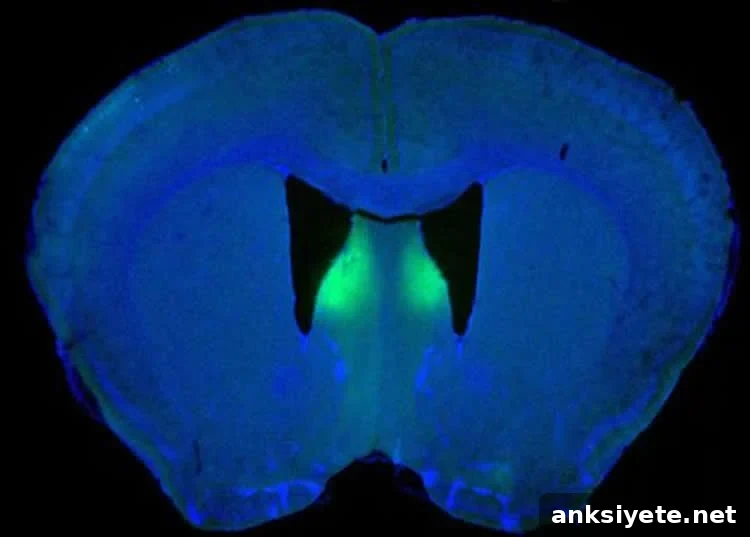
Researchers at NYU Langone Medical Center report that sudden, unprovoked violent outbursts in male mice are linked to changes in a midbrain structure involved in regulating fear and anxiety. Their findings, published online in Current Biology on February 11, 2016, identify the lateral septum as a critical control point for aggressive behavior.
When the lateral septum is damaged or its normal function is lost, the animals display a cascade of neural activity across connected brain regions that produces so-called “septal rage.” These abrupt, violent attacks—primarily directed at other mice—have long been observed after lesions to this area in rodents and in some bird species.
“Our results indicate the lateral septum acts as a gatekeeper for aggression,” says senior investigator Dayu Lin, PhD, assistant professor at NYU Langone’s Druckenmiller Neuroscience Institute. “It both suppresses circuits that drive attack and enhances circuits that inhibit it, effectively turning the volume of aggression up or down.”
The lateral septum receives input from the hippocampus, a region involved in emotion and learning, and it also connects with the hypothalamus, a central hub for aggression and hormone regulation. Lin emphasizes that while septal rage is not documented in humans, mapping these circuits in mice can help clarify broader neural mechanisms that control aggressive behavior across species.
A central discovery of the study is how lateral septum activity affects a specific hypothalamic region—the ventrolateral part of the ventromedial hypothalamus (VMHvl). Previous work showed the VMHvl is highly active during natural aggression, but the upstream influences that modulate this activity were not well understood.
Using optogenetics—stimulating selected neurons with light delivered through a surgically implanted probe—the team selectively excited or inhibited cells in the lateral septum. Modulating these cells allowed researchers to reliably start, stop, and restart aggressive outbursts in the male mice, demonstrating direct causal control over attack behavior.
Importantly, disrupting the pathway from the lateral septum to the VMHvl altered aggression without impairing sexual behavior. Male mice continued to attempt mating with females even when aggressive attacks were suppressed, showing that aggression and sexual behaviors are mediated by separable neural pathways and can be adjusted independently.
At the cellular level, activating lateral septum neurons produced an intriguing pattern within the VMHvl: one population of neurons increased activity while another decreased. The cells that were most active during attacks were suppressed when the lateral septum was excited, whereas the cells that were suppressed during attacks became more active during septal stimulation. This reciprocal regulation suggests the lateral septum selectively inhibits attack-promoting neurons while activating attack-inhibiting neurons, providing nuanced, bidirectional control of aggressive responses.
“This work provides the first direct evidence that the lateral septum can up- or down-regulate aggression in male mice and establishes specific connections between this region and other key centers involved in violent behavior,” Lin adds.
Next, the research team will identify which specific cell types within the lateral septum govern male aggression and determine the physiological and environmental conditions that activate or silence those cells. Lin’s long-term aim is to explore whether targeted interventions could reduce pathological aggression without damaging other social or cognitive functions.
Funding: The experiments reported here took five years to complete and were supported by the National Institute of Mental Health (grant RO1-MH101377). Additional support came from the Ester A. and Joseph Klingenstein Fund, the Whitehall Foundation, the Sloan Foundation, the McKnight Foundation, and the Mather’s Foundation.
Key contributors from NYU Langone include Dayu Lin, Li Chin Wong, Li Wang, James D’Amour, Genghe Chen, Takashi Yamaguchi, Brian Chang, Hannah Bernstein, Xuedi You, James Feng, and Robert Froemke.
Source: David March – NYU Langone Medical Center
Image Credit: Current Biology and Cell Press.
Original Research: Abstract for “Effective Modulation of Male Aggression through Lateral Septum to Medial Hypothalamus Projection” by Li Chin Wong et al., Current Biology, published online February 11, 2016. doi:10.1016/j.cub.2015.12.065
Abstract
Effective Modulation of Male Aggression through Lateral Septum to Medial Hypothalamus Projection
Highlights
• Inhibiting the lateral septum (LS) increases aggression, whereas activating it suppresses ongoing attacks.
• Stimulating the LS-to-VMHvl projection inhibits attack behavior but does not impair mounting.
• The LS provides monosynaptic GABAergic input to VMHvl glutamatergic neurons.
• The LS-VMHvl pathway suppresses attack-excited cells while activating attack-inhibited cells.
Summary
Aggression is a widespread behavior used to compete for limited resources, and because fighting carries high risk, the nervous system has evolved mechanisms to regulate it. Lesioning the lateral septum produces “septal rage,” characterized by frequent attacks. To understand how the LS controls aggression, the authors examined its influence on cells within and around the VMHvl, a region necessary for male mouse aggression. They found that LS inputs inhibit neurons that are activated during attack while paradoxically increasing activity in neurons that are normally inhibited during attack. Optogenetic activation of LS projections to the VMHvl immediately terminated ongoing attacks without significantly affecting sexual mounting. These results identify the LS-to-VMHvl pathway as an effective neural circuit for suppressing male aggression.
“Effective Modulation of Male Aggression through Lateral Septum to Medial Hypothalamus Projection” by Li Chin Wong, Li Wang, James A. D’Amour, Tomohiro Yumita, Genghe Chen, Takashi Yamaguchi, Brian C. Chang, Hannah Bernstein, Xuedi You, James E. Feng, Robert C. Froemke, and Dayu Lin. Current Biology. Published online February 11, 2016. doi:10.1016/j.cub.2015.12.065