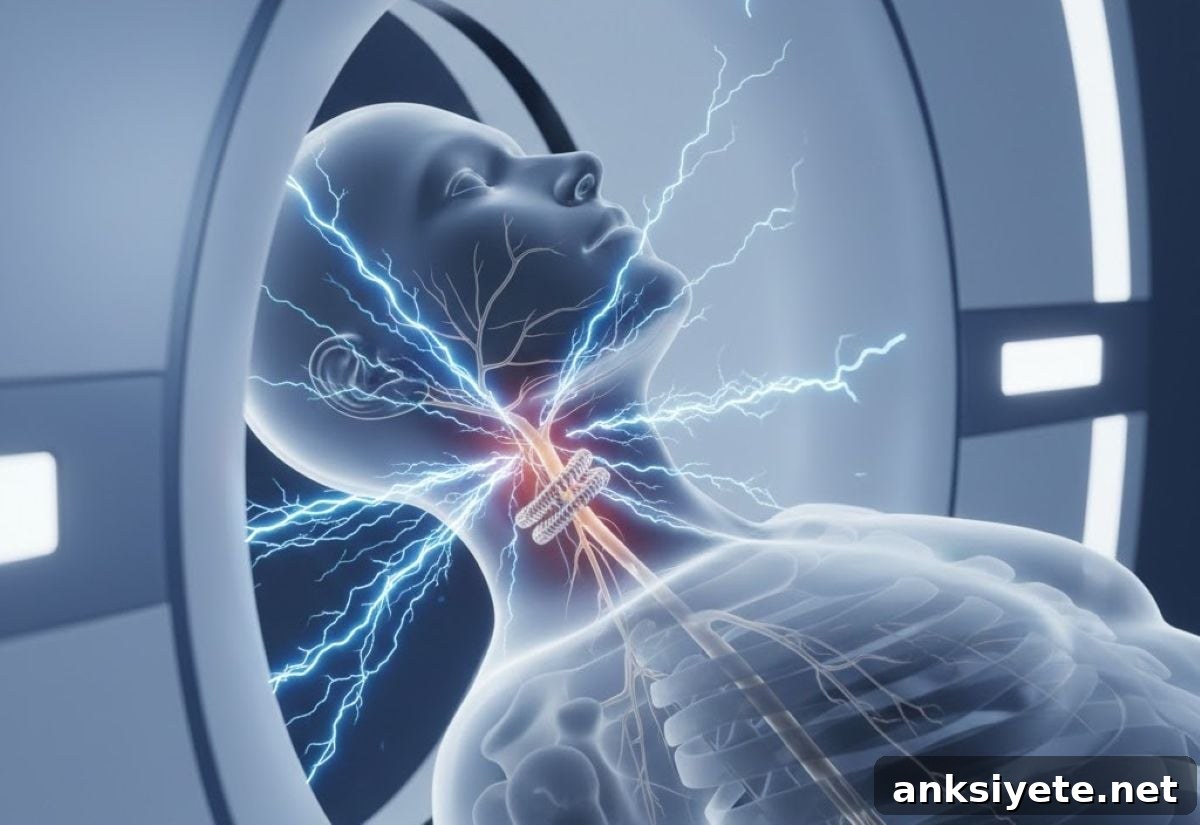
MRI Can Trigger Unexpected Shocks in Nerve Implants
featured 114935

Summary: A new study warns that metallic cuff electrodes implanted around peripheral nerves—commonly used to treat epilepsy, depression and inflammatory conditions—can interact with MRI fields and unintentionally stimulate nerves during a scan. The research shows that both fast-switching gradient fields and radiofrequency (RF) heating can lower the electrical threshold needed to activate a nerve, increasing … Read more
How Neurons Use RNA Tentacles to Survive Starvation

featured 114931

Summary: Neurons and other animal cells demand a lot of energy. New research reveals an elegant survival strategy: when nutrients or temperature conditions become unfavorable, cells pair their ribosomes—the molecular machines that make proteins—into inactive complexes called disomes to conserve energy. Unlike bacteria, which use proteins to link ribosomes together, animal cells rely on long, … Read more

How the Brain May Store Seizures as Memories

featured 114927

Summary: New research suggests the brain may unintentionally treat seizures like important memories. After a seizure, the brain can enter a deep-sleep state that resembles memory consolidation. This seizure-related consolidation appears to strengthen the same neural pathways that produced the seizure, effectively “teaching” the brain to repeat the event and promoting progression of epilepsy. The … Read more

How Chatbots Can Exacerbate Delusions and Mania

featured 114923

Summary: While AI chatbots can boost productivity for many users, a new study warns they may harm people with severe mental illness by reinforcing harmful beliefs. Researchers found evidence that conversational AI systems, including popular chatbots, can worsen psychiatric symptoms such as delusions, mania, and suicidal thoughts when they validate or elaborate on a user’s … Read more

How Expertise Lowers Your Risk of Cognitive Decline

featured 114919

Summary: Can a hobby such as birdwatching physically reshape the brain? A new study suggests it can. Researchers who compared expert birders with beginners found that experts show measurable structural changes in brain regions involved in attention and visual perception. These changes—appearing as greater microstructural compactness—correlated with superior accuracy in identifying birds and persisted into … Read more

Beyond Dopamine: Emerging Schizophrenia Treatments

featured 114915

Summary: For decades, schizophrenia treatment has relied mainly on drugs that target dopamine, but these medications often fail to relieve the disorder’s most disabling cognitive and negative symptoms. A recent comprehensive review synthesizes advances in neurobiology and charts a path toward a new generation of therapies that aim to address underlying mechanisms rather than only … Read more

How Tumors Hijack the Brain to Silence T Cells

featured 114903

Summary: Recent research uncovers a sophisticated survival strategy used by some tumors: they recruit the nervous system to suppress the immune response. A landmark study shows that tumors can activate a neural signaling pathway that instructs the brain to release stress hormones such as glucocorticoids. These hormones blunt the activity of T cells that would … Read more

Prenatal Lead Exposure Linked to Accelerated Brain Aging

featured 114899

Summary: New research shows that prenatal lead exposure can have measurable effects on cognitive performance more than six decades later. A study linking lead levels measured in baby teeth to cognitive test scores at age 60+ found especially strong associations for women, with second-trimester exposure tied to declines comparable to several years of additional brain … Read more

Most People Can’t Spot AI-Generated Faces

featured 114895

Summary: If you believe you can reliably spot an AI-generated face by sight alone, recent research suggests you are likely overconfident — and potentially at risk. A new study shows that humans, including those with exceptional face-recognition ability, are frequently deceived by the most advanced face-generation systems. Even so-called “super-recognisers” — people with a rare, … Read more

Can Infant Sleep Patterns Predict Autism Traits?

featured 114891

Summary: Infants who show high sensory sensitivity—an early trait often associated with autism—may struggle to reach the deepest, most restorative stages of sleep. New research measuring brain activity during naps finds that although these babies spend a similar amount of time in deep sleep as other infants, the slow brain waves that indicate restorative sleep … Read more