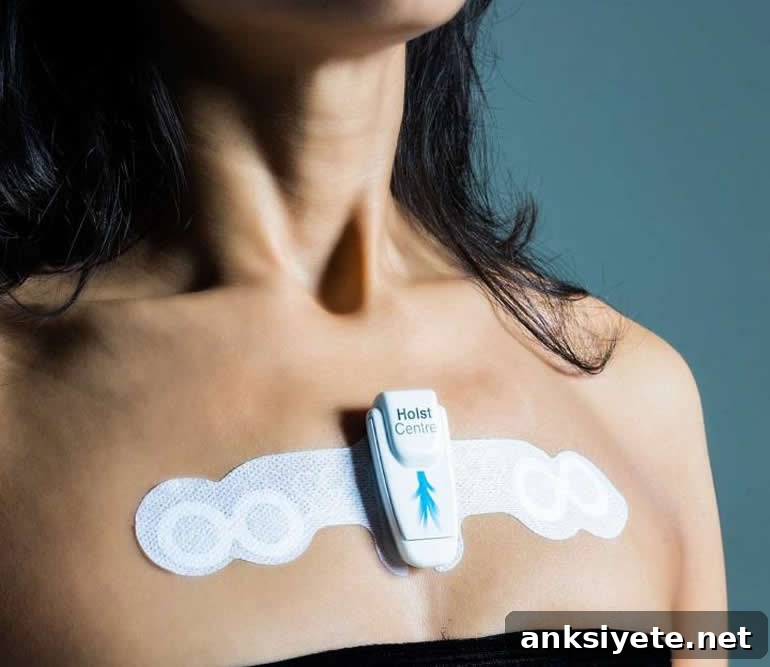
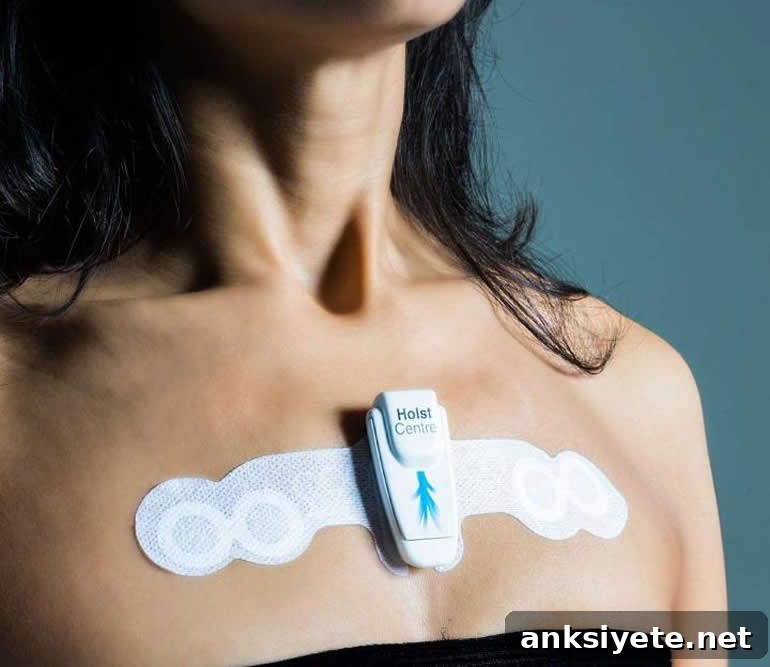
Summary: By measuring changes in heart rate continuously over 24 hours, researchers can predict current depressive symptoms with about 90% accuracy.
Source: European College of Neuropsychopharmacology
For the first time, clinicians have shown that continuous 24-hour heart-rate monitoring can reliably indicate whether someone is currently experiencing depression. In practical terms, this approach could provide an objective early warning of emerging depression and offer a rapid measure of treatment response, enabling more timely and tailored care. Presenting results from this pilot study at the ECNP virtual congress, lead researcher Dr. Carmen Schiweck (Goethe University, Frankfurt) summarized the findings: “Our pilot study suggests that by measuring heart rate for 24 hours, we can determine with roughly 90% accuracy whether a person is depressed.”
Previous research has linked heart rate and heart-rate variability to mood disorders, but the relationship has been hard to clarify because heart-rate changes can occur quickly while depression typically shifts over weeks to months. That mismatch in time scales has made it difficult to connect mood changes to concurrent physiological signals. This study combined continuous multi-day monitoring with a fast-acting antidepressant to bridge that gap.
“Two key innovations in our study were continuous ambulatory heart-rate recording over several days and nights, and using ketamine, an antidepressant with very rapid effects,” said Dr. Schiweck. “That combination allowed us to observe sudden shifts in resting heart rate that coincided with rapid changes in mood.”
Ketamine is known both as an anesthetic and as a drug of misuse. In recent years it has been approved for treating major depressive disorder due to its rapid antidepressant action, often producing noticeable improvements within hours or even minutes—far faster than conventional antidepressants, which may take weeks.
Dr. Schiweck explained: “Earlier studies reported higher average heart rates and lower heart-rate variability in depressed patients, but it was unclear whether these measures had clinical utility because standard treatments act slowly. Because ketamine produces quick mood improvements, we were able to test whether heart-rate measures change in step with mood.”
The study was conducted by the Mind Body Research group at KU Leuven, Belgium, with Dr. Stephan Claes as principal investigator. The team enrolled 16 patients diagnosed with Major Depressive Disorder who had not responded to typical treatments, alongside 16 healthy control participants. All volunteers wore a mini-ECG device and had their heart rate recorded continuously for four days and three nights. After this baseline period, the patients received either ketamine or a placebo.
As expected, the depressed group began with a higher resting heart rate and reduced heart-rate variability compared with controls. On average, resting heart rate in the depressed group was about 10–15 beats per minute higher than in healthy participants. Following treatment, heart-rate metrics in patients who improved shifted toward the range seen in controls.
The most notable outcome was that 24-hour heart-rate data, analyzed with machine learning, served as an effective biomarker to distinguish depressed patients from healthy controls. Wearable mini-ECG recordings were fed into an artificial intelligence model that correctly classified nearly all participants as depressed or non-depressed based on their 24-hour heart-rate patterns.
“Normally, heart rate is higher during daytime activity and drops at night during sleep,” Dr. Schiweck noted. “In depression that nighttime decline appears blunted, and this disrupted day-night rhythm may help identify people at risk of developing depression or relapsing.”
The researchers also observed that patients with higher baseline resting heart rates were more likely to respond to ketamine, suggesting heart-rate profiling could help match patients to treatments in the future.
Dr. Schiweck emphasized the preliminary nature of the results: “This is a small proof-of-concept trial. Six of the 16 patients showed a clinically meaningful response—defined here as at least a 30% reduction on the Hamilton Depression Rating Scale—so larger studies with antidepressant-free samples are needed. Our next step is longitudinal follow-up of depressed patients and those in remission to confirm whether heart-rate changes can serve as an early warning system.”
Commenting on the study, Professor Brenda Penninx of the Department of Psychiatry at Amsterdam University Medical Centre noted the study’s novelty and the value of extended ambulatory monitoring: “This is an innovative proof-of-concept study. My group previously examined short-term heart-rate variability in over a thousand depressed patients and controls and did not find a consistent differentiation, with antidepressant medication affecting variability more than depression status itself. Continuous monitoring over several days and nights provides unique daytime and nighttime information on autonomic function. These findings now need replication in larger and more diverse clinical settings.”
Professor Penninx was not involved in this research; her remarks are an independent expert comment.
Funding: The research was supported by a TGO-IWT Grant from Belgium. KU Leuven collaborated with imec on the heart-monitoring technology, and imec did not provide funding for the study.
About this psychology research article
Source:
European College of Neuropsychopharmacology
Contacts:
Press Office – European College of Neuropsychopharmacology
Image Source:
Image credited to IMEC.
Original Research:
Findings presented at the ECNP virtual congress.