
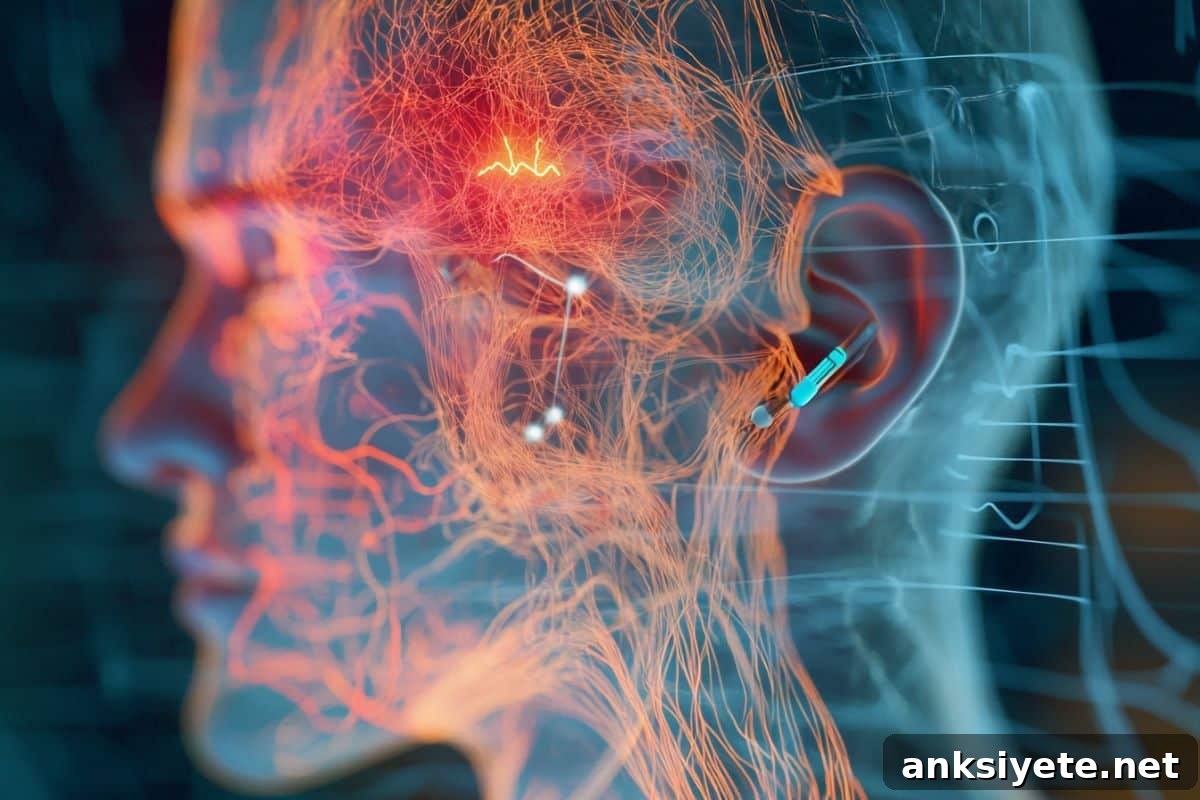
Summary: Synchronizing vagus nerve stimulation with the body’s natural rhythms—specifically the heartbeat and breathing—substantially improves therapeutic effectiveness. This non-invasive “electric pill” approach uses small ear-mounted electrodes to activate the auricular branch of the vagus nerve and may reduce chronic pain, inflammation, and other conditions by enhancing parasympathetic activity.
Researchers report the strongest results when stimulation is delivered during the heart’s contraction phase (systole) and during inhalation. These findings indicate that adapting stimulation to each person’s moment-to-moment physiological rhythms can make auricular vagus nerve stimulation (aVNS) more effective—potentially helping patients who did not respond to prior treatments.
Key Facts:
- Timing matters: Stimulation timed to systole and inhalation shows the greatest effect.
- Personalized therapy: Aligning stimulation with individual cardiorespiratory rhythms may increase success rates.
- Non-invasive option: Ear-based electrodes offer a targeted, gentle way to modulate autonomic function for chronic condition management.
Source: Vienna University of Technology
Not every condition requires medication. Some chronic problems—from persistent pain and inflammation to certain neurological disorders—can be addressed by neuromodulation. One practical method places small electrodes in the ear to stimulate the vagus nerve, leveraging its broad influence over internal organs, heart rate, and inflammatory pathways.
This ear-applied stimulation technique is often described as an “electric pill” because it provides a minimally invasive, device-based route to influence the parasympathetic nervous system.
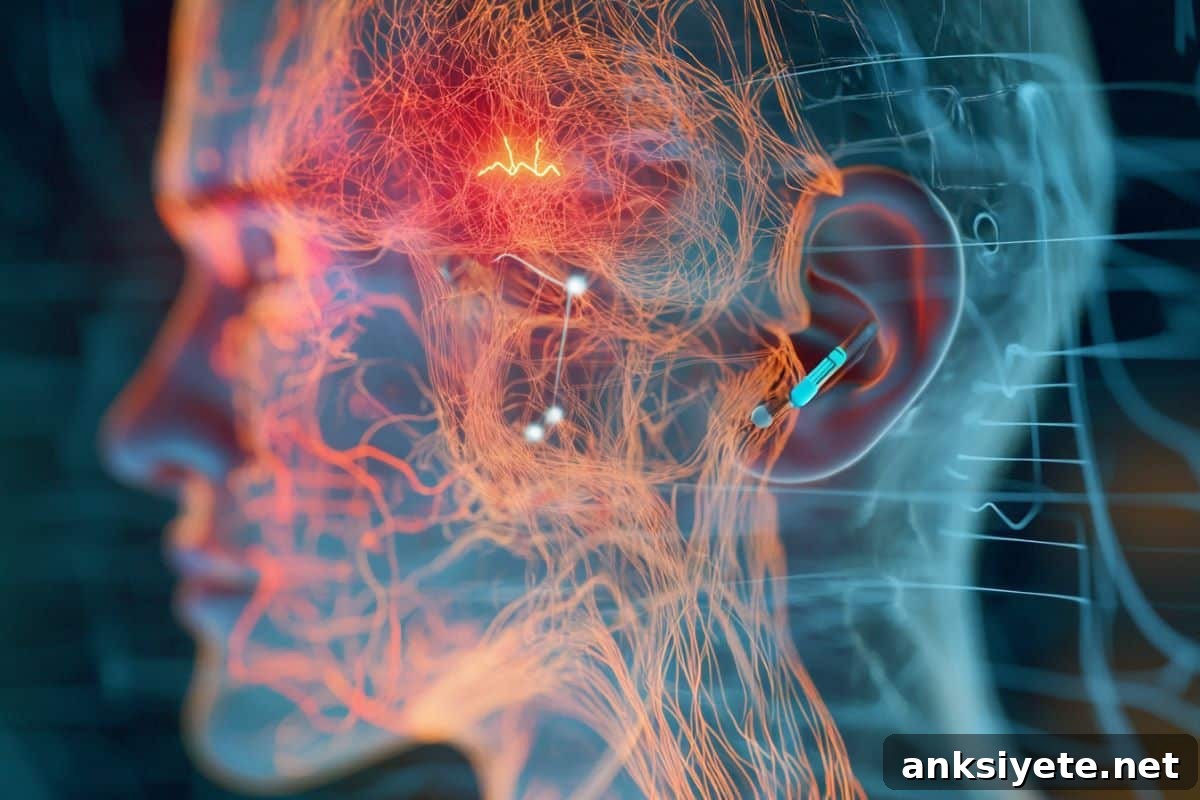
Despite promising potential, vagus nerve stimulation does not always produce consistent effects. A collaborative study by TU Wien and the Vienna Private Clinic shows that synchronizing stimulation with the body’s own heartbeat and breathing rhythms can markedly improve outcomes. The experiments indicate that when aVNS is timed to those natural physiological cycles, its impact on heart rate and autonomic modulation becomes much stronger.
The “electric pill” for the parasympathetic nervous system
The vagus nerve is the longest nerve of the parasympathetic nervous system, central to regulating internal organs, circulation, and recovery processes. Because a branch of the vagus nerve reaches the outer ear, small electrodes placed on the ear can activate afferent vagal pathways, influence brain centers, and thereby affect multiple bodily functions.
“Stimulation does not always produce the expected outcome,” explains Prof. Eugenijus Kaniusas from the Institute of Biomedical Electronics at TU Wien. “The nervous system isn’t equally receptive at every moment. There appears to be a rapidly changing ‘gate’ to the control center that can open and close in fractions of a second.”
In a pilot study of five healthy volunteers, researchers applied auricular vagus nerve stimulation while monitoring heart rate. Prior work had shown heart rate changes can indicate whether stimulation yields beneficial autonomic effects. The new results demonstrate that the exact timing of stimulation relative to the cardiac cycle is crucial: stimulation delivered out of sync with the heartbeat produced minimal effect, whereas stimulation applied during systole produced a pronounced heart-rate deceleration compared with stimulation during diastole.
Breathing phase also influenced outcomes: stimulation during inhalation had notably greater impact than stimulation during exhalation. Together, these findings show that synchronizing aVNS precisely with both heartbeat and respiration enhances cardiovagal modulation and the overall effectiveness of the therapy.
“Our results indicate that timing aVNS to the heartbeat and breathing rhythm significantly increases its potency,” says Eugenijus Kaniusas. “This approach could make treatment more successful for patients who previously saw little benefit.”
Plans for larger clinical studies
If stimulation devices can be programmed to adapt in real time to a person’s individualized cardiorespiratory patterns, clinicians may obtain more reliable therapeutic responses than with fixed, open-loop stimulation. Future research will need to test this personalized, time-gated approach in larger and clinically relevant patient groups and refine algorithms to optimize stimulation timing for individual needs.
“This technology has the potential to be an effective and non-invasive way to modulate the autonomic nervous system in a targeted, gentle manner,” says Dr. Joszef Constantin Szeles of the Vienna Private Clinic. “It could represent an important advance in neuromodulatory treatments for chronic diseases.”
About this neuroscience and neurotech research news
Author: Florian Aigner
Source: Vienna University of Technology
Contact: Florian Aigner – Vienna University of Technology
Image: The image is credited to Neuroscience News
Original Research: Open access.
“Personalized auricular vagus nerve stimulation: beat-to-beat deceleration dominates in systole-gated stimulation during inspiration – a pilot study” by Joszef Constantin Szeles et al., Frontiers in Physiology
Abstract
Personalized auricular vagus nerve stimulation: beat-to-beat deceleration dominates in systole-gated stimulation during inspiration – a pilot study
Neuromodulation is emerging as a non-pharmacological therapy that targets the vagus nerve to rebalance autonomic function. Auricular vagus nerve stimulation (aVNS) aims to restore sympathovagal balance and recruit parasympathetic, anti-inflammatory pathways to treat chronic disease. However, current aVNS approaches can produce inconsistent over- or under-stimulation, limiting therapeutic efficacy.
This pilot study explores a personalized, time-gated form of aVNS that synchronizes stimulation with ongoing cardiorespiratory rhythms. The investigators assessed how cardiac-gated stimulation affects instant beat-to-beat intervals (RR intervals), a direct readout of cardiovagal influence because the stimulated afferent vagus nerve modulates efferent cardiac pathways.
Five healthy participants each completed two 25-minute sessions with sequences of non-gated and gated aVNS modes. The protocol compared open-loop aVNS with systole-gated and diastole-gated closed-loop stimulation. RR interval changes were analyzed relative to the immediately preceding beat and evaluated as a function of the personalized stimulation onset angle measured from the R peak. The role of respiratory phase was included to assess cardiovagal modulation during inspiration versus expiration.
Results indicate that systole-gated aVNS tends to prolong RR intervals when stimulation occurs after the R peak and shorten them when delivered before the R peak. For diastole-gated stimulation, later stimulation onset within the diastolic window tended to lengthen the subsequent RR interval. Overall, RR prolongation increased with stimulation angle and then leveled off as the delay from the stimulated beat grew.
The slope of RR prolongation was steeper for systole-gated versus diastole-gated aVNS, and inspiratory systole-gated stimulation showed the largest slopes—indicating the greatest cardiovagal modulatory capacity when stimulation is timed to systole during inspiration.
This pilot work demonstrates that personalized, time-gated auricular vagus nerve stimulation can modulate heart rate and parasympathetic activity—effects that are diminished in many chronic conditions—and that modulation is strongest for systole-gated stimulation delivered during inspiration.