
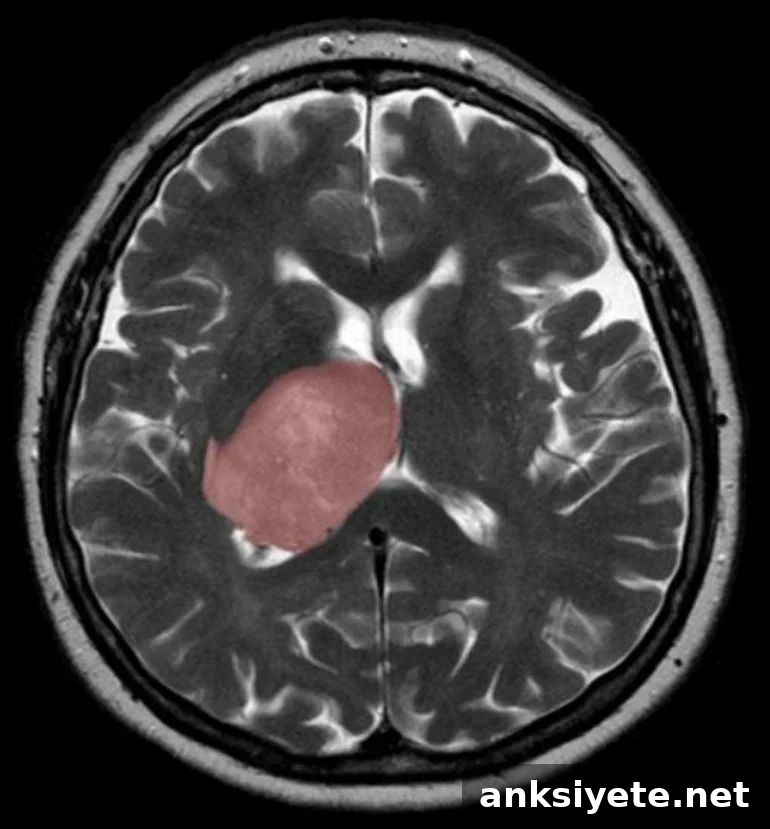
Summary: New research suggests some brain tumours may develop when damaged brain tissue attempts to heal but is derailed by genetic mutations. The study indicates that certain glioblastomas originate when normal repair processes shift into a chronic, inflammation-driven state—possibly years before patients show symptoms.
Source: University of Toronto
Researchers in Toronto report that the brain’s own repair mechanisms can, under certain conditions, be hijacked to fuel tumour growth. When cells mobilized to repair injury—whether caused by trauma, infection, or stroke—acquire specific mutations, they may fail to stop dividing and instead form glioblastoma, an aggressive form of brain cancer.
An interdisciplinary team from the University of Toronto, The Hospital for Sick Children (SickKids), and the Princess Margaret Cancer Centre, part of a pan‑Canadian Dream Team focused on glioblastoma, led this investigation. Their findings, published in the journal Nature Cancer, map molecular features of glioblastoma stem cells (GSCs) and identify an unexpected link between wound‑healing programs and tumour initiation.
“Our data indicate that a specific mutation in the right cell type, combined with the wound‑healing environment, can drive tumour formation,” says Dr. Peter Dirks, Head of the Division of Neurosurgery and Senior Scientist in Developmental and Stem Cell Biology at SickKids and leader of the Dream Team. Co-leaders on the study include Gary Bader, Professor of Molecular Genetics at the Donnelly Centre, and Dr. Trevor Pugh, Senior Scientist at the Princess Margaret.
The team used cutting‑edge single‑cell RNA sequencing and advanced computational analysis to profile nearly 70,000 glioblastoma stem cells isolated from 26 patient tumours. Single‑cell technology allowed the researchers to detect rare cellular states within tumours that bulk measurements had previously missed.
Analysis revealed that GSCs do not exist as a single uniform population. Instead, they distribute along a transcriptional gradient between two dominant states: a Developmental state that resembles rapidly dividing neural stem cells seen during brain development, and an Injury Response state characterized by activation of immune and inflammation pathways—markers typical of wound healing such as interferon and TNF‑alpha signaling.
The discovery of an Injury Response state provides a new perspective on glioblastoma heterogeneity. In this model, a mutated cell recruited into the normal repair process becomes trapped in a perpetual healing program. With normal growth controls broken, that cell continues to proliferate and seed tumour growth. Because each glioblastoma contains multiple molecularly distinct GSC subpopulations, current therapies often fail to eradicate all tumour subclones, contributing to recurrence.
Complementary functional studies, including genome‑wide CRISPR–Cas9 knockout screens led by Stephane Angers’ lab, validated that the two GSC states depend on different sets of essential genes. The Injury Response state, in particular, revealed vulnerabilities tied to inflammation and immune signaling that had not been prioritized as therapeutic targets for glioblastoma.
Importantly, the proportion of cells in each state varies by patient: some tumours are skewed toward the developmental end of the gradient, others toward the injury‑response end, and many exist along a continuum between these extremes. This patient‑specific bias suggests a path for precision medicine: profiling an individual’s tumour at single‑cell resolution could guide a tailored combination of drugs aimed at eradicating multiple GSC subclones simultaneously.
“The aim is to find drugs that selectively eliminate glioblastoma stem cells,” says Gary Bader. “First we had to define the molecular identity of these cells so we can target them effectively.” Professor Trevor Pugh adds that the study opens opportunities to screen for agents active at different points along the developmental–injury gradient and to design therapeutic cocktails that address tumour heterogeneity.
These findings offer a new conceptual framework for how glioblastomas may arise and persist: as a derailed neural wound‑healing response driven by mutated stem cells. That framework points to inflammation and injury‑response pathways as promising avenues for new treatments to improve outcomes for glioblastoma patients, who currently face limited options and short median survival after diagnosis.
About this brain cancer research news
Source: University of Toronto
Contact: Jovana Drinjakovic – University of Toronto
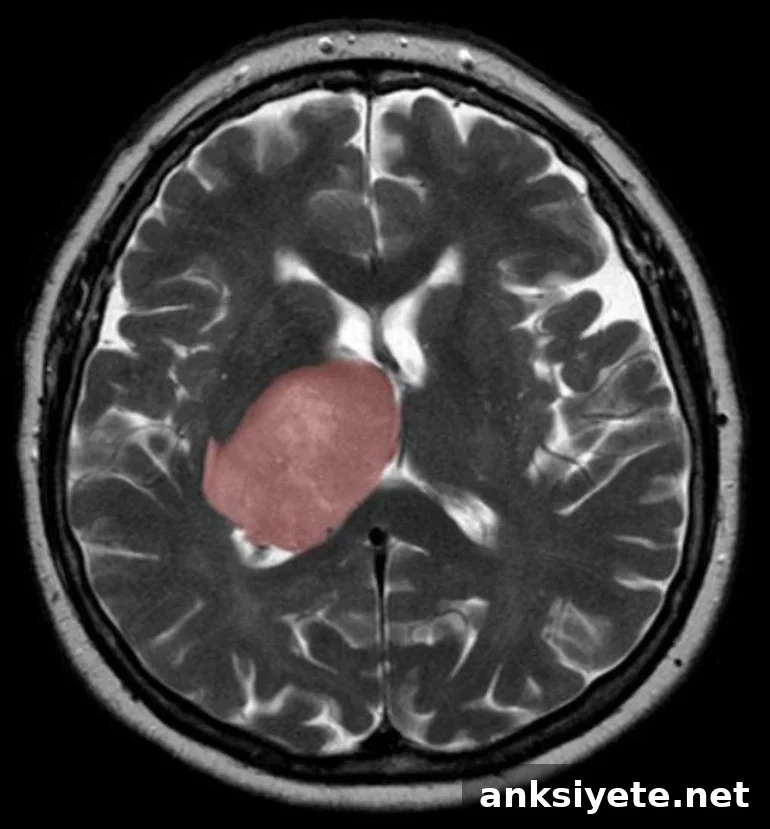
Image: The image is credited to Hellerhoff, Wikimedia Commons
Original Research: Closed access. Article: “Gradient of Developmental and Injury Response transcriptional states defines functional vulnerabilities underpinning glioblastoma heterogeneity” by Laura M. Richards, Owen K. N. Whitley, Graham MacLeod, Florence M. G. Cavalli, Fiona J. Coutinho, Julia E. Jaramillo, Nataliia Svergun, Mazdak Riverin, Danielle C. Croucher, Michelle Kushida, Kenny Yu, Paul Guilhamon, Naghmeh Rastegar, Moloud Ahmadi, Jasmine K. Bhatti, Danielle A. Bozek, Naijin Li, Lilian Lee, Clare Che, Erika Luis, Nicole I. Park, Zhiyu Xu, Troy Ketela, Richard A. Moore, Marco A. Marra, Julian Spears, Michael D. Cusimano, Sunit Das, Mark Bernstein, Benjamin Haibe-Kains, Mathieu Lupien, H. Artee Luchman, Samuel Weiss, Stephane Angers, Peter B. Dirks, Gary D. Bader & Trevor J. Pugh. Published in Nature Cancer.
Abstract
Gradient of Developmental and Injury Response transcriptional states defines functional vulnerabilities underpinning glioblastoma heterogeneity
Glioblastomas contain diverse cell populations, including rare glioblastoma stem cells (GSCs) that drive tumor growth and recurrence. To explore functional diversity within GSCs, the researchers performed single‑cell RNA sequencing on more than 69,000 GSCs cultured from tumours of 26 patients. The analysis uncovered extensive transcriptional heterogeneity not solely explained by DNA somatic mutations. Instead, GSCs mapped along a transcriptional gradient between two states resembling normal neural development and an inflammatory wound response. Independent genome‑wide CRISPR–Cas9 dropout screens reproduced this observation, identifying distinct essential genes for each state. Further single‑cell profiling of over 56,000 malignant cells from primary tumours showed organization along an astrocyte maturation gradient while retaining founder GSC programs. These results support a model in which glioblastomas expand from a GSC‑based neural wound‑response program, highlighting new inflammation‑linked vulnerabilities for therapeutic development.