
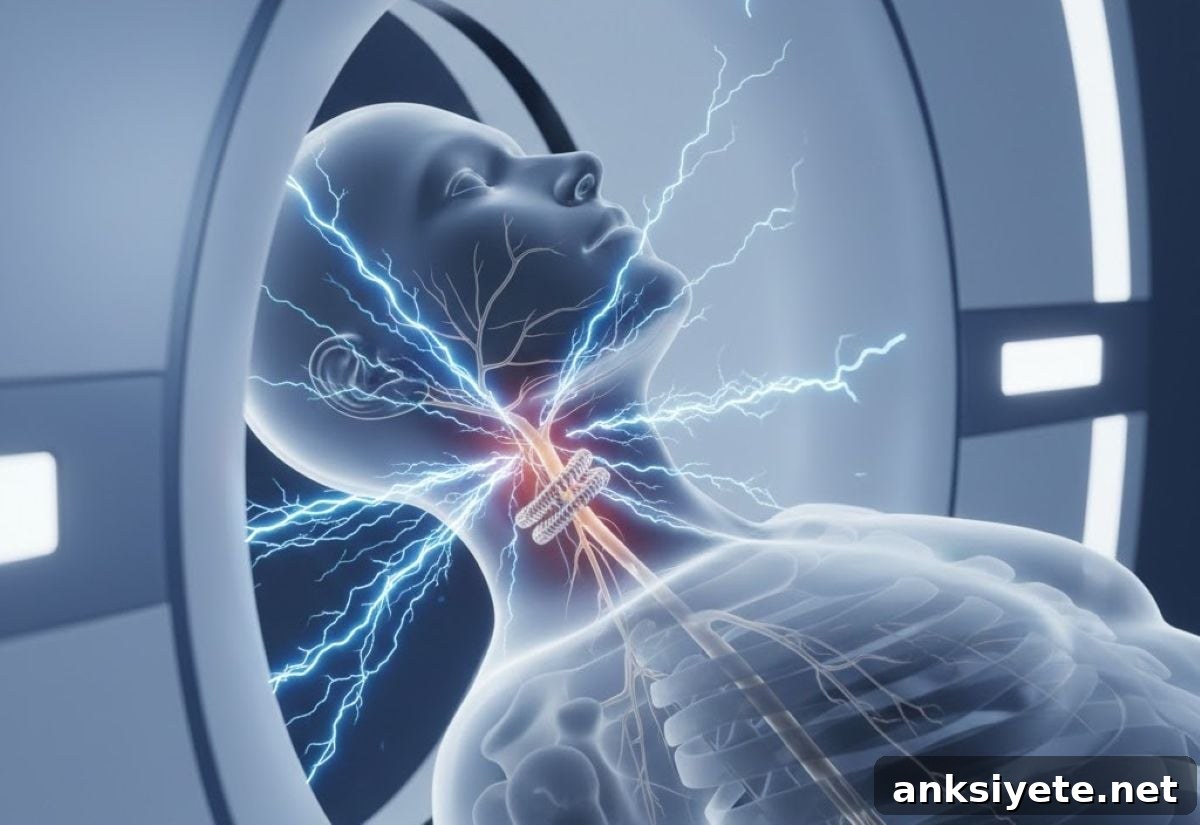
Summary: A new study warns that metallic cuff electrodes implanted around peripheral nerves—commonly used to treat epilepsy, depression and inflammatory conditions—can interact with MRI fields and unintentionally stimulate nerves during a scan. The research shows that both fast-switching gradient fields and radiofrequency (RF) heating can lower the electrical threshold needed to activate a nerve, increasing the risk of discomfort or pain for patients with these implants.
As bioelectronic implants become more common, understanding how medical imaging environments affect implanted devices is essential. This study highlights potential safety gaps in current MRI guidelines for people with implanted cuff electrodes, particularly vagus nerve stimulators, and calls for updated testing and design strategies to reduce risk.
Key Points
- Unintended nerve activation: Gradient magnetic fields used in MRI can induce electrical currents near metallic cuff electrodes and trigger nerve responses that are not part of therapeutic stimulation.
- Lowered activation threshold: The presence of a cuff electrode reduces the minimum electrical level needed to make a nerve fire, which means standard MRI exposures could be enough to elicit sensations or pain in some patients.
- RF heating amplifies the effect: Heating caused by RF fields during MRI further lowers the activation threshold, especially for brief, high-intensity pulses typical of high-resolution imaging.
- Devices and patients affected: The findings are most relevant to cuff electrodes placed around the vagus nerve, a common target for managing chronic neurological and psychiatric conditions.
- Need for updated safety guidance: Researchers recommend revising MRI safety assessments to include a wider range of body models, implantation paths and imaging polarizations so rules reflect real-world implant variability.
Source: University of Houston
Overview
Ji Chen, a professor of electrical and computer engineering at the University of Houston, led the research using detailed electromagnetic, thermal and neurophysiological simulations to evaluate how MRI fields interact with cuff electrodes sitting near nerve bundles. The simulations focused on two principal MRI emissions: gradient coil–induced electric fields and radiofrequency coil–induced heating. Together, these mechanisms can change the conditions for neural activation around an implanted device.
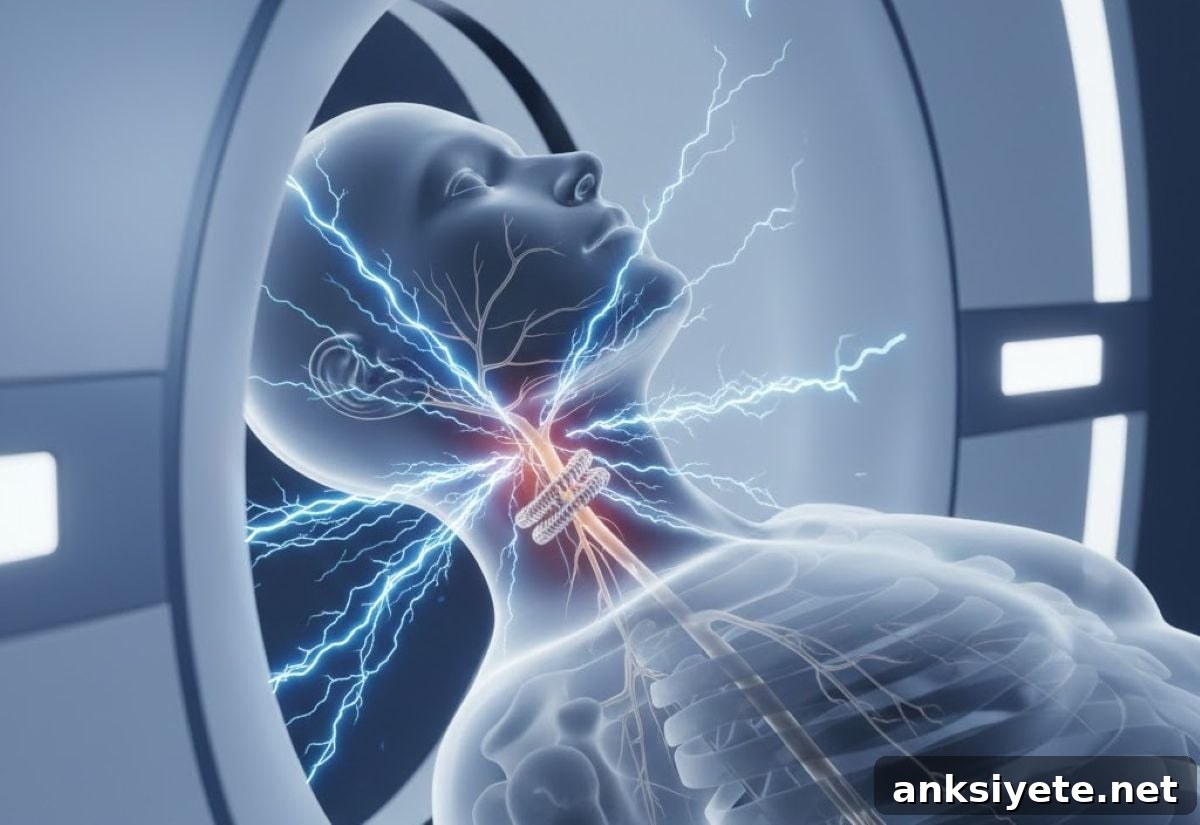
Chen explains that the combined effects of gradient and RF fields can meaningfully reduce the activation threshold of nearby nerves. In practical terms, currents induced by gradient switching and local tissue heating due to RF energy can make it easier for a nerve to be stimulated unintentionally. Although MRI-conditional implants exist, this study suggests that those safety margins may not fully account for current cuff electrode designs and implantation variations.
The researchers emphasize these results are drawn from simulation studies and should be interpreted as preliminary evidence of a potential safety concern. They call for additional experimental validation and broader safety assessments that reflect diversity in human anatomy, implant routing and scanner configurations.
Implications for Patients and Clinicians
Patients with implanted neurostimulation devices should not interpret this study as an absolute ban on MRI. Instead, it is a caution that safety evaluation should be individualized. Radiologists and neurologists should communicate closely before scheduling MRI scans for patients with cuff electrodes, verify device labeling and MRI-conditional status, and consider tailored scan protocols to minimize gradient and RF exposure where possible.
Clinicians should also be aware that unintended stimulation might present as sudden sharp sensations, involuntary muscle twitching, or localized pain during scanning. If any unusual sensations occur, the scan should be paused and the patient evaluated promptly.
Research Directions and Mitigation
To address these risks, Chen’s team is developing new electrode designs and mitigation strategies aimed at reducing interactions between MRI fields and implanted cuffs. The researchers recommend updated testing standards that include a range of human body models, various implantation trajectories and different MRI polarizations. Such broadened testing will help ensure safety across patient populations and scanner types.
Key Questions
A: The study serves as a warning to clinicians and device designers rather than an outright prohibition. MRI-conditional implants are available, but safety margins may vary. Always consult your neurologist and radiologist before undergoing a scan.
Q: Does the implant actually “shock” the patient?
A: MRI fields do not deliver a deliberate electrical shock through the device. Instead, they can induce currents in the tissue near a metal cuff that mimic electrical stimulation and cause sensations such as sharp pain or twitching.
Q: Are scientists working on a fix?
A: Yes. The University of Houston team and other researchers are pursuing improved electrode designs and testing methods to minimize MRI interactions and make future implants more compatible with modern MRI systems.
Editorial Notes
- This article was edited by a Neuroscience News editor.
- The cited journal paper was reviewed in full by the reporting team.
- Additional context was added by editorial staff to explain clinical and safety implications.
About this neurotech research news
Author: Laurie Fickman
Source: University of Houston
Contact: Laurie Fickman – University of Houston
Image: The image is credited to Neuroscience News
Original Research: Open access. “Unintended Vagus Nerve Stimulation From Cuff Electrode During MRI: Combined Effects of Gradient and Radiofrequency Fields” by Lijian Yang, Xiaolin Yang, Ao Shen, Mir Khadiza Akter, Hui Ye, Norbert Kaula, Jianfeng Zheng and Ji Chen. Magnetic Resonance in Medicine. DOI: 10.1002/mrm.70261
Abstract
Unintended Vagus Nerve Stimulation From Cuff Electrode During MRI: Combined Effects of Gradient and Radiofrequency Fields
Purpose
This study examines how MRI emissions—specifically gradient coil–induced electric fields and radiofrequency coil–induced heating—can alter neural activation near implanted cuff electrodes, with a focus on the vagus nerve.
Methods
The authors used electromagnetic, thermal and neurophysiological simulations to quantify nerve activation thresholds under MRI-induced fields. The work evaluated both gradient field exposure and RF-induced heating, paying particular attention to short, trapezoidal gradient pulses common in modern imaging protocols.
Results
Simulations indicate that cuff electrodes can significantly lower the activation threshold under gradient field exposure. RF-induced heating further decreases this threshold for short-duration stimulations. In some simulated scenarios, the neuron activation threshold fell below peripheral nerve stimulation limits referenced in existing MRI safety standards.
Conclusion
These findings point to a potential risk of unintended vagus nerve stimulation during MRI for patients with cuff electrode implants. The study underscores the need for more comprehensive safety evaluations, updated guidance for MRI compatibility testing, and improved implant designs to protect patients during imaging.