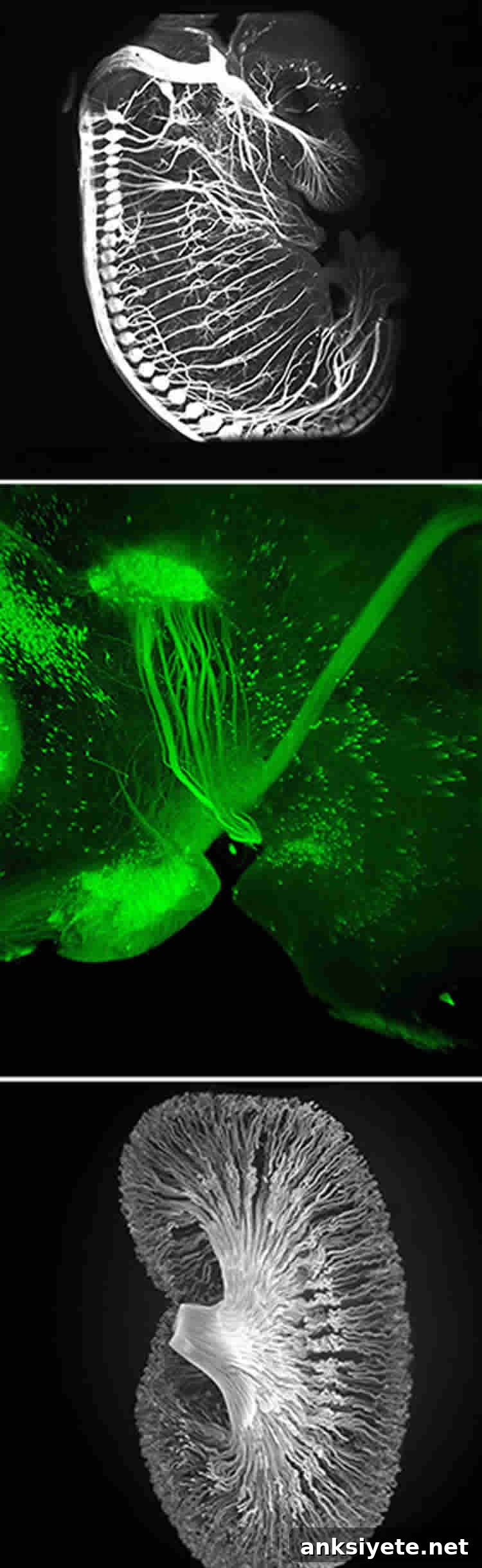
How a Heart-to-Brain Genetic Pathway Causes Fainting
Summary: Researchers have identified a genetic pathway linking the heart and brain that explains why people faint. By treating the heart as…
Topic
Topics
Summary: Researchers have identified a genetic pathway linking the heart and brain that explains why people faint. By treating the heart as…
Summary: Can an organism without any nerve cells — no neurons, no brain — still learn? New research shows that the giant…
An international research team has identified a previously unknown neurodegenerative disorder and traced its origin to a single mutation carried by an…
Summary: A new study identifies two distinct neural circuits that govern whether an animal approaches or avoids social interaction. Reduced activity in…
Summary: Researchers explain how the language we speak and our cultural experiences can shape the way we perceive color. Source: The Conversation.…
Summary: People who are more accurate at reading another person’s emotions also tend to be better at interpreting the emotions musicians communicate…
Summary: Researchers have mapped how specific brain circuits process empathy, demonstrating that observing another’s pain engages many of the same neural pathways…
Summary: The MeCP2 gene regulates key molecular and synaptic mechanisms that shape ketamine’s long-term antidepressant effects, enhancing synaptic strength and plasticity and…
Summary: Trained musicians demonstrated stronger ability to predict rhythmic patterns than non-musicians. Differences between musicians trained in Japanese classical music and those…
The brain is astonishingly complex, containing roughly 86 billion nerve cells. Reproducing lab-grown brain tissue that faithfully reflects this complexity remains a…
Readers are exploring