
Summary: Trained musicians demonstrated stronger ability to predict rhythmic patterns than non-musicians. Differences between musicians trained in Japanese classical music and those trained in Western classical music were present but more subtle.
Source: University of Tokyo
Researchers at the University of Tokyo compared brain responses in Japanese classical musicians, Western classical musicians, and nonmusicians to explore how different musical training shapes the brain’s ability to learn and predict rhythms. Participants were exposed to unfamiliar rhythmic and nonrhythmic sequences while their brain activity was recorded. The study found that musical training enhances auditory statistical learning of rhythm compared with no training, and that training in different musical traditions produces nuanced differences in higher-order neural processing.
“Music is ubiquitous and indispensable in our daily lives. It rewards, comforts, and moves us emotionally,” said Project Assistant Professor Tatsuya Daikoku of the International Research Center for Neurointelligence at the University of Tokyo. “While many studies examine Western classical, pop, or jazz traditions, this is the first study to investigate neural mechanisms in practitioners of Japanese classical music, known as gagaku.”
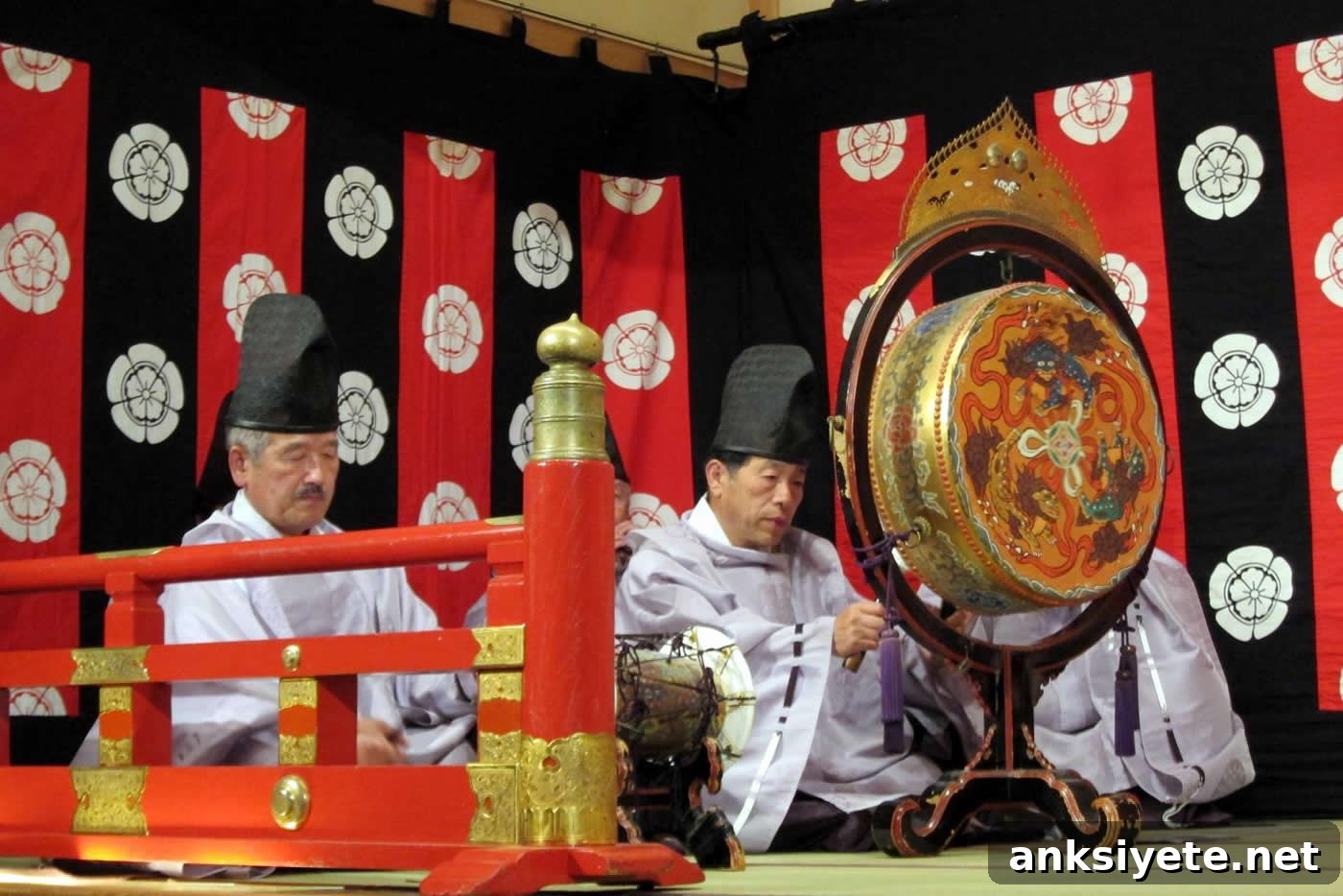
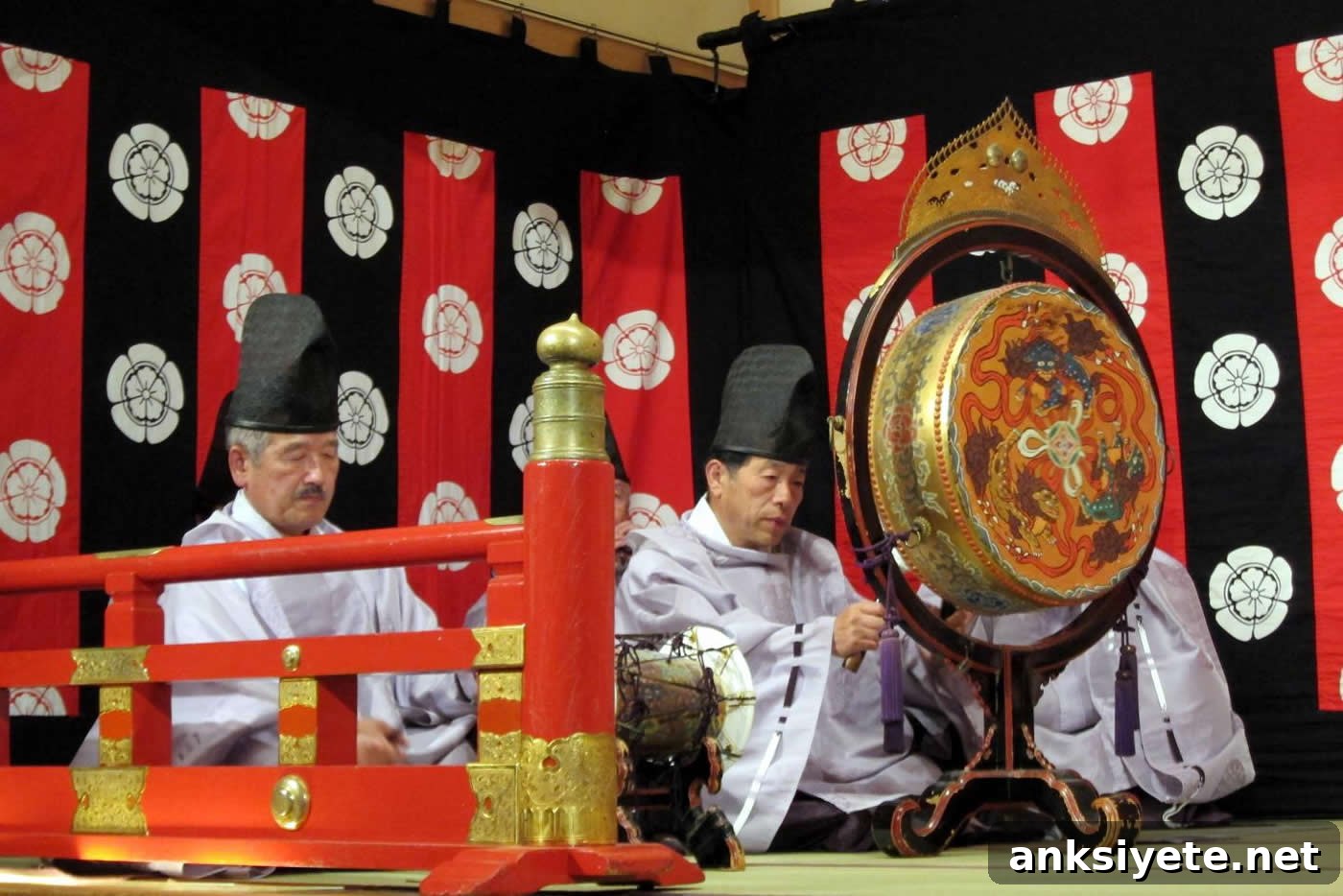
Japanese classical music often differs from Western classical music in its approach to temporal structure. Many traditional Japanese performance forms, such as Noh and Kabuki, incorporate flexible timing that expands or contracts rhythmic intervals without strict mathematical regularity. This sense of timing is often referred to as ma, a culturally significant concept describing the perceptual space between sounds and events.
Daikoku and coauthor Assistant Professor Masato Yumoto from the Graduate School of Medicine designed experiments to probe how musical training influences statistical learning—the brain’s capacity to extract regularities from sequences and to predict upcoming events. Participants included musicians trained in Western classical music, musicians trained in Japanese classical music, and nonmusicians. All listened to sequences with and without a steady beat while researchers measured neural responses.
The team used magnetoencephalography (MEG) to record magnetic brain signals with high temporal precision. Analysis showed that statistical learning of rhythmic sequences was primarily reflected in activity in the left hemisphere. Crucially, musicians—whether trained in Japanese or Western classical styles—showed stronger neural signatures of statistical learning than nonmusicians.
“We anticipated that musicians would show enhanced statistical learning for unfamiliar rhythmic sequences, consistent with previous findings on melody,” Daikoku explained. “That result confirmed our expectations. What surprised us in a productive way was detecting distinct neural response patterns between musicians trained in Japanese versus Western classical traditions.”
Differences between the two groups of musicians were subtle and emerged in higher-order processing of rhythmic complexity rather than in basic accuracy of prediction. The study did not find that one musical tradition produced universally better performance than the other. Instead, the results suggest that cultural background and training methods shape specific neural processing strategies during temporal prediction and uncertainty estimation.
More precisely, the research identified two neural components associated with processing uncertainty and rhythm. An earlier component known as P1 showed left-hemisphere lateralization for perceptive uncertainty in both groups of musicians. A later component, N1, showed left lateralization only in Japanese classical musicians. The findings indicate that different types of musical training may modulate how the brain represents temporal statistical structure, especially regarding global processing of uncertainty rather than local transitional probabilities.
Daikoku emphasized the broader aims of the research: “This study contributes to a larger effort to understand how language and music across cultures shape learning and brain development. We are also exploring music-based approaches to support individuals with developmental disorders such as language impairment. I hope this work encourages greater appreciation for Japanese classical music and prompts more people to explore its rich traditions.”
Funding: This research was supported by the Suntory Foundation, the Kawai Foundation for Sound Technology & Music, and The Kao Foundation for Arts and Sciences. The funders did not influence study design, data collection, analysis, publication decisions, or manuscript preparation.
About this music and neuroscience research article
Source: University of Tokyo
Media contacts: Tatsuya Daikoku – University of Tokyo
Image credit: Wally Gobetz
Original research: “Musical Expertise Facilitates Statistical Learning of Rhythm and the Perceptive Uncertainty: A Cross-cultural Study” by Tatsuya Daikoku and Masato Yumoto. Neuropsychologia. DOI: 10.1016/j.neuropsychologia.2020.107553 (closed access).
Abstract
Musical Expertise Facilitates Statistical Learning of Rhythm and the Perceptive Uncertainty: A Cross-cultural Study
The human brain continuously extracts statistical regularities from sequential information, a process known as statistical learning (SL). SL underpins the development of language and musical perception and functions within predictive coding frameworks that aim to minimize sensory surprise and resolve uncertainty. Prior work has shown that Western classical training sharpens the brain’s probabilistic models for melody and improves perceptual estimates of uncertainty (entropy) for novel sequences. However, effects of musical training on the probabilistic modeling of rhythm—and how those effects vary across musical cultures—had not been fully explored.
This study examined how SL of temporal sequences, both with and without an explicit beat, is manifested in neural responses, and how SL is modulated by Western- and Japanese-classical musical training. MEG recordings revealed that SL effects for beat sequences were prominent in the left hemisphere and were stronger in both groups of trained musicians compared with nonmusicians. Sequence entropy negatively correlated with neural SL effects, primarily in the left hemisphere of both musician groups. These results suggest that musical training generally facilitates SL of rhythm regardless of cultural tradition. At the same time, specific neural components differed by training: the P1 component showed left-lateralized representation of perceptive uncertainty in both musician groups, while the N1 component showed left lateralization only in Japanese classical musicians. These findings indicate that different musical educations modulate neural representations underlying temporal SL, especially in global processing of uncertainty rather than local transitional probabilities, and they offer new neurophysiological insight into Japanese classical music.