
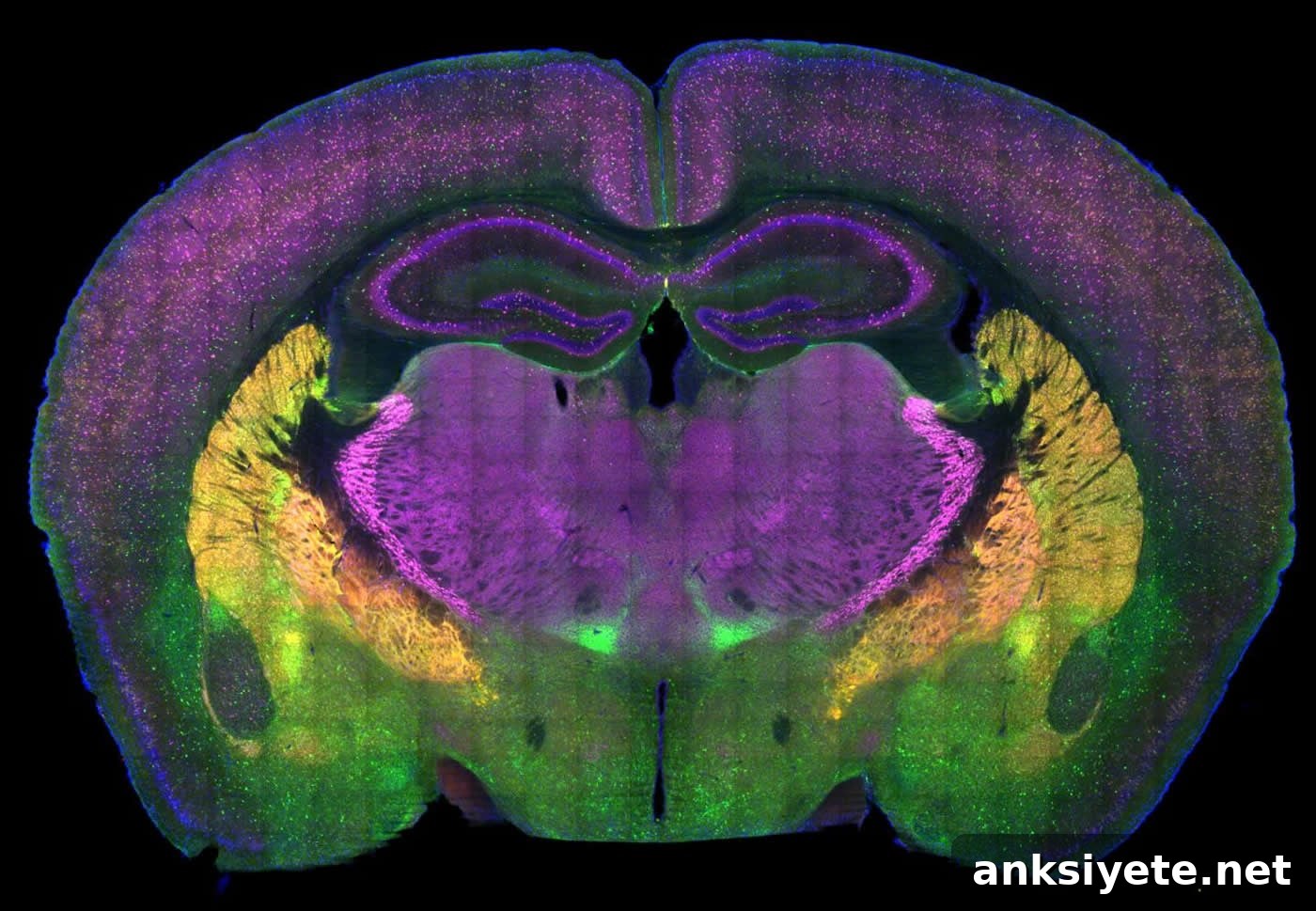
Summary: A new study identifies two distinct neural circuits that govern whether an animal approaches or avoids social interaction. Reduced activity in the infralimbic cortex to basolateral amygdala (IL→BLA) pathway disrupts normal social approach, while increased activity in the prelimbic cortex to basolateral amygdala (PL→BLA) pathway produces a similar social avoidance effect.
Source: Scripps Research Institute
People vary widely in how they respond to unfamiliar social situations: some seek them out, others withdraw. For individuals with conditions such as autism spectrum disorder, an unexpected social encounter can trigger powerful negative emotions like fear and anxiety, prompting avoidance. Research from the laboratory of neuroscientist Damon Page, PhD, at Scripps Research maps two medial prefrontal cortex–amygdala subcircuits that independently influence the decision to approach or avoid social interaction.
Efforts to understand the neural basis of social behavior and its disruption in disorders such as autism and schizophrenia have pointed to multiple brain regions, including parts of the prefrontal cortex involved in planning and decision-making and the amygdala, which processes emotional valence. However, establishing direct causal links between activity in specific pathways and social behavior has proved difficult. This study combines anatomical tracing, chemogenetics, optogenetics and behavioral testing in mice to pinpoint how subpopulations of prefrontal neurons that project to the basolateral amygdala (BLA) shape social preference.
The researchers began by identifying BLA-projecting neurons in two adjacent subdivisions of the medial prefrontal cortex: the infralimbic cortex (IL) and the prelimbic cortex (PL). Using retrograde labeling, they found that IL neurons that send signals to the BLA were more likely to be activated by a social cue than were PL→BLA neurons. To test the functional role of each pathway, the team used chemogenetic tools to either suppress or enhance activity selectively in those projections during social interaction tests.
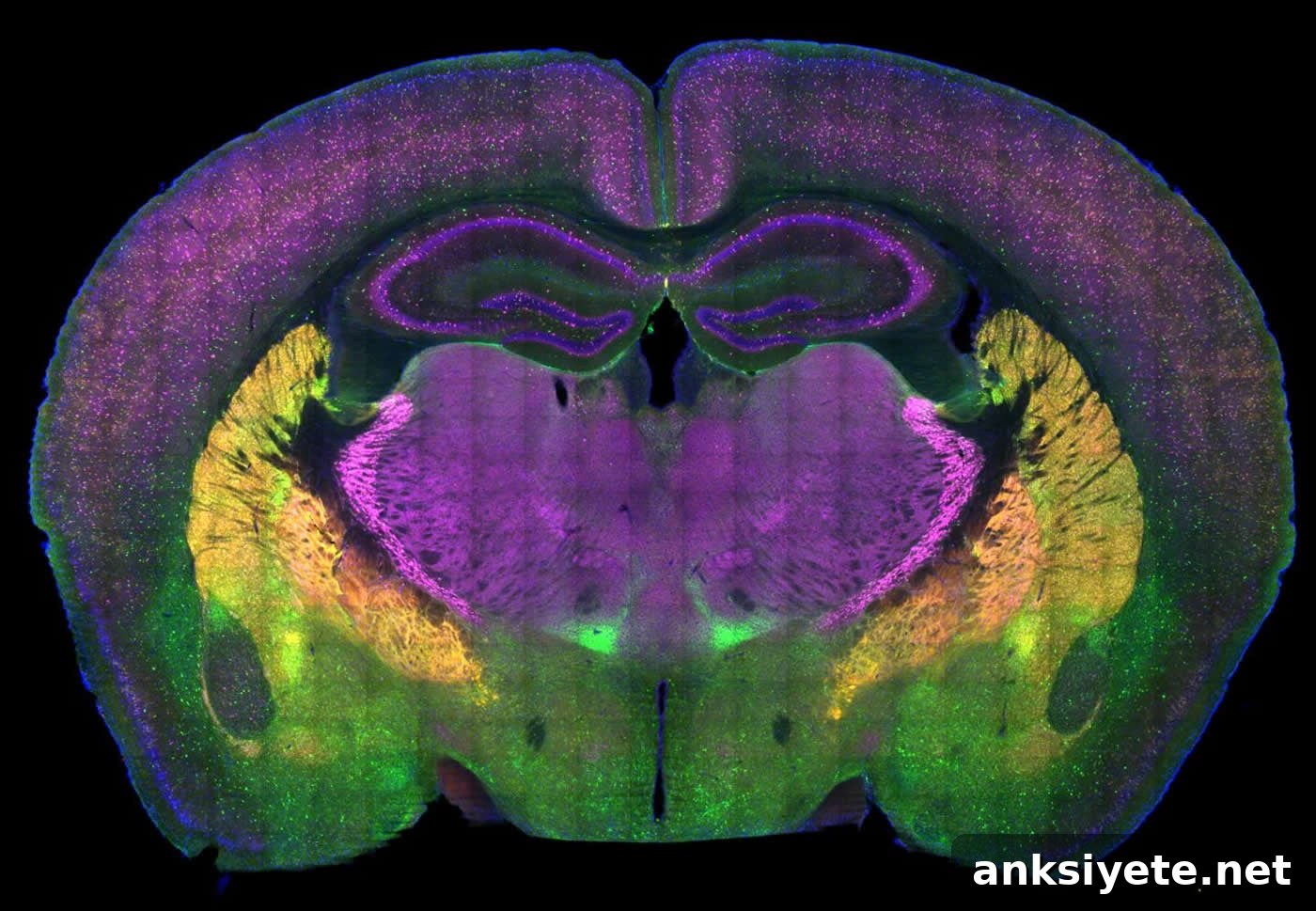
Their results reveal a bidirectional control mechanism: chemogenetic inhibition of the IL→BLA pathway abolished normal social preference, indicating that reduced signaling along this circuit drives social avoidance. In contrast, chemogenetic activation of the PL→BLA pathway also abolished social preference, showing that heightened activity in that pathway can similarly bias animals toward avoidance. Complementary optogenetic experiments provided converging evidence: sustained activation of PL→BLA projections not only produced social deficits but also produced place avoidance, consistent with encoding a negative emotional state. The authors further showed that reactivating PL→BLA neurons that had been engaged by prior aversive experience produced social impairment, linking negative-valence encoding within this pathway to later avoidance of social contact.
Co-first author Aya Zucca emphasizes the translational relevance: both mice and humans use comparable prefrontal and amygdala networks to evaluate and respond to social cues, so dissecting these circuits in mice offers a tractable model for studying how social approach-avoidance decisions are made and how they go awry. By using precise, cell-type- and projection-specific manipulations, the study moves beyond broad regional correlations and demonstrates causal roles for discrete mPFC→BLA subcircuits in shaping social behavior.
These findings have several important implications. First, they identify a circuit-level mechanism by which valence information (positive versus negative emotional value) can bias social decisions: IL→BLA activity supports approach while PL→BLA activity, when elevated, conveys negative valence and promotes avoidance. Second, the work establishes experimental tools and behavioral paradigms that will allow future studies to examine how these pathways develop and whether genetic or environmental risk factors associated with autism or other neuropsychiatric conditions alter their wiring or function. Finally, understanding the specific circuits that gate social approach versus avoidance could help guide the development and assessment of targeted therapies aimed at restoring healthy social motivation.
“To understand something properly, you need to know where to look. It’s a needle-in-the-haystack problem,” Page says. “Understanding how this circuit works normally enables us to now ask the questions, ‘How is this wiring changed in a condition like autism? How do therapeutic interventions impact the function of this circuit?’”
While the neural circuitry underlying social symptoms in autism and related disorders is likely complex and distributed, this study provides a clear landmark by revealing how distinct mPFC→BLA subcircuits encode valence and direct social approach-avoidance behavior. These insights offer a foundation for further research into developmental wiring, the effects of genetic and environmental risk factors, and the mechanisms by which experience and intervention can reshape social neural circuits.
About this ASD research article
Source:
Scripps Research Institute
Media Contacts:
Stacey DeLoye – Scripps Research Institute
Image Source:
The image is credited to Damon Page lab.
Original Research: Closed access
Title: “Social Behavior Is Modulated by Valence-Encoding mPFC-Amygdala Sub-circuitry” by Wen-Chin Huang, Aya Zucca, Jenna Levy, Damon T. Page. Cell Reports.
Abstract
Social Behavior Is Modulated by Valence-Encoding mPFC-Amygdala Sub-circuitry
Highlights
• Chemogenetic activation of PL→BLA projections abolishes social preference
• Chemogenetic inhibition of IL→BLA projections abolishes social preference
• Optogenetic activation of PL→BLA induces social deficits and place avoidance
• Reactivation of negative-valence encoding PL→BLA projections induces social deficits
Summary
The prefrontal cortex and amygdala are anatomical substrates linked to both social information and emotional valence processing, but it is not known whether sub-circuits in the medial prefrontal cortex (mPFC) that project to the basolateral amygdala (BLA) are recruited and functionally contribute to social approach-avoidance behavior. Using retrograde labeling of mPFC projections to the BLA, the authors find that BLA-projecting neurons in the infralimbic cortex (IL) are preferentially activated in response to a social cue compared with BLA-projecting neurons in the prelimbic cortex (PL). Targeted chemogenetic manipulation of these sub-circuits shows that activation of PL→BLA or inhibition of IL→BLA circuits impairs social behavior. Sustained closed-loop optogenetic activation of PL→BLA circuitry induces social impairment and corresponds to a negative emotional state, as revealed by real-time place preference behavioral avoidance. Reactivation of foot shock-responsive PL→BLA circuitry impairs social behavior. Altogether, these data suggest a circuit-level mechanism by which valence-encoding mPFC→BLA sub-circuits shape social approach-avoidance behavior.