Summary: Most bacterial strains in the human gut microbiome remain persistent within families and geographic regions; individual strains have over a 90% chance of persisting for at least one year.
Source: Earlham Institute
The human gut microbiome is a dynamic ecosystem of trillions of microbes that supports digestion, immune function and even mental health. Understanding how gut bacteria persist over time is essential for designing effective probiotics, dietary strategies and medical treatments.
A team of researchers in the UK and Germany, working with international collaborators, investigated how bacterial strains in the human gut endure across the lifespan. They combined metagenomic analysis of stool samples with family- and region-level comparisons to identify the main evolutionary and dispersal strategies that shape persistence.
Metagenomics—sequencing all microbial genes in a community—reveals not only which bacterial strains are present but also their genetic capabilities, including traits that influence long-term survival in the gut. The researchers re-examined metagenomic data from more than 2,000 adult and infant samples drawn from published longitudinal studies, where most people contributed two to three samples spaced months apart.
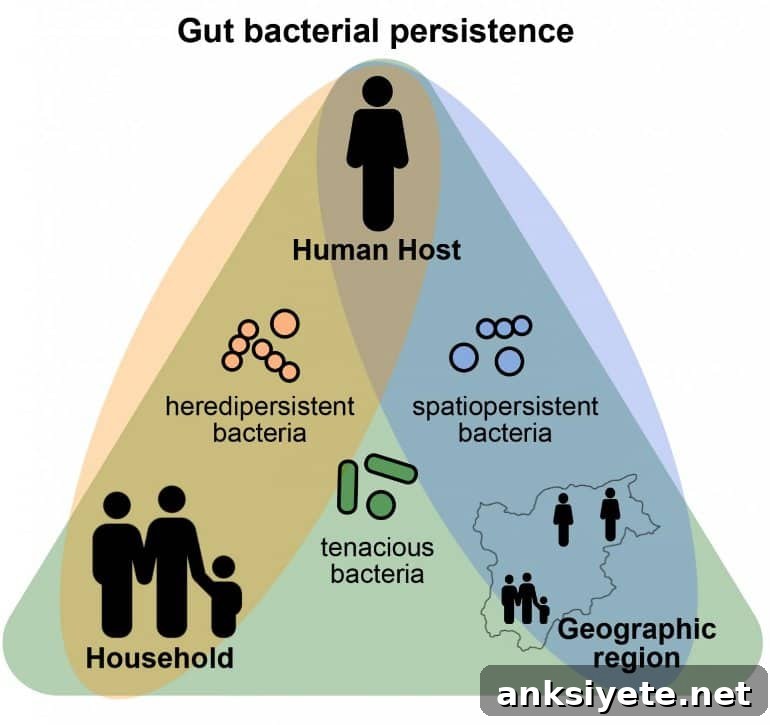
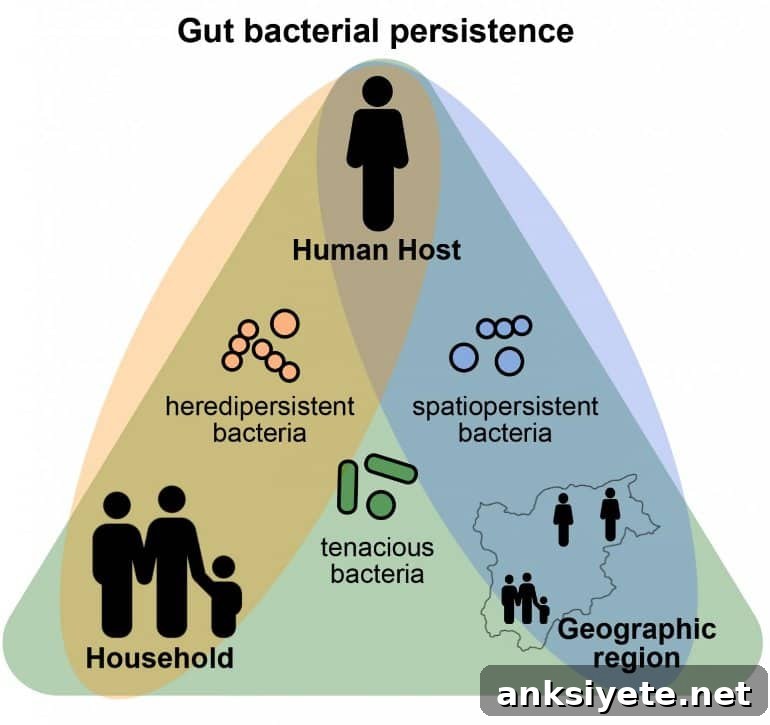
By expanding this collection into a dataset of 5,278 metagenomes and overlaying time-series and geographic information, the team identified three broad dispersal and persistence strategies across hundreds of bacterial species: tenacious, heredipersistent and spatiopersistent. They also evaluated how factors such as age, household membership, regional location and antibiotic exposure affect bacterial turnover.
Lead author Dr Falk Hildebrand (Quadram Institute and Earlham Institute) explains that the majority of gut bacterial strains are highly persistent. “Our analysis shows that most strains present in the microbiome are very stable—more than a 90% chance of remaining for at least a year,” he said. Persistence in infants was lower, averaging about 80%, consistent with the ongoing exchange of microbes during early life.
Professor Peer Bork (EMBL Heidelberg) noted that persistence patterns are visible not only within individuals but also across families and regions. “Comparing time series from family members and mapping those data geographically allowed us to group strains with distinct dispersal strategies and to observe how these patterns shape host association and regional distributions,” he said.
Three persistence strategies
Tenacious bacteria represent the most stably associated group. These strains are well adapted to long-term residence in the gut and can adjust to changing nutrients from infancy through adulthood. However, tenacious bacteria are also the most vulnerable to being lost after antibiotic treatment; if these long-carried strains are eliminated, the loss may be long-lasting.
Heredipersistent bacteria tend to cluster within families and appear to rely on repeated transmission cycles to maintain their presence in a host. These strains show higher turnover in childhood and seem to spread efficiently through familial contact. Genomic analyses indicate that many heredipersistent strains possess genes associated with spore formation, a trait that facilitates transmission between family members and across household environments.
Spatiopersistent bacteria are associated with particular geographic areas rather than specific family lineages. These strains exhibit regional clustering, suggesting that local environment, diet and community-level exposures shape their distribution and persistence.
The distinction among these persistence types has practical implications for interventions aimed at restoring or modifying the gut microbiome. Single, intensive treatments such as faecal microbiota transplantation (FMT) may be effective at introducing or replacing tenacious strains, whereas strains that depend on reinfection cycles might respond better to repeated probiotic administration, dietary adjustments or sustained environmental changes that favor their colonization.
The study also highlights the varied impacts antibiotics can have across bacterial groups. Antibiotic exposure affects species differently depending on their intrinsic persistence and how readily they can be replaced by other microbes. The findings underscore concerns about overuse of antibiotics and suggest a need for tailored strategies to mitigate their long-term effects on the microbiome.
By clarifying which gut bacteria are closely tied to an individual and which are prone to switching hosts, the research provides actionable insight for developing targeted probiotics, prebiotics and clinical applications that aim to support or restore a healthy gut microbial community.
Funding: The study was funded by the Biotechnology and Biological Sciences Research Council and the European Research Council.
About this microbiome research news
Source: Earlham Institute
Contact: Hayley London – Earlham Institute
Image: The image is credited to Earlham Institute/Quadram Institute/EMBL
Original Research: The findings will appear in Cell Host and Microbiome