What Is Personality? Meaning, Traits, and Types

featured 70848

Summary: Caltech researchers present theoretical models that clarify how personality relates to genes, brain structure, and behavior. They propose testable hypotheses for locating personality within the brain and for linking personality to other mental functions such as memory and emotion. Source: CalTech Do you prize courage and boldness or curiosity and intellect? Some personality quizzes—playful … Read more

Parkinson’s Gene Required for Dopamine Neuron Survival

featured 44477

Summary: A new study reveals that LRRK proteins are essential for the survival of dopamine neurons in the brain, a finding that could influence the development of treatments for Parkinson’s disease. Source: NIH/NINDS. A new study published in the journal Neuron clarifies a normal role for LRRK proteins and highlights their importance for dopamine neuron … Read more

How to Teach AI to Adapt

featured 69972

Summary: Researchers have developed an AI-inspired neural model that mirrors how the prefrontal cortex uses gating to regulate information flow between neural regions. This framework improves adaptive learning and could guide more brain-like artificial intelligence systems. Source: Salk Institute Teaching computers to think and learn like humans remains a central goal in artificial intelligence. Human … Read more

Why We Crave Sugar: The Science of Sugar Cravings

featured 27240

Scientists have long blamed sugar’s sweet taste and high calorie content for undermining diets. A new study from Yale University, however, shows that the brain processes taste and calories in distinct ways, and that only the calorie-driven response reliably predicts why people often abandon diet goals. The research, published Jan. 25, 2016 in the journal … Read more

How Sensory Pathways Detect and Respond to External Temperature

featured 42571

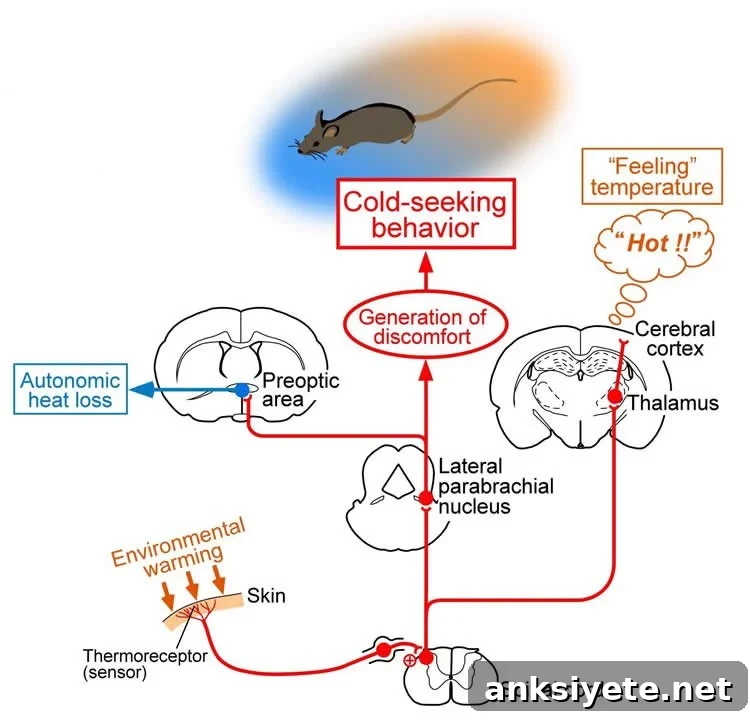
Summary: By selectively disabling specific brain regions in rats and observing the animals’ preferred ambient temperatures, researchers clarified how distinct neural pathways contribute to sensing and responding to external temperature. These findings advance understanding of thermoregulation and may shed light on disorders such as heatstroke. Source: Nagoya University. Maintaining a stable body temperature requires coordinated … Read more

6 Ways to Reset Your Brain After a Tough Year of COVID-19

featured 70310

Summary: Neuroscientists describe six evidence-based strategies to support brain health and improve mental wellbeing. Source: The Conversation 2020 was a difficult year for many, but with COVID-19 vaccines being rolled out, there is renewed hope for a safer, more normal 2021. Months of anxiety, grief and isolation can leave lasting effects on the brain. Chronic … Read more

Anti-Cancer Drug Reverses Social Deficits in Autism

featured 47207

Summary: Researchers report that a very low dose of the anti-cancer drug romidepsin reduced social deficits in animal models of autism. Source: University at Buffalo. Social difficulties are among the most disabling features of autism spectrum disorder (ASD), and currently no approved treatment directly targets these core symptoms. New research from the University at Buffalo … Read more

Eye-Tracking Study Reveals How Autism Alters Social Attention

featured 99391

Summary: Researchers report that children with autism spectrum disorder (ASD) develop distinct visual attention patterns compared with typically developing children, tending to focus more on non-social elements—objects, textures and irregularities—than on faces and social interactions. A longitudinal eye-tracking study in which children watched short cartoons showed that, unlike typically developing peers who converge toward similar … Read more

Study: Traffic Noise Linked to Higher Tinnitus Risk

featured 90642

Summary: New national research finds that people who live near heavy road traffic and are exposed to higher residential noise levels face an increased risk of developing tinnitus. Source: University of Southern Denmark Living close to a busy road can raise stress levels and disrupt sleep. Prolonged stress and poor sleep quality are known contributors … Read more

Beyond Caffeine: How Coffee Boosts Brain Readiness and Focus

featured 95117

Summary: Drinking a cup of coffee produces changes in brain connectivity that make people more alert and better prepared to shift from rest to task-focused activity — effects that are not fully reproduced by caffeine alone. A group of Portuguese researchers reported that a standard cup of coffee reduced connectivity within the brain’s default mode … Read more