
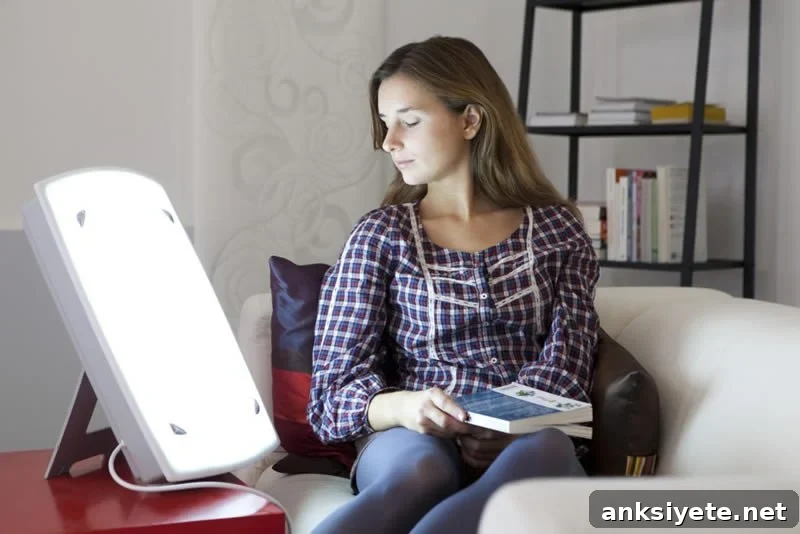
Summary: Daily exposure to bright, artificial light may reduce symptoms of bipolar depression and appears safe when used as an adjunct treatment.
Source: University of British Columbia
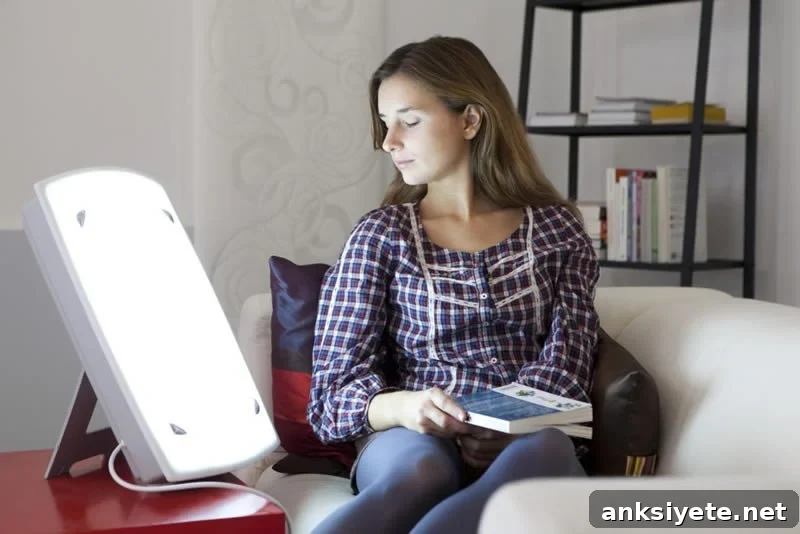
Overview: Light therapy — daily exposure to bright, artificial light — is an established, evidence-based treatment for seasonal and some nonseasonal depressive disorders. Its effectiveness for bipolar disorder has been less well studied. A recent meta-analysis led by Dr. Raymond Lam of the University of British Columbia examined randomized controlled trials to evaluate whether adjunctive light therapy improves symptoms of bipolar depression and whether it is safe for this population.
Dr. Lam, a professor of psychiatry and director of the Mood Disorders Centre at the Djavad Mowafaghian Centre for Brain Health, and his colleagues pooled the available randomized, double-blind, placebo-controlled trials to assess the impact of bright light on depressive symptoms, clinical response, remission rates, acceptability, and the risk of treatment-emergent mood switches in people with bipolar disorder.
Key findings
The meta-analysis included seven trials with a total of 259 patients diagnosed with bipolar depression. When results were combined, adjunctive bright light treatment produced a statistically significant improvement in clinician-rated depressive symptoms compared with placebo conditions. There was also a higher likelihood of clinical response among participants receiving active light therapy, although remission rates did not show a significant difference.
Importantly for safety, light therapy in these trials was well tolerated. Few participants discontinued treatment due to adverse effects, and the pooled evidence did not show an increased risk of switching from depression to mania associated with light therapy — a particular concern when using some antidepressant medications in people with bipolar disorder.
How might light therapy work?
The precise mechanism by which light therapy reduces depressive symptoms remains uncertain. Light enters through the eyes and helps regulate the brain’s central circadian pacemaker, the suprachiasmatic nucleus, which organizes daily rhythms in sleep, hormones, cognition, and behavior. Disturbances in these circadian systems are common in bipolar disorder and may contribute to mood episodes. Adjusting circadian timing with light could therefore be one pathway through which therapy exerts benefit.
Additionally, research suggests that light exposure can influence major mood-related neurotransmitters such as serotonin and dopamine. These effects raise the possibility that light therapy may also act through neurochemical pathways similar to some antidepressant treatments, though definitive mechanistic conclusions are not yet available.
Why this matters for bipolar disorder treatment
Treating bipolar depression is challenging: fewer effective options exist compared with treatments for mania, and conventional antidepressants can be of limited benefit and sometimes increase the risk of mood cycling. Many patients are already taking mood stabilizers or antipsychotic medications, creating potential concerns about drug interactions. A nonpharmacological therapy such as light therapy — if effective and safe — would offer a valuable adjunctive option that can be used alongside existing medications without adding drug interaction risk.
Limitations of the current evidence and future directions
Although the pooled results are encouraging, the meta-analysis highlighted several limitations in the existing literature. Trials were small, treatment durations were generally short, and studies used a range of light parameters (different intensities, durations, and timing). Most participants were also receiving concurrent medications for bipolar disorder, making it harder to isolate the specific contribution of light therapy. Trial quality and methodology varied across studies.
To build stronger evidence, future research should recruit larger samples, standardize and compare different light treatment parameters (wavelength, intensity, timing, and session length), and evaluate longer-term use of light therapy for maintenance and relapse prevention in bipolar disorder. Determining optimal dosing and whether light therapy can reduce relapse rates over months to years are important next steps.
Source:
University of British Columbia
Media contacts:
Kerry Blackadar – University of British Columbia
Image source:
Image adapted from the University of British Columbia news release.
Original research: “Light Therapy for Patients With Bipolar Depression: Systematic Review and Meta-Analysis of Randomized Controlled Trials.” Authors include Raymond W. Lam and colleagues. Published in the Canadian Journal of Psychiatry (closed access), doi: 10.1177/0706743719892471.
Abstract (summary)
Objective: Bipolar disorder presents treatment challenges, particularly for depressive episodes. Light therapy is an evidence-based nonpharmacological approach for major depression, but its efficacy in bipolar depression is less clear. This review and meta-analysis evaluated adjunctive light therapy in randomized, double-blind, placebo-controlled trials in patients with bipolar disorder.
Methods: Databases were searched through June 30, 2019, to identify randomized controlled trials. Primary outcomes assessed change in clinician-rated depressive symptoms; secondary outcomes included clinical response, remission, acceptability, and treatment-emergent mood switches. Outcomes were pooled using random-effects meta-analysis.
Results: Seven trials including 259 patients were identified. Light therapy produced a significant improvement in depression rating scores and increased odds of clinical response compared with control conditions, with no significant increase in affective switching to mania. Study limitations included heterogeneous light parameters, small sample sizes, short treatment durations, and variable study quality.
Conclusion: Current evidence provides positive but not yet conclusive support for adjunctive light therapy in reducing symptoms of bipolar depression and improving clinical response rates. Light therapy appears well tolerated with no clear increase in risk of mood switching, but larger, more rigorous trials are needed to define optimal treatment protocols and long-term benefits.