Traditional Japanese Art Inspires Futuristic Brain Organoids

featured 36973

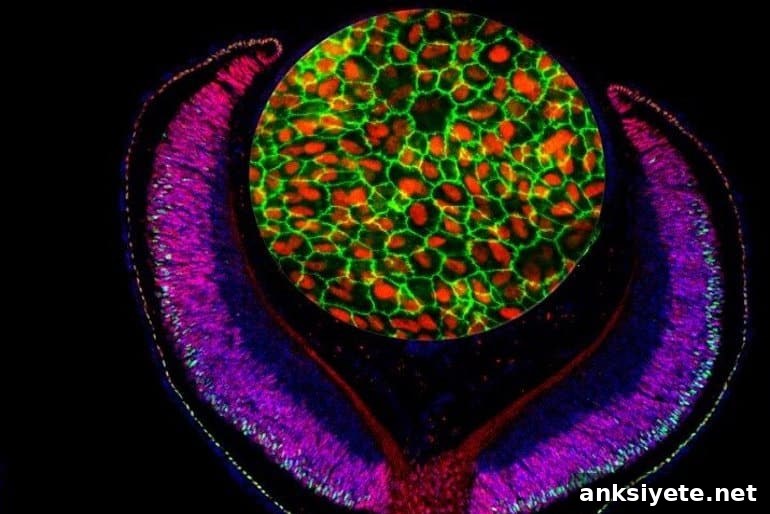
The Ancient Art of Ikebana Inspires Bioprinting of Brain Organoids for Personalized Cancer Research Summary: Researchers adapted principles from the traditional Japanese art of flower arranging to develop a bioprinting method that creates miniature brain organoids, offering a more realistic platform for studying glioblastoma and testing personalized treatment strategies. Source: University of British Columbia From … Read more

Why Your Baby Cries: The Role of Genetics in Infant Crying

featured 111436

Summary: A new Swedish twin study shows that how long an infant cries is strongly influenced by genetics, with heritability estimates rising from roughly 50% at two months to about 70% by five months. The study also finds that night awakenings and how quickly infants settle are more affected by environmental factors such as sleep … Read more

How Dark Personality Traits Make People Fall for Fake News

featured 87365

Summary: Individuals who score higher on dark personality traits are more likely to accept fake news, particularly when the false information aligns with their self-interest. Even when confronted with scientific evidence, people with these traits tend to reshape facts to suit their preferences. The study found that stronger self-interested tendencies made it harder for participants … Read more

New Brain Map Reveals Drug Targets for Complex Disorders

featured 42355

Summary: Researchers have produced a new map that reveals how proteins associate across brain networks. The map is integrated into a software platform that lets scientists visualize where disease-related risk factors operate within those networks. Source: USC. A new study of protein interactions provides a foundation for developing treatments that target dysfunctional pathways in the … Read more

Tiny Brain Region Reveals New Targets for Addiction, Depression

featured 109262

Summary: New research highlights the habenula, a small but influential brain region, as a central regulator of reward, motivation, and emotional states. Studies show habenula circuits shape how the brain responds to reward and disappointment and how it develops drug cravings. This work has revealed promising drug targets—most notably the GPR151 receptor—that could help reduce … Read more

How Endocannabinoids Help the Brain Fight Stress

featured 96963

Summary: A new study reveals that, under stress, the brain produces its own cannabinoid molecules—chemicals that act on the same receptors as THC from cannabis—to help reduce stress signals and promote adaptive responses. These endocannabinoids are produced in the amygdala and act to suppress stress-related input coming from the ventral hippocampus, a brain region involved … Read more

Stressed Cells Reveal How to Clear Toxic Proteins in Dementia

featured 82533

Summary: Researchers describe a newly discovered cellular mechanism that can reverse the accumulation of protein aggregates by refolding them rather than degrading them. Source: University of Cambridge Small amounts of stress can sometimes be beneficial. New research shows that, in cells, a specific stress response may help undo harmful protein tangles linked to dementia by … Read more

12 Counseling Theories to Use in Clinical Practice

featured 152195

Several established psychotherapy theories form the foundation of modern counseling practice. Counseling aims to provide clients with a safe, confidential environment where they can explore feelings, thoughts, and behaviors and work toward meaningful change. Although counseling draws on many theoretical approaches, most share common goals: to explain and predict behavior, to identify contributing factors to … Read more

Left-Handed Proteins Could Block Alzheimer’s Progression

featured 115881

Summary: Researchers at Kobe University have developed a novel approach to neutralize a key driver of Alzheimer’s disease by using mirror-image protein fragments. These synthetic “right-handed” peptides bind tightly to the naturally occurring “left-handed” amyloid-beta, preventing it from aggregating into toxic brain plaques. Conventional drug design struggles with intrinsically disordered proteins like amyloid-beta because they … Read more

How to Schedule Activities: 6 Templates and Worksheets

featured 145063

The activities we choose shape our emotions and daily experience. When someone is depressed, they often stop doing things that used to bring meaning or enjoyment, which can deepen the low mood and reduce motivation (Behavioral Activation for Depression, n.d.). Behavioral activation is a core component of Cognitive-Behavioral Therapy (CBT). It helps clarify how a … Read more