
Summary: Researchers have identified a broad perceptual skill, called “o,” that predicts how well people learn and perform tasks requiring object recognition and other perceptual decisions.
Source: The Conversation
People differ in many ways. You’re likely familiar with differences in personality and in cognitive abilities such as reasoning, memory and problem-solving.
By contrast, many assume there is much less variability in perceptual skills like recognizing, matching or categorizing objects. Yet those perceptual abilities are crucial in everyday life and in high-stakes fields such as interpreting satellite imagery, matching fingerprints or diagnosing medical conditions. The common belief is that motivated, intelligent people who receive the right training should eventually reach high proficiency in perceptual tasks that they practice intensively.
We are psychologists who study individual differences on difficult perceptual tasks, and our research challenges that expectation. Evidence shows that people differ substantially in their capacity to recognize and discriminate objects, and these differences matter when perceptual decisions affect safety, health or legal outcomes.
A general ability for recognizing objects
Classic psychological work at the turn of the 20th century revealed that cognitive abilities across many domains—memory, math, verbal reasoning—tend to correlate. That discovery gave rise to the concept of general intelligence, or g, which predicts outcomes ranging from income to health and longevity.
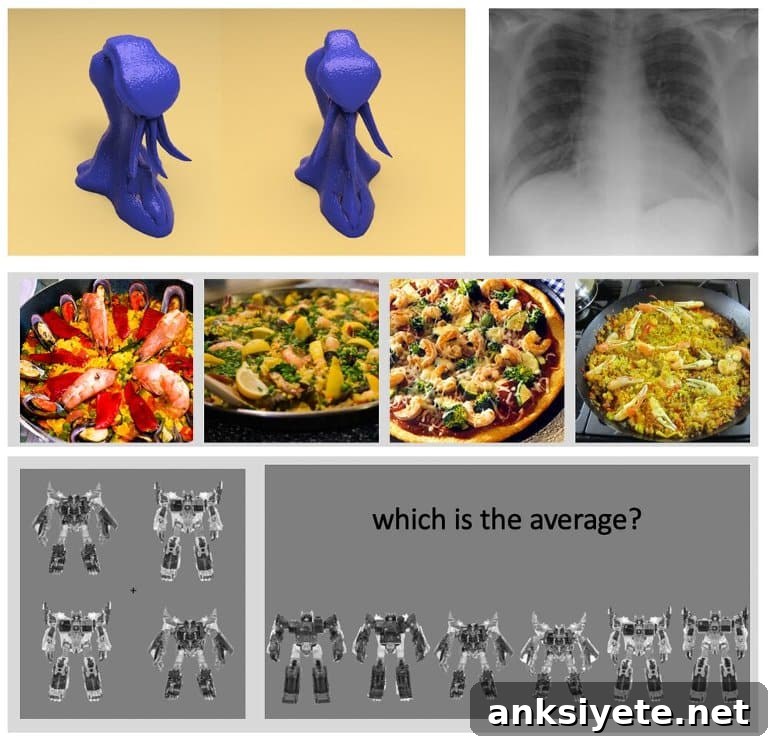
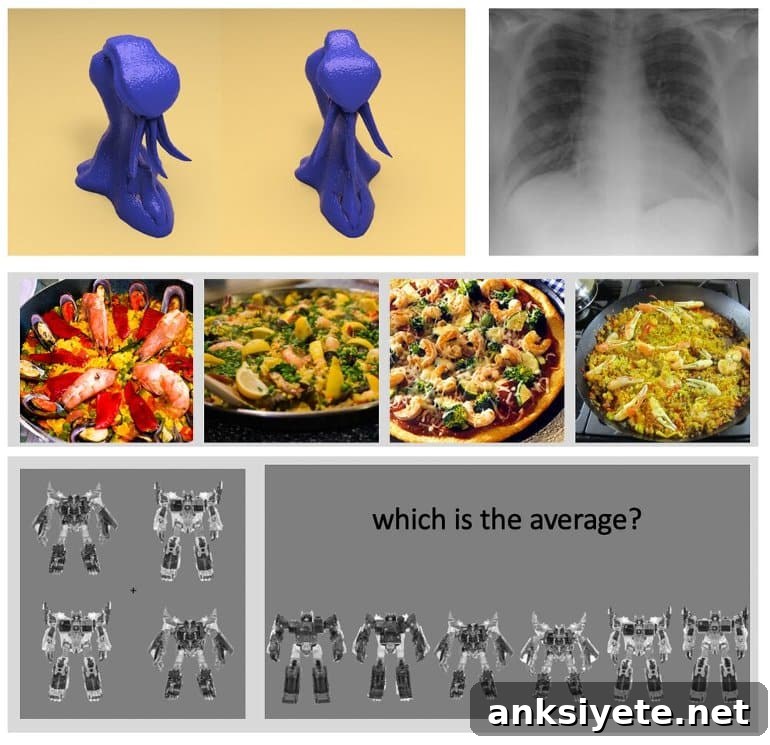
Analogous patterns appear for perceptual skills. Our studies find that people who are excellent at one kind of object-recognition task (for example, identifying birds) often perform well on other, quite different recognition tasks (such as identifying airplanes or spotting tumors in chest X-rays). Similar generality shows up across a variety of perceptual domains, including reading musical notation or recognizing images of prepared food.
Experience and training clearly improve recognition for familiar categories: the more you look at birds or medical images, the better you become. But this raised a question for us: do people all begin training with roughly the same baseline perceptual talent, or do innate differences matter?
Do people start from the same baseline?
To address this, we assessed perceptual ability using novel, computer-generated objects so that prior experience would not give anyone an advantage. In one large study, 246 people each completed about 13 hours of testing on a range of tasks using six categories of unfamiliar artificial objects. Tasks required remembering and recognizing objects, matching them, and judging parts of objects.
Across these tasks, we found substantial and systematic individual differences. Applying statistical techniques that have long been used to study intelligence and personality, we discovered that more than 89% of the variance in performance across tasks and categories could be explained by a single, general factor. We call this factor “o” for object recognition, in analogy to the g factor in intelligence research.
Follow-up work shows that o applies to both artificial and real objects. People with higher o not only learn to recognize visual objects more effectively but also perform better at related abilities, such as computing summary statistics for groups of objects (estimating an “average” object) and recognizing objects by touch. A brief online demo allows individuals to compare their own performance to others.
o is distinct from general intelligence
Because o is so broad, one might wonder whether it simply reflects general intelligence in a different guise. Our data suggest it does not. In studies we and others have conducted, conventional measures like IQ and SAT scores do not reliably predict performance on novel-object recognition tasks. In addition, o is distinct from personality traits such as conscientiousness.
To test the real-world relevance of o, we examined people with and without radiology training on the task of detecting lung nodules in chest X-rays. Those with higher o performed better at this medical-perception task even after accounting for differences in intelligence and radiology experience. That result illustrates that identifying perceptual talent can add value beyond selecting candidates solely on the basis of general cognitive ability and training.
This evidence suggests practical implications for education, training and professional selection. Universities and employers currently place heavy emphasis on measures of general cognitive ability when admitting students or hiring professionals. That focus may be justified for many roles, but it does not guarantee peak performance in occupations that depend heavily on perceptual discrimination.
Concerns about equity and fairness are important. Reliance on intelligence testing alone has been criticized for contributing to inequalities in hiring and placement associated with race, gender and socioeconomic status. At the same time, denying the role of innate variation in talent can be misleading. Overpromising the extent to which training alone can overcome innate differences risks wasting time and resources and can stigmatize individuals whose efforts do not produce the same results as others.
A more nuanced approach is to measure a broader range of talents, including perceptual abilities, and to use those measurements to inform training, placement and career guidance. Classical measures of intelligence explain a lot, but they are only one piece of the picture. Focusing attention on general perceptual ability, such as o, could help match people with roles that best fit their strengths, reduce mismatches, and potentially improve outcomes in fields where perceptual decisions are critical. Notably, although experience can produce category-specific differences (for example, sex differences in recognition for highly familiar categories), we find no evidence of sex differences in the general ability o.
About this neuroscience research news
Author: Isabel Gauthier and Jason Chow
Source: The Conversation
Contact: Isabel Gauthier and Jason Chow – The Conversation
Image: The image is credited to Isabel Gauthier