Fossil Skull Reveals How Penguin Brains Evolved

featured 23083

When they’re not the stars of animated films, penguins play a vital role in studies of evolution. Penguins are unique among modern birds because, although they cannot fly in air, they ‘fly’ through water. Their wing-propelled swimming depends on a suite of anatomical adaptations—some of which are found in unexpected places, including the brain. Recent … Read more

How Neural Ultrasound Improves Learning in 60 Seconds

featured 114145

Summary: Researchers have demonstrated that non-invasive transcranial ultrasound stimulation (TUS) can alter human reward learning by targeting the nucleus accumbens, a deep brain region central to motivation. After brief, focused stimulation, participants learned more quickly from positive feedback and showed a greater tendency to repeat choices that had previously been rewarded. These changes resemble important … Read more

Focused Ultrasound Therapy for Brain Disorders

featured 71076

Summary: Transcranial pulsed stimulation (TPS) and other focused ultrasound techniques can non-invasively target and modulate deep brain regions, opening new treatment possibilities for a wide range of neurological and psychiatric disorders. Source: University of Vienna Targeted ultrasound is emerging as more than an imaging tool: focused acoustic pulses can now be used to treat brain … Read more

Ultrasensitive Calcium Sensors Reveal Hidden Neuronal Activity

featured 10776

Every time you speak a word, take a step, or read a sentence, networks of neurons relay information across the brain. Researchers now have a powerful new way to watch those messages in real time by seeing each neuron light up when it fires. When a neuron receives input from another cell, a brief cascade … Read more

How Movement Shapes Memory: The Surprising Link

featured 52451

Summary: New research reveals that the cerebellum contributes not only to movement control but also to cognitive processes such as short-term memory and motor planning. Source: Baylor College of Medicine. Background For decades neuroscientists have assigned different brain regions to specific functions: the cerebellum was primarily linked to motor control and coordination, while the frontal … Read more

How Sleep Strengthens Long-Term Immune Memory

featured 24099

More than a century of research has shown that sleep supports the retention of memories for facts and events. New analysis suggests that deep, slow-wave sleep—the stage associated with consolidating fragile, newly formed memories into stable, long-lasting ones—may also reinforce the immune system’s memory of previously encountered pathogens. In an Opinion article published September 29 … Read more

Genome Study Reveals Genetic Links to Reading and Language

featured 85774

Summary: A large genome-wide analysis of five reading- and language-related skills reveals shared genetic foundations that contribute to these abilities. Source: Max Planck Institute What is the biological basis of our uniquely human capacity to speak, read and write? An extensive genome-wide study of five reading and language skills, conducted across many thousands of people … Read more

How Neuroscience Unlocks the Flow State for Creativity

featured 101354

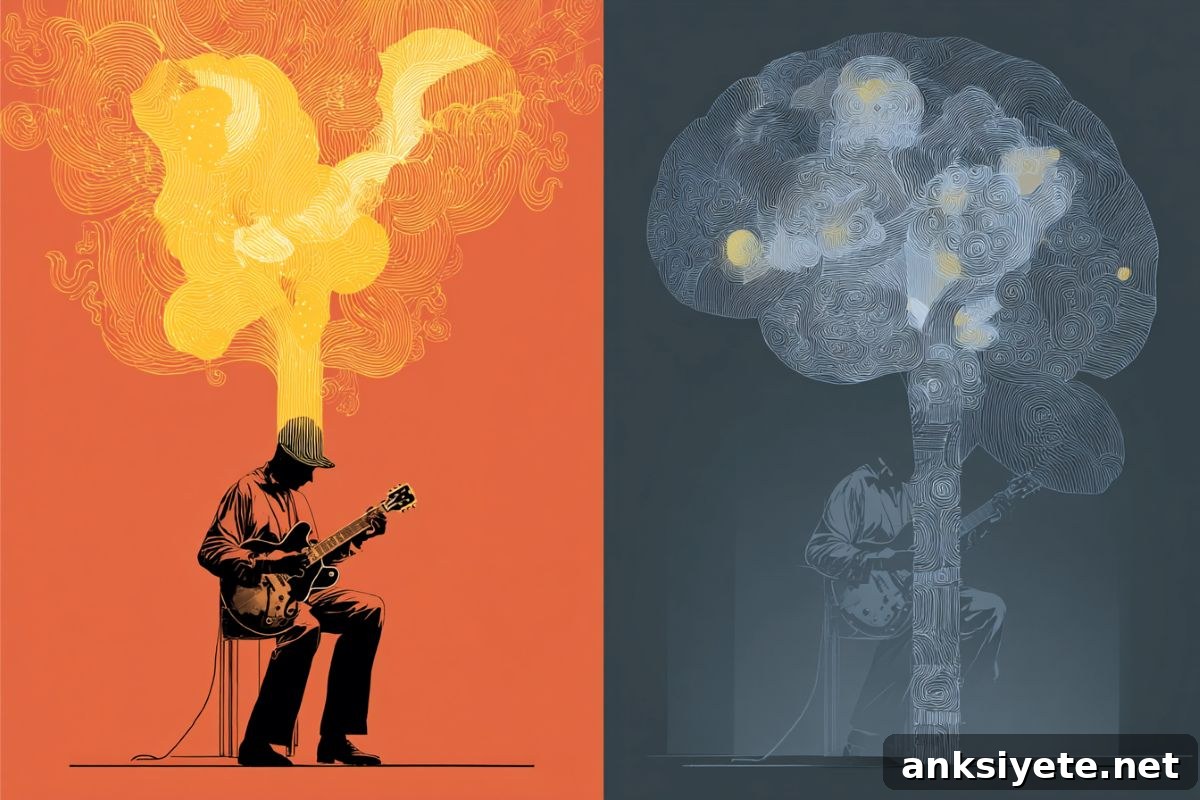
Summary: A new neuroimaging study with Philadelphia-area jazz guitarists explored the brain processes that enable creative flow. The research shows that flow depends on a strong foundation of expertise, followed by letting go of conscious control so creativity can emerge naturally. Researchers measured brain activity and performance quality during jazz improvisation to identify what happens … Read more

Existing Drug Shows Promise in Treating ALS

featured 85377

Summary: Terazosin, a medication commonly used for enlarged prostate and high blood pressure, shows potential as a treatment for motor neuron disease (MND), also known as amyotrophic lateral sclerosis (ALS). Source: University of Edinburgh A drug already prescribed for benign prostatic hyperplasia and hypertension has demonstrated protective effects on motor neurons in laboratory and animal … Read more

Brain Structure Predicts Number Sense

featured 12716

Brain Structure Predicts Whether People Represent Numbers Spatially or Non‑Spatially A new study from the Donders Institute in Nijmegen demonstrates that the way individuals mentally represent numbers—either along a spatial line or via non‑spatial magnitudes—has a measurable structural basis in the brain. Many people mentally organize numbers along an imaginary horizontal line, with smaller numbers … Read more