
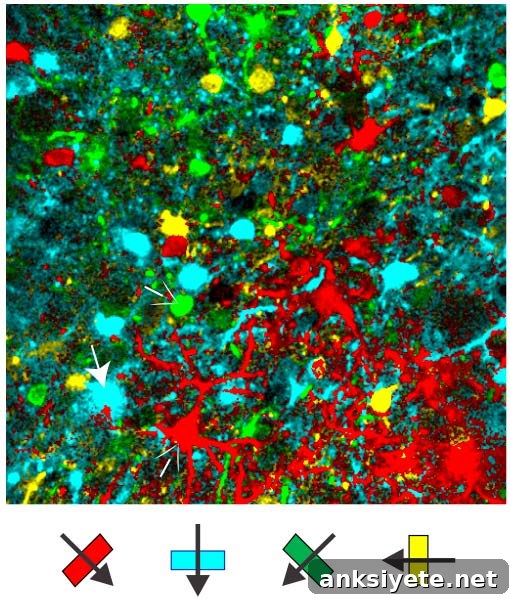
Every time you speak a word, take a step, or read a sentence, networks of neurons relay information across the brain. Researchers now have a powerful new way to watch those messages in real time by seeing each neuron light up when it fires.
When a neuron receives input from another cell, a brief cascade of electrochemical events is triggered to pass the signal along. One of the earliest and most reliable signs of this activity is a rapid influx of calcium ions through channels in the cell membrane. Scientists at the Howard Hughes Medical Institute’s Janelia Research Campus have engineered an ultrasensitive fluorescent protein that detects those calcium transients and glows each time a neuron fires. This genetically encoded calcium indicator (GECI), named GCaMP6, is the most sensitive calcium sensor to date and, for the first time, makes it possible to detect essentially every neural impulse rather than only a subset. The results were reported in the July 18, 2013 issue of Nature.
“You can think of the brain as an orchestra, with different neuron types playing distinct parts,” says Janelia lab head Karel Svoboda, a neurobiologist involved in developing the sensor. “Previous methods let us hear only a few instruments. GCaMP6 lets us listen to far more of the symphony at once. Further improvements to the molecule and imaging methods could eventually reveal the entire performance.”
Identifying which neurons fire and precisely when they fire is essential for linking brain regions to behaviors and disorders, understanding how memories are formed, and studying how neuronal circuits organize and store information. For decades, researchers relied on synthetic calcium-indicator dyes to visualize neural activity. While those dyes produced bright signals, they were difficult to deliver into living brain tissue, could be toxic, and typically allowed only a single imaging session in an animal.
In 1997, Roger Tsien and colleagues introduced the first genetically encoded calcium indicator, combining a calcium-binding sensor with a fluorescent protein so that calcium binding produced fluorescence. GECIs could be expressed by the animal’s own cells, enabling repeated, long-term imaging in the same animal and making studies of development and learning feasible. Early GECIs, however, lacked the sensitivity and signal strength of synthetic dyes, and incremental improvements often proceeded slowly because feedback from tests in living brains was limited.
To accelerate progress, Karel Svoboda joined with Loren Looger, Vivek Jayaraman and Rex Kerr to create the Genetically Encoded Neural Indicator and Effector (GENIE) project at Janelia. Under the direction of Douglas Kim, GENIE established a higher-throughput, quantitative pipeline for engineering and testing GCaMP variants. The team combined rapid biochemical assays—measuring fluorescence responses to calcium in vitro—with systematic tests in neuronal preparations and final validation in genetically engineered mice, flies and zebrafish. This approach allowed screening of many more protein variants than had been possible previously.
“Earlier efforts typically tested maybe ten to twenty constructs very carefully,” Looger explains. “We were able to screen a thousand variants in a precise neuronal assay. Looking across so many constructs reveals which structural features make the best sensor.”
Through iterative design and testing, the researchers optimized the GCaMP scaffold for sensitivity, brightness and performance in living organisms. The resulting sensor, GCaMP6, produces signals roughly seven times stronger than earlier genetically encoded indicators and, unexpectedly, outperforms some synthetic dyes in detecting individual spikes. This enhanced performance allows researchers to resolve single action potentials across diverse neuron types and to monitor large cellular populations with greater fidelity.
GCaMP6 is already enabling more complete maps of neuronal activity in model systems and will be a valuable tool for labs worldwide studying neural activity, circuit function, and behavior. The team at Janelia plans continued development of new variants tailored to specific applications—for example, red-shifted indicators that fluoresce in the red spectrum to improve imaging at greater tissue depths.
“One major goal at Janelia is to build a comprehensive atlas of every neuron in the Drosophila brain,” Looger says. “Calcium sensors are the most practical way to assign function across such an atlas. With GCaMP6, researchers can be more confident that they are capturing a complete picture of neuronal activity.”
Notes about this neuroscience and electrophysiology research
Contact: Karel Svoboda, PhD – Howard Hughes Medical Institute
Source: Howard Hughes Medical Institute press release (reporting on GCaMP6 development and application)
Image Credit: Tsai-Wen Chen, GENIE project, Janelia Research Campus. Adapted from the HHMI press materials.
Original Research: “Ultrasensitive fluorescent proteins for imaging neuronal activity” by Tsai-Wen Chen et al., Nature, published online July 18, 2013 (doi: 10.1038/nature12354).