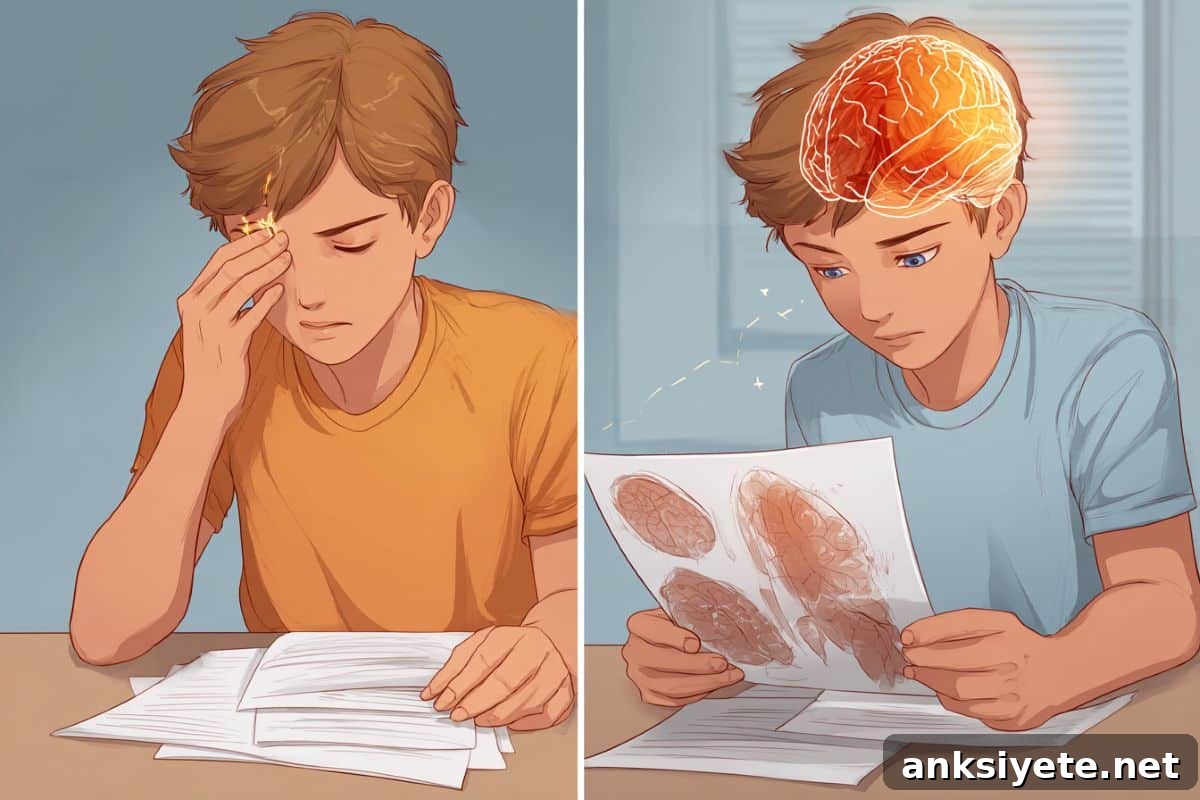
How Vision Therapy Restores Sight After a Concussion
featured 113155

Summary: Concussions often produce lasting vision problems: nearly half of adolescents and young adults with ongoing post-concussion symptoms develop eye coordination disorders that interfere with reading, screen use, and daily activities. A randomized clinical trial found that a 12-week, office-based program of vergence and accommodative vision therapy restored normal vision in almost 90% of participants, … Read more

Teen Loneliness Linked to Detectable Brain Network Changes

featured 113151

Summary: A large neuroimaging study finds that adolescents who regularly prefer solitude over social interaction show measurable differences in brain structure and function. Brain scans indicate altered activity and weaker connectivity in regions involved in social and emotional processing, with changes observed across several cognitive networks. These widespread alterations suggest persistent social withdrawal during adolescence … Read more

How Psilocybin Rewires Brain Circuits Linked to Pain and Mood

featured 113147

Summary: New research from the University of Pennsylvania shows that psilocybin, the active compound in certain psychedelic mushrooms, can reduce chronic pain and pain-related depressive behavior by altering brain circuits rather than acting at the injury site. In mouse models, a single dose produced both pain relief and mood improvement that persisted for nearly two … Read more

How RNA-Protein Signaling Links Cancer and Alzheimer’s

featured 113141

Summary: Researchers have developed a powerful new method that reveals the full network of RNA-protein interactions inside human cells, providing detailed insight into molecular communication that underlies health and disease. The approach freezes contacts between RNAs and proteins, tags each partner, and converts those contacts into unique DNA barcodes that are read by sequencing. Applied … Read more

How Dietary RNA Could Slow Cellular Aging

featured 113136

Summary: Living longer does not automatically mean living healthier. New research shows that specific RNA molecules found in the diet can protect cells from harmful protein accumulation, a key driver of aging and age-related disease. In experiments with the nematode Caenorhabditis elegans, dietary RNAs activated cellular stress responses and autophagy, improving resilience and slowing cellular … Read more

New Study Suggests ALS Is an Autoimmune Disorder

featured 113132

Summary: New research suggests amyotrophic lateral sclerosis (ALS) may have an autoimmune component. Scientists found that CD4+ T cells in people with ALS recognize and attack neuron-associated proteins, a discovery that helps explain rapid disease progression in some patients and points toward immune-focused treatment strategies. Importantly, patients who showed a stronger presence of anti-inflammatory CD4+ … Read more

Early vs. Late Autism: Distinct Genetic Profiles Revealed

featured 113128

Summary: A large international study led by the University of Cambridge shows that autism diagnosed in early childhood differs in important genetic and developmental ways from autism diagnosed later in life. By combining behavioural and genetic data from tens of thousands of autistic people, researchers found distinct developmental trajectories and polygenic profiles linked to the … Read more

How Pianists Use Touch to Shape Piano Timbre

featured 113124

Summary: New research provides scientific evidence that pianists can alter piano timbre mid-performance using finger touch alone. Using a high-speed, non-contact sensor system, researchers recorded key motions in millisecond detail and identified specific motion features that reliably corresponded with the timbral qualities listeners perceived. The study shows that timbre control is not just a metaphor … Read more

New Study Finds Psilocybin May Worsen Postpartum Depression

featured 113119

Summary: New preclinical research indicates that psilocybin — a psychedelic compound under investigation for treating various mental health disorders — can worsen anxiety and depressive-like behaviors in mouse mothers when administered during the postpartum period. Treated dams showed increased anxiety, avoidance of their pups, and persistent depressive-like behavior. Offspring nursed by these mothers also developed … Read more

How Income Inequality Alters Children’s Brains and Mental Health

featured 113111

Summary: A large-scale neuroimaging study of children in the United States links higher income inequality at the state level to measurable changes in brain structure and function that predict poorer mental health in early adolescence. The effect was observed across socioeconomic groups, indicating that societal inequality—not only individual family income—can influence brain development and wellbeing. … Read more