AI Reveals Most Detailed 3D Map of the Human Brain
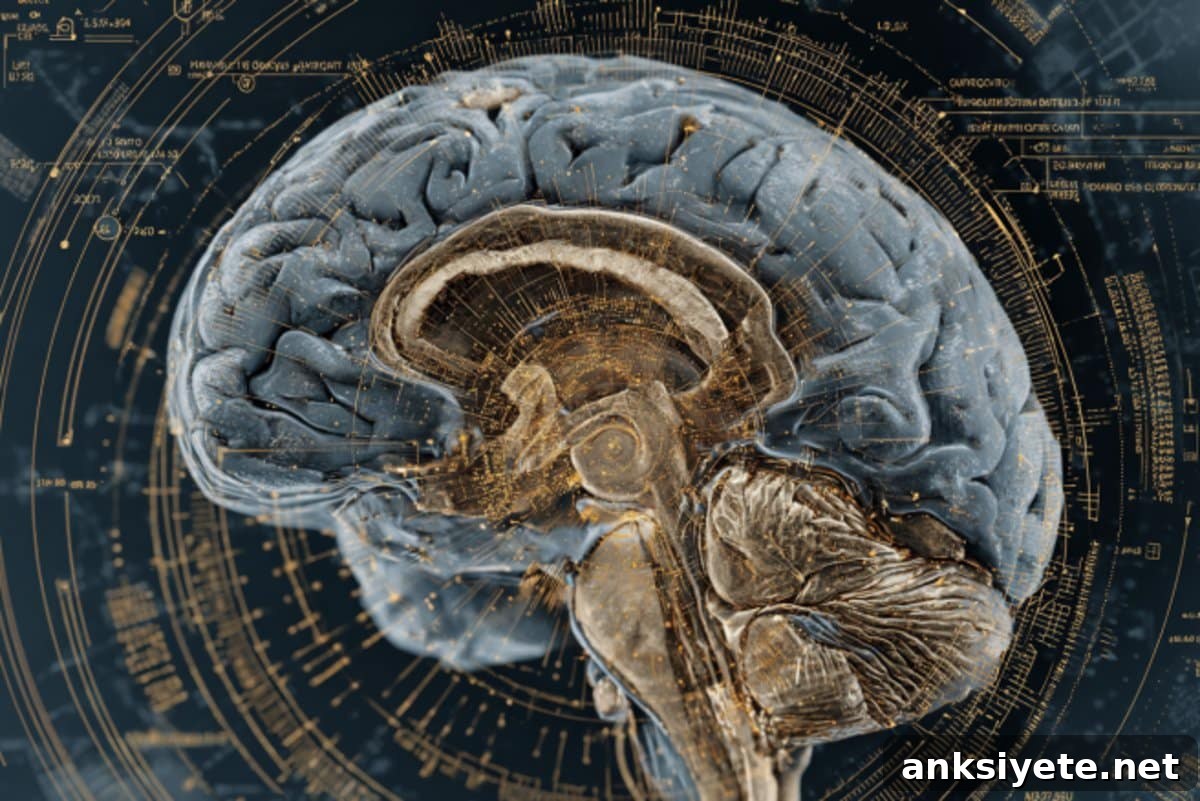
featured 113734

Summary: NextBrain is a new AI-powered, histology-based brain atlas that lets researchers map the adult human brain at an unprecedented level of anatomical detail. Built by aligning roughly 10,000 microscopic tissue sections from post-mortem brains with MRI using advanced AI, the atlas provides a 3D, probabilistic map of 333 precise brain regions that were previously … Read more

Why AI Lie Detection Still Lags Behind Humans

featured 113723

Summary: A large-scale study evaluated whether AI personas can reliably detect human deception. The research, spanning 12 experiments and more than 19,000 AI participants, found that AI systems can sometimes identify lies but are inconsistent and currently untrustworthy for real-world lie detection. Overall, AI showed a pronounced bias toward labeling statements as lies rather than … Read more

BrainSTEM Atlas Reveals Every Cell in the Developing Human Brain

featured 113714

Summary: Researchers have produced one of the most comprehensive single-cell atlases of the developing human brain. The BrainSTEM framework analyzed nearly 680,000 fetal brain cells to map cell types, developmental trajectories, and interactions at high resolution, creating an open-source reference for studying neuron development and improving lab-grown models for Parkinson’s disease and other neurological disorders. … Read more

How Your Brain Predicts Viral Content Before You Do

featured 113709

Summary: A large-scale analysis of brain imaging data shows that our brains can signal which messages are likely to spread widely. Across diverse campaigns and media, persuasive messages consistently engage neural systems tied to reward, empathy, and social cognition, reliably predicting both individual preferences and broader public appeal. Notably, emotional brain responses were especially informative … Read more

New Antioxidant Defense Mechanism Identified in the Brain

featured 113705

Summary: New research from Johns Hopkins Medicine identifies biliverdin reductase A (BVRA) as a critical protector of neurons against oxidative stress. The enzyme performs this protective role independently of its well-known enzymatic function of producing bilirubin. Using genetically engineered mice and a combination of biochemical and genomic analyses, the team shows BVRA binds directly to … Read more

Long-Term Melatonin Use May Raise Heart Failure Risk

featured 113701

Summary: A large analysis of over 130,000 adults with chronic insomnia found that long-term melatonin use — defined as one year or more — was associated with substantially higher rates of heart failure, hospital admissions for heart failure, and death from any cause. Using a global electronic health record database, researchers reported that people with … Read more

Brain Circuit Drives Sex Differences in Risk and Impulsivity

featured 113692

Summary: Researchers investigating risky decision-making in rats discovered that a reward-related neural circuit influences impulsivity and risk-taking in distinct ways depending on when it is engaged and the biological sex of the animal. Modulating this circuit during the learning phase of a gambling task changed choice preferences differently in males and females, while manipulating the … Read more

Sleep Loss Can Increase Hunger and Daytime Sleepiness

featured 113687

Summary: New experimental work with fruit flies shows that it is not simply the hours of lost sleep that trigger recovery behaviors, but the energy shortfall that can result from certain kinds of sleep loss. When sleep deprivation led to measurable energy depletion, flies increased both food intake and sleep afterward. By contrast, sleep loss … Read more

Why Kids Still Get Capitalization Wrong After Grade School

featured 113683

Summary: New research from the University of Tasmania shows that English-speaking children continue to refine capitalization skills well beyond the earliest grades. Across two cloze studies, students in Grades 3–6 made more capitalization errors than older students and were much more likely to capitalize correctly when two cues were present—both a proper noun and sentence-initial … Read more

Could Your Winter Blues Be Seasonal Affective Disorder (SAD)?

featured 113677

Summary: As daylight diminishes each year, many people notice lower energy or a dip in mood. For millions, these seasonal changes are more than temporary sadness—they are signs of seasonal affective disorder (SAD), a recurring form of depression tied to reduced natural light. Changes in sunlight can disrupt serotonin and melatonin levels and throw off … Read more