
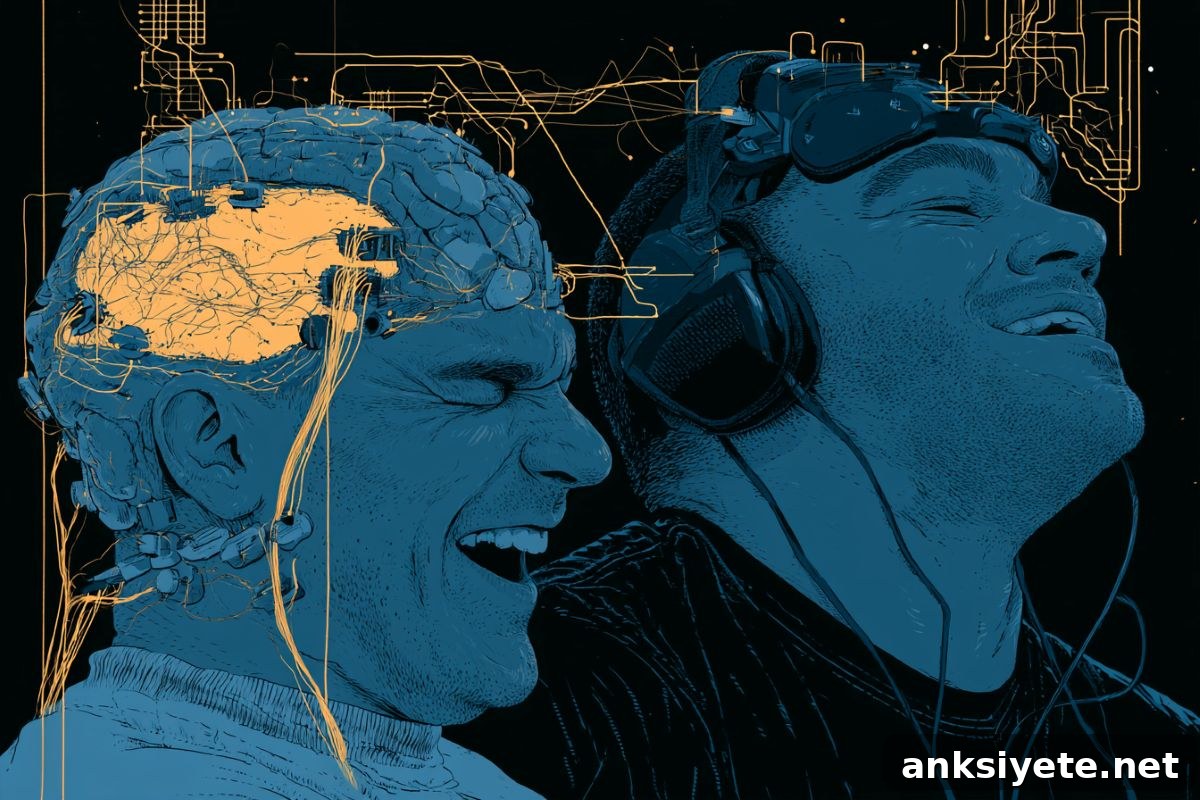
Summary: Laughter is one of humanity’s most universal social signals, yet researchers have struggled to map the precise brain circuits that produce it because genuine, unforced mirth is hard to generate in laboratory settings.
An international team overcame this challenge by reviewing clinical reports from awake pre-surgical epilepsy patients. During these procedures, focused electrical stimulation of specific brain regions sometimes produced involuntary laughter, and because patients were awake they could report whether the response included real positive emotion or was merely a motor reflex. These rare clinical observations offer a unique window into the neural architecture of laughter.
Key Facts
- Dual-network architecture: Human laughter is supported by two anatomically and functionally distinct systems: a deep, emotion-driven spontaneous network and a cortical, motor-driven volitional network.
- Awake surgical mapping: Much of the evidence comes from pre-surgical cortical mapping in awake epilepsy patients, where electrical stimulation of localized nodes can unintentionally elicit laughter and allow immediate subjective reports.
- Spontaneous network and mirth: Stimulation of regions within the spontaneous network — notably the pregenual anterior cingulate cortex, nucleus accumbens, and temporal pole — produces intense, authentic laughter often accompanied by euphoria and a genuine feeling of mirth.
- Volitional network and motor mechanics: Stimulation of the volitional network — including the rolandic operculum, globus pallidus, and presupplementary motor area — triggers the motor acts of laughing or smiling without any accompanying positive emotion.
- Evolutionary roots: The spontaneous system appears to be evolutionarily older, linked to mammalian “rough-and-tumble” play and functioning to reduce aggression and strengthen social bonds. The volitional system overlaps with speech-related motor networks and supports fast, precisely timed conversational laughter.
- Analgesic link: The spontaneous laughter network engages the anterior cingulate cortex, a region involved in the brain’s natural pain-dampening system, offering a neural explanation for why laughter can raise pain thresholds.
Source: Cell Press
Laughter unites people across cultures, but the brain mechanisms behind it have remained elusive because spontaneous mirth rarely appears on demand in laboratory experiments.
Published June 23 in the journal Trends in Neurosciences, the review synthesizes reports from clinical procedures in which awake patients underwent direct electrical brain stimulation. Those stimulations sometimes caused laughter as an unexpected side effect, enabling researchers to identify brain areas capable of evoking laughter and to distinguish whether the response included subjective joy or was merely a motor output.
By combining these clinical observations with other patient studies and animal data, the authors outline a two-system model of laughter: one system that produces spontaneous, emotion-driven outbursts and another that governs deliberate, socially timed laughter used in conversation.
Researchers have long recognized these two broad types of laughter. As Sophie K. Scott (University College London) explains, spontaneous laughter is involuntary and can be overwhelming—“something sets you off and you are helpless with mirth.” This form can appear in some neurological or psychiatric conditions. Volitional laughter, by contrast, is highly controlled and tightly synchronized with speech and breathing during social interaction.
To separate the circuitry for these forms, the research team examined detailed reports from pre-surgical brain mapping in epilepsy patients. Surgeons stimulate tiny cortical and subcortical regions while patients are awake to identify tissue to spare. When stimulation hits certain nodes, laughter can occur, and patients can immediately describe whether they experienced internal joy or only muscular movements.
The review finds that the spontaneous network includes limbic and temporal structures tied to emotional regulation and reward, and stimulation of these sites produces laughter with elevated mood and euphoria. The volitional network, by contrast, is primarily a motor system connected with speech production, and activation there produces laugh-like movements without emotional change.
The authors argue that the spontaneous network likely evolved as an adaptive social signal in mammals to reduce conflict during play and to promote bonding—an idea supported by observations of laughter-like vocalizations in several nonhuman species. The volitional network’s close overlap with speech systems explains how conversational laughter can be timed with millisecond precision to coordinate turn-taking and shared breathing.
Beyond basic neuroscience, these findings have clinical relevance for disorders marked by aberrant laughter and could provide a framework for decoding the social use of vocalizations in language and conversation analysis. The review also highlights the intriguing connection between spontaneous laughter and pain modulation, motivating further inquiry into how laughter activates the brain’s own analgesic circuits.
Key Questions Answered:
A: Inducing authentic, uninhibited laughter inside a laboratory scanner is extremely difficult. To overcome this, researchers reviewed clinical records from pre-surgical brain mapping in awake epilepsy patients. During these procedures, clinicians use small electrical probes to stimulate localized brain regions while patients remain conscious. When those probes hit specific nodes, they can trigger laughter, and the patient can immediately report whether that response reflected true internal joy or only a mechanical muscle reflex.
A: The spontaneous laughter system likely originated as an evolutionary survival mechanism. It shares lineage with the playful vocalizations seen in many mammal species. In early social groups, these involuntary vocal signals communicated that an interaction was playful and harmless, helping to prevent escalation of aggression while strengthening social bonds.
A: Volitional laughter is a precise communicative tool that must start and stop quickly during conversation. To achieve the timing required for coordinated turns and shared breaths, this form of laughter co-opts the cortical motor-control networks that also govern speech production, allowing millisecond-level control in social interaction.
Editorial Notes:
- This article was edited by a Neuroscience News editor.
- The journal paper was reviewed in full.
- Additional context was added by editorial staff.
About this neuroscience and laughter research news
Author: Julia Grimmett
Source: Cell Press
Contact: Julia Grimmett – Cell Press
Image: The image is credited to Neuroscience News
Original Research: Open access. “The neural basis of laughter” by Fausto Caruana and Sophie K. Scott. Trends in Neurosciences
DOI: 10.1016/j.tins.2026.05.002
Abstract
The neural basis of laughter
Behavioral and clinical evidence distinguish two principal forms of human laughter: spontaneous, emotionally driven vocalizations and volitional expressions used for social communication. Progress in understanding the neuroscience of laughter has been limited by the difficulty of capturing spontaneous, natural signals in laboratory settings. Invasive human investigations, such as direct electrical stimulation during awake mapping, provide a rare causal window into the underlying circuitry. Evidence supports a dual-system framework in which an evolutionarily ancient cingulo-temporal network drives spontaneous laughter and its roles in social bonding and analgesia, while a lateral motor-opercular system recruits speech networks to support volitional laughter for social negotiation and conversation.