
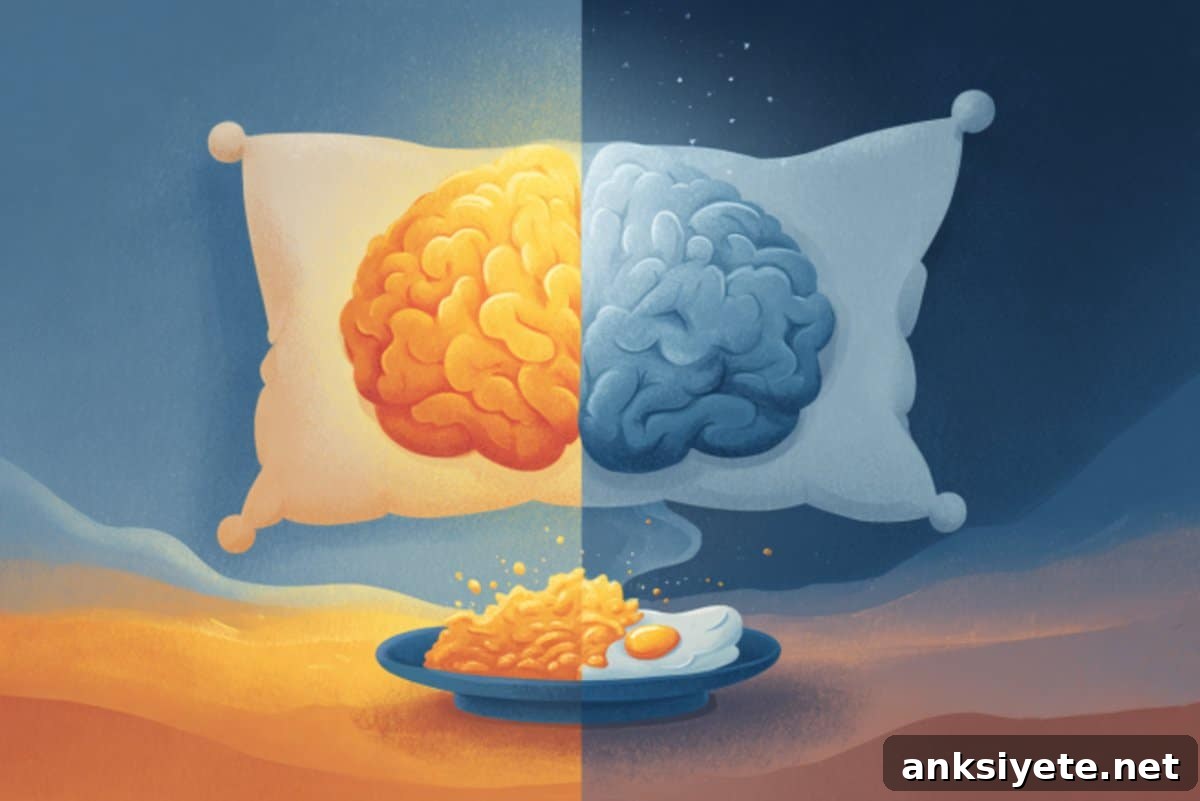
Summary: New experimental work with fruit flies shows that it is not simply the hours of lost sleep that trigger recovery behaviors, but the energy shortfall that can result from certain kinds of sleep loss. When sleep deprivation led to measurable energy depletion, flies increased both food intake and sleep afterward. By contrast, sleep loss that did not reduce energy stores produced no feeding or sleep rebound.
These results highlight a close physiological link between sleep, metabolism, and appetite: the body’s drive to restore energy balance appears to underlie compensatory eating and sleeping. The finding helps explain why disrupted sleep often coincides with overeating and metabolic challenges in other animals, and it suggests that treating sleep and metabolic problems together could be more effective than addressing either alone.
Key Facts
- Energy connection: Sleep deprivation that produces an energy deficit triggers both increased feeding and compensatory sleep.
- Behavioral mechanism: Recovery behaviors are driven by the need to restore energy balance rather than only by the number of lost sleep hours.
- Clinical implication: Integrated treatment strategies that address both sleep and eating behaviors may improve outcomes for metabolic disorders.
Source: SfN
Although sleep and feeding are fundamental behaviors that influence each other, the precise mechanisms linking the two have been unclear. Researchers led by William Ja at the Herbert Wertheim UF Scripps Institute for Biomedical Innovation and Technology used Drosophila (fruit flies) to test how different types of sleep disruption affect subsequent sleep and food intake, while measuring metabolic expenditure.
In the study, the team compared several models of sleep loss, including behavioral and neuronal manipulations that either did or did not increase metabolic rate. They monitored individual flies for changes in sleep time, feeding behavior, and respiratory metabolism. The experiments revealed a consistent pattern: when sleep disruption raised metabolic demand and produced an energy deficit—demonstrated by increased metabolism and food consumption—flies later exhibited clear sleep rebound. When sleep loss did not increase metabolic expenditure and did not deplete energy, there was no compensatory increase in feeding or subsequent sleep.
This work supports the idea that one key function of sleep is energy conservation, and that the homeostatic drive to sleep after deprivation may be triggered specifically by an energy shortfall incurred during wakefulness. In other words, the brain’s signaling for recovery sleep appears tightly coupled to the organism’s metabolic state.
Lead author William Ja notes that these findings reinforce the value of noninvasive, behavior-based sleep interventions for problems involving both sleep and metabolism. Correcting sleep habits may reduce cravings and make dietary changes easier to sustain. Moreover, the results suggest that treating sleep disorders and metabolic disorders separately could be less effective than interventions that address both behaviors together.
Key Questions Answered:
A: In the study, flies that experienced energy-depleting sleep loss compensated by increasing both food intake and sleep to restore balance.
A: No. Only sleep deprivation that produced an energy deficit triggered increased feeding; forms of deprivation that did not increase metabolic expenditure did not cause overeating.
A: While direct translation from flies to humans requires care, the findings imply that improving sleep quality and timing could help regulate appetite and metabolic health, and that combined approaches addressing sleep and eating behaviors may be especially beneficial.
About this sleep and hunger research news
Author: SfN Media
Source: SfN
Contact: SfN Media – SfN
Image: The image is credited to Neuroscience News
Original Research: Closed access.
“Energy Deficit is a Key Driver of Sleep Homeostasis” by William Ja et al., Journal of Neuroscience. DOI: 10.1523/JNEUROSCI.1656-24.2025
Abstract
Energy Deficit is a Key Driver of Sleep Homeostasis
Sleep and feeding are typically mutually exclusive but mutually essential behaviors that affect survival and long-term health. Across species, chronic sleep loss is often associated with higher calorie consumption, while fasting can suppress sleep. Despite these observed links, the causal interactions between sleep and feeding—and how changes in one behavior alter the other—remain incompletely understood.
Drosophila melanogaster provides a powerful model to disentangle sleep loss from the homeostatic rebound that follows, because distinct neuronal and behavioral manipulations can produce sleep loss with or without subsequent rebound. In this study, the authors measured sleep, individual food intake, and respiratory metabolic rate in male flies subjected to manipulations that cause sleep loss.
The investigators found that sleep disruptions that produced an increased metabolic rate and signs of energy deficit were consistently followed by increased food intake and a robust homeostatic sleep rebound. By contrast, forms of sleep loss that did not raise metabolism or food intake did not produce rebound sleep. These results support the hypothesis that energy deficit accrued during sleep deprivation is a key driver of sleep homeostasis.
Overall, the findings emphasize that sleep may serve a critical role in conserving energy and point to the importance of assessing multiple indicators of energy balance—such as metabolism and feeding—when studying sleep regulation. They also highlight the potential value of exploring metabolic treatments that consider effects on sleep, and of designing therapeutic strategies that jointly target sleep and eating behaviors.