
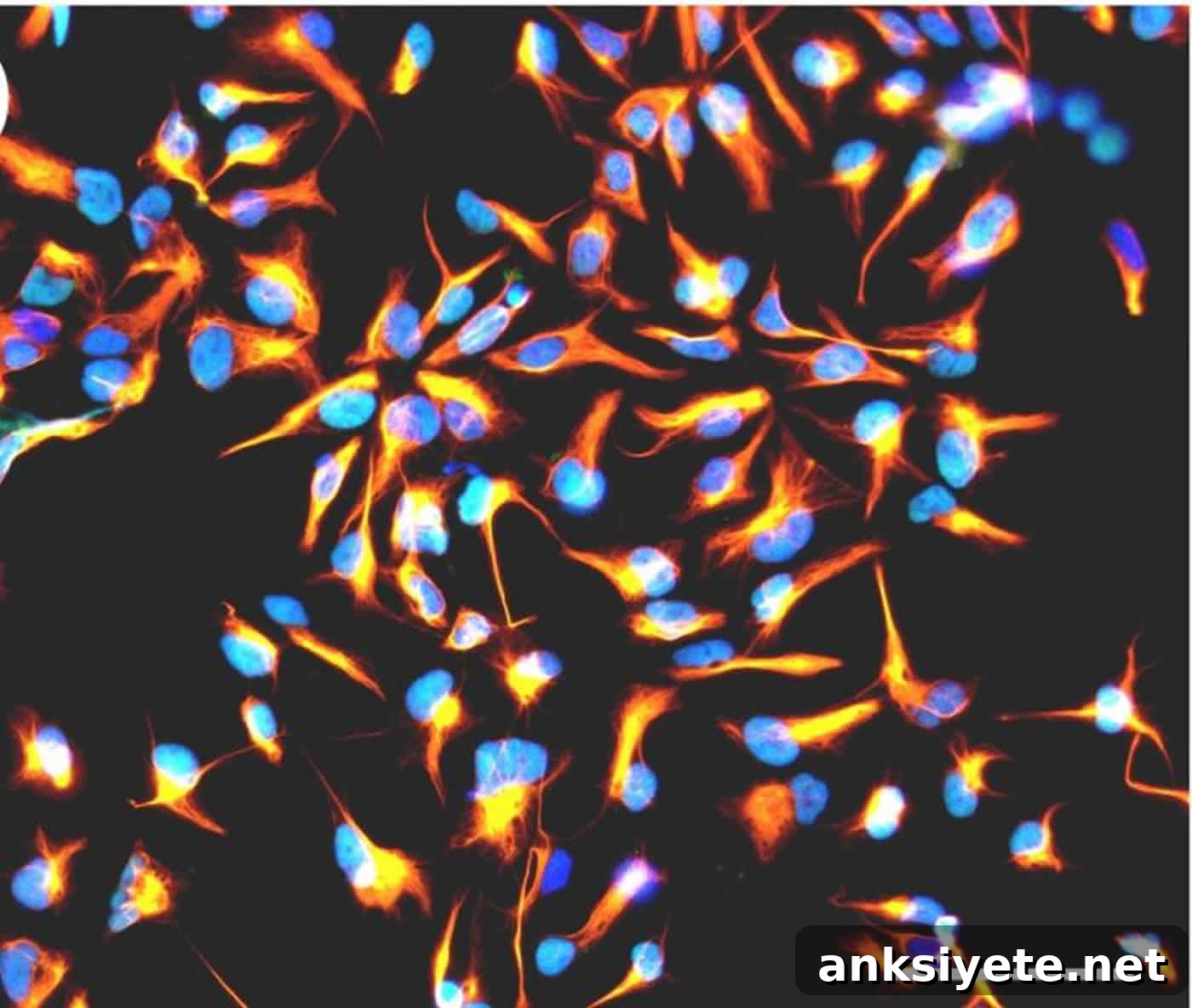
Congenital transmission of viruses from a pregnant person to the fetus can disrupt normal brain development. Human cytomegalovirus (HCMV) is one such virus that can cross the placenta and infect the fetal brain, alongside other pathogens like rubella and Zika virus. A study published on April 14 in PLOS Pathogens investigates how HCMV alters the behavior of human neural stem cells (NSCs) and identifies activation of a key transcription factor—Peroxisome Proliferator-Activated Receptor gamma (PPARγ)—as a mediator that impairs neuron formation.
HCMV is a common cause of congenital infection. In the United States, roughly 1% of newborns are congenitally infected; most appear asymptomatic at birth, but about 20% go on to develop neurological problems that may be present at birth or emerge later. Severe cases can present with marked brain abnormalities, including microcephaly.
To understand how HCMV compromises brain development, researchers led by Stéphane Chavanas at Université de Toulouse and INSERM UMR1043 developed a laboratory model using human neural stem cells derived from embryonic stem cells. These NSCs normally differentiate into neurons at a high rate. In the study, infection with HCMV substantially reduced the generation of neurons from these stem cells, indicating a direct effect of viral infection on neurogenesis.
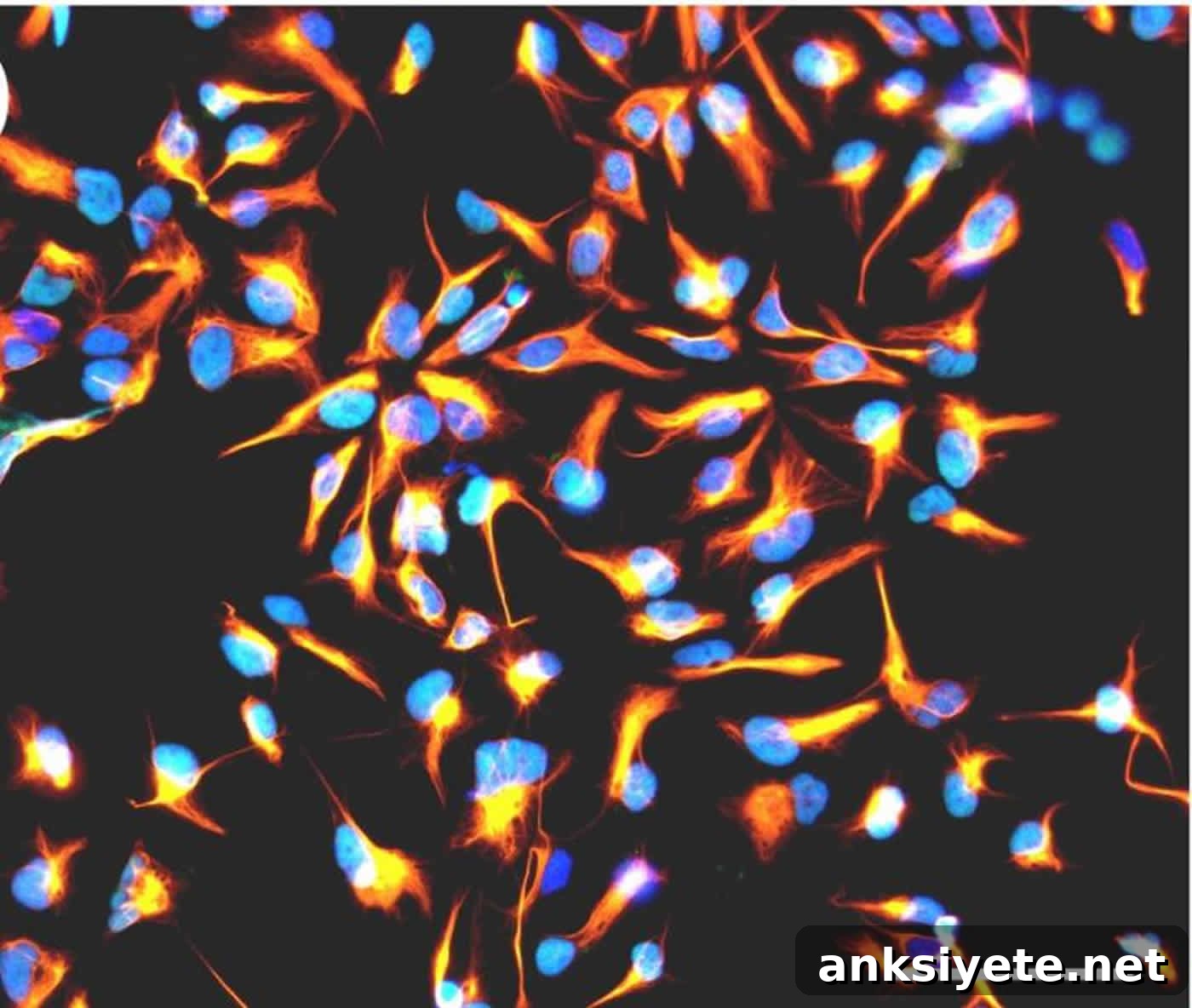
The authors explored molecular mechanisms and focused on PPARγ, a transcription factor known to play important roles in brain development. They found that HCMV infection markedly increased both PPARγ protein levels and its transcriptional activity in infected NSCs. Parallel biochemical analyses showed that levels of 9-hydroxyoctadecadienoic acid (9-HODE)—a naturally occurring lipid agonist of PPARγ—were elevated in infected NSCs compared with uninfected controls.
To test causality, the team exposed uninfected NSCs to 9-HODE and to pharmacological activators of PPARγ. Both manipulations mimicked the effect of HCMV infection by boosting PPARγ activity and reducing the rate at which NSCs produced neurons. Conversely, treating HCMV-infected NSCs with a selective PPARγ inhibitor restored neuron production toward normal levels. These complementary gain- and loss-of-function experiments indicate that PPARγ activation is sufficient and necessary for the observed block in neurogenesis.
To validate the relevance of these cell-culture findings in human tissue, the researchers examined post-mortem brain samples from fetuses with confirmed congenital HCMV infection and compared them with uninfected control samples. In infected fetal brains, PPARγ was detected in the nuclei of cells located in germinative zones—regions where neural stem cells proliferate and generate new neurons—consistent with an active, nuclear-localized role. Nuclear PPARγ was absent in comparable regions from control fetuses, linking the in vitro observations to pathology seen in infected human brains.
The study authors emphasize that human NSCs provide a valuable experimental platform for modeling how congenital viral infections perturb brain development. This cell system can be applied to other prenatal neurotropic viruses, including Zika virus, to interrogate shared and distinct molecular pathways that underlie congenital brain disease. Their data support a model in which HCMV infection elevates 9-HODE and activates PPARγ, which in turn inhibits neuronogenesis and contributes to neurodevelopmental outcomes associated with congenital infection.
Source: Stéphane Chavanas – PLOS
Image Credit: Rolland M, Li X, Sellier Y, Martin H, Perez-Berezo T, Rauwel B, et al.
Original Research: Open-access study titled “PPARγ Is Activated during Congenital Cytomegalovirus Infection and Inhibits Neuronogenesis from Human Neural Stem Cells” by Maude Rolland et al., published in PLOS Pathogens on April 14, 2016 (doi:10.1371/journal.ppat.1005547).
Abstract
PPARγ Is Activated during Congenital Cytomegalovirus Infection and Inhibits Neuronogenesis from Human Neural Stem Cells
Congenital human cytomegalovirus (HCMV) infection is a leading cause of permanent central nervous system sequelae, including sensorineural hearing loss, cerebral palsy, and severe neurodevelopmental disorders. To investigate how HCMV affects neuronal development, the study used human neural stem cells and examined the impact of infection on Peroxisome Proliferator-Activated Receptor gamma (PPARγ). HCMV infection strongly impaired neuronogenesis while increasing PPARγ levels and activity. Infected NSCs accumulated higher amounts of 9-hydroxyoctadecadienoic acid (9-HODE), a PPARγ agonist. Exposure of uninfected NSCs to 9-HODE or pharmacological PPARγ activation reproduced the block in differentiation, whereas inhibition of PPARγ in infected NSCs rescued neuron production. Immunodetection in human fetal brain samples revealed nuclear PPARγ in germinative zones of congenitally infected fetuses but not in controls. These results identify PPARγ activation as a key contributor to impaired neurogenesis during congenital HCMV infection and provide a framework for identifying PPARγ-regulated gene targets in the infected developing brain.