
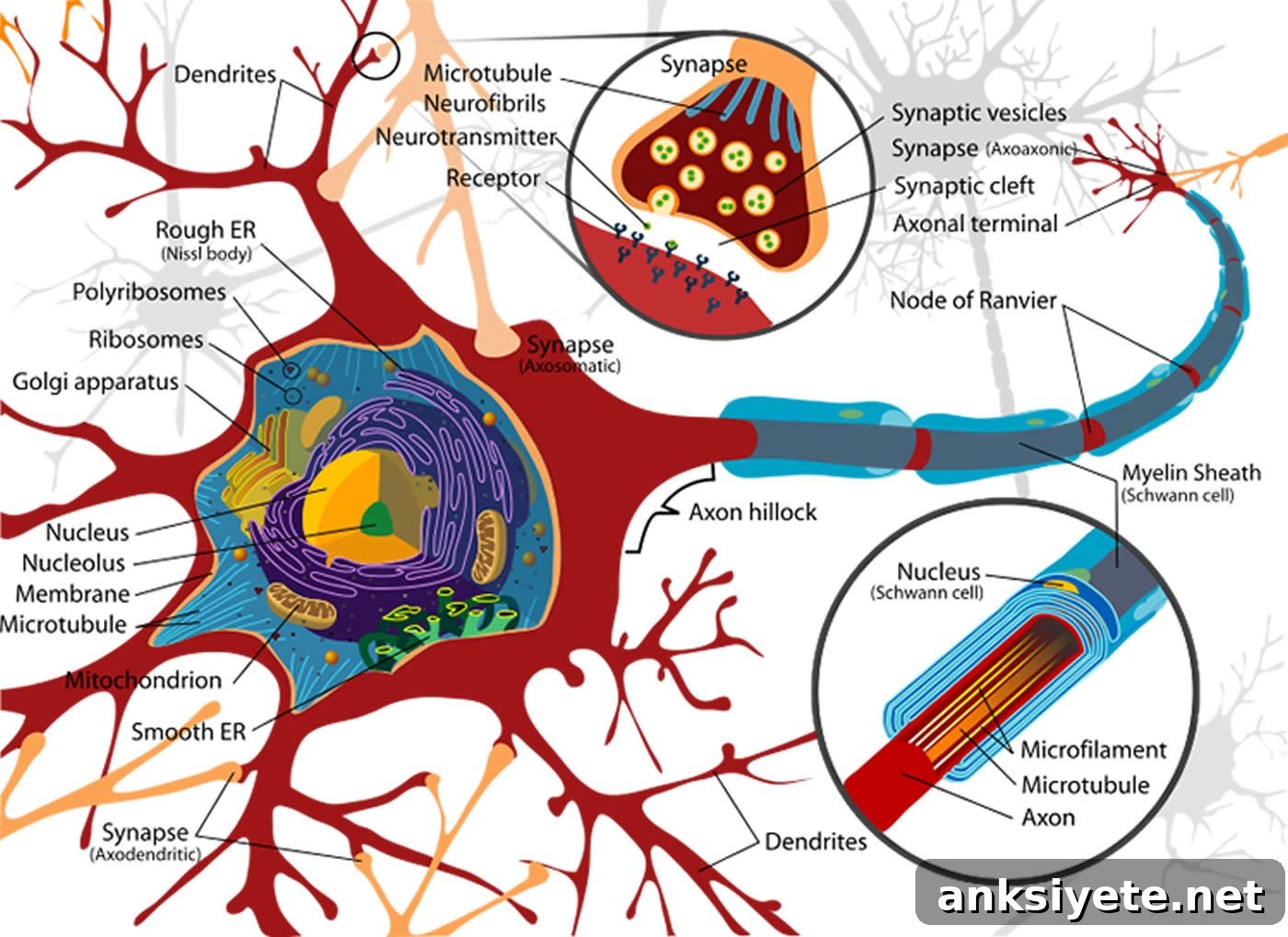
Research over recent decades increasingly indicates that stored memories are encoded by long-lasting changes in neuronal communication and the strength of connections between neurons. Learning triggers distinct patterns of electrical activity in these cells that alter how they respond to incoming signals, modify gene expression, and change cellular morphology beyond the immediate learning event.
“You might say these changes define the cellular correlate of the memory engram,” says Friedrich Johenning, a researcher at the Neuroscience Research Center and one of the study’s co-lead authors. “Our work aims to identify the physiological mechanisms by which a single neuron can implement long-term changes in its responsiveness,” adds co-lead author Anne‑Kathrin Theis.
In this study, the researchers demonstrate that the calcium signal within individual dendritic spines produced by back-propagating action potentials can be enhanced for the long term. Dendritic spines are small yet crucial protrusions on dendrites that mediate synaptic communication between neurons. When an action potential travels back from the soma into the dendritic tree and encounters a spine, calcium concentration inside that spine rises rapidly. This rise results partly from calcium influx across the plasma membrane through voltage- and ligand-gated channels and partly from release of calcium stored inside the neuron via intracellular ryanodine receptors (RyRs).
Activation of RyRs triggers release of stored calcium into the spine cytosol, and this store release can produce sustained modifications of the calcium response that follows electrical impulses. Notably, these changes are highly local: they are confined to individual spines and do not spread uniformly across neighboring spines or the entire dendrite. As a result, each spine can independently regulate its calcium signaling and thus selectively modify its contribution to synaptic transmission.
“The key questions now are how these spine-specific, long-lasting changes in calcium dynamics alter synaptic communication and how similar mechanisms may go awry in neuropsychiatric and neurodegenerative disorders,” says Dietmar Schmitz, senior author and head of the study. Understanding the link between altered spine calcium handling and disease-related dysfunction could open avenues for targeted interventions that stabilize or restore normal synaptic function.
Source: Dr. Friedrich Johenning – Charité Universitätsmedizin Berlin
Image credit: LadyofHats (public domain)
Original research: Full open-access study “Ryanodine Receptor Activation Induces Long-Term Plasticity of Spine Calcium Dynamics” by Friedrich W. Johenning, Anne‑Kathrin Theis, Ulrike Pannasch, Martin Rückl, Sten Rüdiger, and Dietmar Schmitz in PLOS Biology. Published June 22, 2015, doi:10.1371/journal.pbio.1002181
Abstract
Ryanodine Receptor Activation Induces Long-Term Plasticity of Spine Calcium Dynamics
A defining feature of signaling in dendritic spines is the synapse-specific conversion of brief electrical signals into localized biochemical responses. Calcium (Ca2+) is a major effector in this cascade: it acts as both a depolarizing charge carrier at the membrane and as a second messenger inside the cell. When neurons fire action potentials, most spines experience global back-propagating action potential (bAP) Ca2+ transients that translate suprathreshold electrical activity into intracellular biochemical events.
Using a combination of electrophysiology, two-photon Ca2+ imaging, and computational modelling, the authors show that bAPs are electrochemically coupled to Ca2+ release from intracellular stores via ryanodine receptors. They describe a novel function of spine RyRs: activity-dependent, long-term enhancement of bAP-evoked Ca2+ transients. This enhancement is compartmentalized—individual spines regulate bAP Ca2+ influx independently of each other and independently of the dendritic Ca2+ transient. Importantly, induction of this enhancement requires bAPs propagating antidromically into dendrites and spines, while expression of the enhanced Ca2+ transient is a spine-specific function of RyR activity. The findings demonstrate that RyRs can form localized Ca2+ signaling nanodomains within single spines and that RyR-mediated release produces a new form of Ca2+ transient plasticity, which could serve as a spine-specific storage mechanism for patterns of neuronal suprathreshold activity.
“Ryanodine Receptor Activation Induces Long-Term Plasticity of Spine Calcium Dynamics” by Friedrich W. Johenning, Anne‑Kathrin Theis, Ulrike Pannasch, Martin Rückl, Sten Rüdiger, and Dietmar Schmitz. PLOS Biology. Published June 22, 2015. doi:10.1371/journal.pbio.1002181