
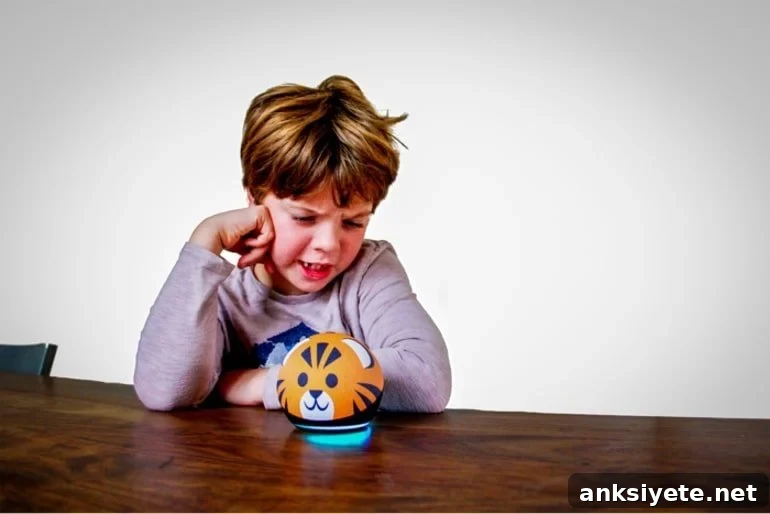
Summary: Children ages 4–11 tend to view Amazon’s Alexa as having more human-like thoughts and feelings than a Roomba vacuum, yet they generally agree that neither device should be yelled at or harmed. Those protective attitudes decrease as children move into adolescence.
Source: Duke University
Most children learn early that yelling at or hitting another person is wrong. But how do they think about similar behavior toward voice assistants and household robots?
A new study by developmental psychologists at Duke University explored how children perceive two familiar home technologies—Amazon’s voice assistant Alexa and the autonomous Roomba vacuum. Researchers asked kids whether these devices can feel, think, or deserve moral consideration, and whether it is acceptable to yell at or physically mistreat them.
Children between the ages of four and eleven were more likely to attribute minds and emotions to Alexa than to the Roomba. Despite these distinctions, most children judged that neither gadget should be subjected to yelling or harm. Those protective judgments, however, weakened with age: older children were somewhat more likely to judge mistreatment of machines as permissible.
The findings were published online April 10 in the journal Developmental Psychology and add to our understanding of how kids form beliefs about interactive technologies they encounter at home.
Lead author Teresa Flanagan, a visiting scholar in Duke’s department of psychology & neuroscience, said the study was partly inspired by portrayals of human-robot interaction in popular media such as HBO’s Westworld.
“Films and shows can depict adults treating robots in cruel ways,” Flanagan said. “We wanted to know how children, who are growing up with conversational devices and household robots, think about those technologies.”
To investigate, Flanagan and her team surveyed 127 children aged 4 to 11 who visited a science museum with their families. Each child watched short video clips of Alexa and a Roomba, then answered structured questions about whether the devices could experience sensations, think, or feel emotions, and whether they deserved moral treatment.
Under the supervision of Tamar Kushnir, Ph.D., the researchers analyzed the responses and found several consistent patterns. Across ages, children generally believed both Alexa and Roomba could not feel physical sensations—few children said the devices would be ticklish or feel pain if pinched. But Alexa received higher ratings for mental and emotional traits: many children thought Alexa could think, understand, or feel upset when treated unkindly, while the Roomba was less often credited with those features.
“Even without a visible humanlike body, young children attribute emotions and a mind to Alexa,” Flanagan explained. “That doesn’t mean they attribute minds to all technologies—children did not treat the Roomba the same way—so Alexa’s verbal, conversational abilities seem to shape their judgments.”
Despite these perceived differences, children at all ages tended to agree that hitting or yelling at the devices was wrong. Younger children especially treated the idea of attacking technology as a clear moral violation, while older children were more likely to view such actions as undesirable but sometimes allowable.
“Four- and five-year-olds often think you simply do not have the freedom to commit a moral violation like attacking another being,” Flanagan said. “As children grow older, they begin to see those behaviors as less absolute—still wrong, but more within someone’s control.”
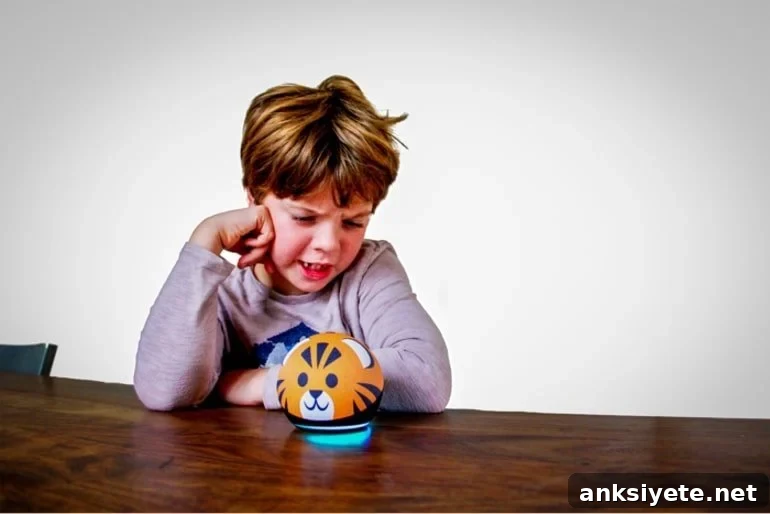
The study also revealed that children’s reasons for opposing harm varied. Some younger participants invoked practical concerns—one 10-year-old said yelling might break the device’s microphone—while others used emotional language, suggesting the robot would “feel really sad.” These responses raise questions about whether children’s judgments reflect moral concern, appreciation of property rights, or a mix of both.
Flanagan and her colleagues note that as interactive technologies become more common in homes and classrooms, children’s developing beliefs about machine minds and moral treatment will matter for socialization. The study prompts further questions for parents and educators: should adults model respectful behavior toward machines, such as thanking voice assistants for help, and how might such modeling influence children’s moral development?
Funding: This research was supported by the U.S. National Science Foundation (SL-1955280, BCS-1823658).
About this AI and emotion research news
Author: Karl Bates
Source: Duke University
Contact: Karl Bates – Duke University
Image credit: Veronique Koch, Duke University
Original Research: Closed access. “The Minds of Machines: Children’s Beliefs About the Experiences, Thoughts, and Morals of Familiar Interactive Technologies” by Teresa Flanagan. Developmental Psychology
Abstract
The Minds of Machines: Children’s Beliefs About the Experiences, Thoughts, and Morals of Familiar Interactive Technologies
Children are growing up alongside interactive technologies that move, speak, and behave like agents. This study examined whether children’s beliefs about common household devices align with beliefs about more advanced humanoid robots used in laboratory research.
In a sample of 127 children aged 4–11 (mean age 7.50; 53% female), researchers compared beliefs about the mental, physical, emotional, and moral properties of Amazon Alexa and Roomba with beliefs about a humanoid robot (Nao). Children’s responses clustered into three dimensions: having experiences, having minds, and deserving moral treatment. Although children attributed some agent-like features to each technology, such attributions declined with age.
Children’s judgments about whether these technologies could “act otherwise” in moral scenarios also shifted with age, indicating a developmental change in how children perceive technological limitations and agency. Systematic differences emerged across Alexa, Roomba, and Nao that correspond to each device’s observable characteristics. Overall, the findings suggest children’s intuitive theories of agency are shaped by the increasingly technological environments they inhabit.