
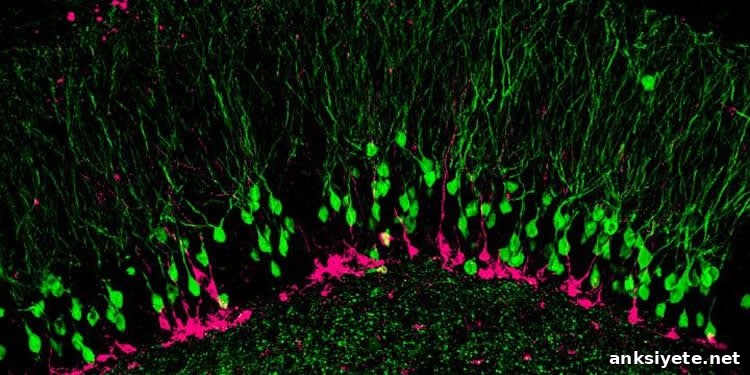
Summary: Researchers describe how newly generated neurons help make memories sharper.
Source: Harvard
Harvard researchers reveal mechanisms by which new neurons sharpen memory precision
The brain’s billions of neurons are largely set at birth, with one important exception: the hippocampus. Deep within the folds of the cerebral cortex, neural stem cells in the hippocampus continue to produce new neurons throughout life. These adult-born neurons must compete with established neurons for connections and space in the memory-forming circuitry.
In a study published in Neuron, scientists at the Harvard Stem Cell Institute, Massachusetts General Hospital, and the Broad Institute of Harvard and MIT, together with international collaborators, report methods that bias this competition in favor of newly generated neurons and thereby improve memory precision.
“The hippocampus enables us to form memories about what happened, when it happened, and where—information critical to navigating daily life,” said Amar Sahay, PhD, HSCI Principal Faculty member and the study’s corresponding author. “Neurogenesis—the ongoing generation of new neurons—plays a key role in keeping similar memories distinct.”
As people age, connections among mature neurons become denser and stronger, which makes it harder for new neurons to integrate. At the same time, neural stem cells decline in productivity, reducing the supply of new neurons. That combination undermines the brain’s ability to separate closely related experiences and can contribute to age-related memory decline.
To test whether the competitive balance could be shifted, the research team selectively increased expression of a transcription factor, Klf9, in mature dentate granule cells in mice. This manipulation reduced more than one-fifth of dendritic spines on those mature neurons, doubled the number of adult-born neurons that successfully integrated into hippocampal circuits, and increased activation of neural stem cells.
Crucially, the effect was reversible. When Klf9 expression returned to normal, the mature neurons rebuilt their dendritic spines and competition resumed. The neurons that had already integrated, however, remained part of the circuit, effectively rejuvenating the dentate gyrus with a larger cohort of functional, age-matched adult-born neurons.
The team used a second, complementary approach by deleting Rac1, a protein required for maintaining dendritic spines, specifically in mature neurons. This also increased survival of adult-born neurons, confirming that selectively weakening spine structure on older cells can promote integration of new neurons without altering neural activity or stem cell proliferation.
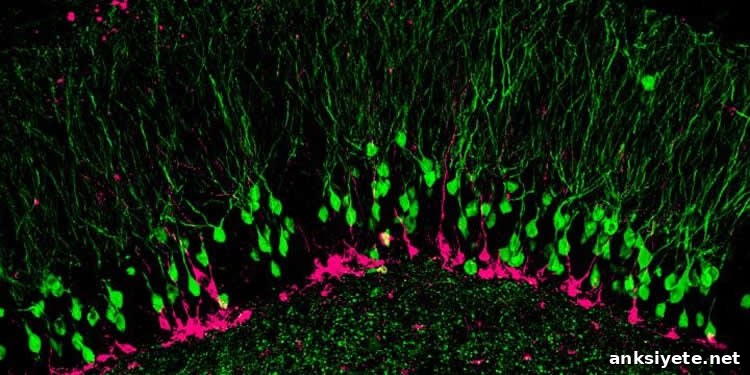
A central function of the dentate gyrus region of the hippocampus is pattern separation: encoding similar experiences using distinct neuronal populations so that closely related memories do not interfere with one another. If two memories recruit overlapping ensembles of neurons, it becomes harder to tell those memories apart and the brain may retrieve the wrong memory in the wrong context—for example confusing a peaceful walk in the woods with a hazardous patrol in the same environment. By encouraging the integration and survival of adult-born neurons, the researchers reduced overlap between neuronal populations encoding related experiences.
Mice with enhanced neurogenesis showed clearer separation between neuronal ensembles and demonstrated more precise, stronger memory performance. Notably, boosting neurogenesis in middle-aged and older mice improved memory precision, indicating that this mechanism can rejuvenate memory circuits across the lifespan.
“Improving the hippocampus’s ability to avoid retrieving past experiences when it is inappropriate could be beneficial,” said Sahay. The finding has potential relevance for conditions where memory precision is impaired, such as age-related memory loss, mild cognitive impairment, and post-traumatic stress disorder, though further research is needed to translate these findings to humans.
Collaboration and funding: The study was carried out by teams from the Harvard Stem Cell Institute, the Broad Institute of Harvard and MIT, Massachusetts General Hospital, Harvard Medical School, Columbia University, Heidelberg University, University Hospital of Cologne, Johannes Gutenberg University, and Echelon Bioscience. Funding was provided by the NIH, the Harvard Stem Cell Institute, and the Harvard Neurodiscovery Center/MADRC Center.
Source and authorship: Report prepared by Hannah L. Robbins, Harvard. Original research led by Kathleen M. McAvoy, Kimberly N. Scobie, Stefan Berger, Craig Russo, Nannan Guo, Pakanat Decharatanachart, Hugo Vega-Ramirez, Sam Miake-Lye, Michael Whalen, Mark Nelson, Matteo Bergami, Dusan Bartsch, Rene Hen, Benedikt Berninger, and Amar Sahay, published in Neuron (2016).
Modulating neuronal competition in the dentate gyrus to rejuvenate aging memory circuits — key points
Highlights
• Eliminating a subset of dendritic spines on mature dentate granule cells (DGCs) enhances the integration of adult-born DGCs.
• Adult neurogenesis determines how populations of DGCs encode information, shaping population-based coding in the dentate gyrus.
• Integration of adult-born DGCs transiently reorganizes incoming local connections to those newborn cells.
• Promoting the integration of adult-born DGCs in adulthood, middle age, and aging improves memory precision.
Abstract summary
Understanding how adult-born dentate granule cells (DGCs integrate into hippocampal circuits and influence memory has been limited. These experiments demonstrate that adult-born DGCs compete with mature DGCs for afferent inputs. Temporarily increasing expression of a negative regulator of dendritic spines, Klf9, in mature DGCs reduced mature cell spines, enhanced integration and survival of newborn DGCs, and activated neural stem cells. When Klf9 expression was normalized, mature spines and activity returned and neuronal competition dynamics reset, while the newly integrated neurons remained. Selective deletion of Rac1 in mature DGCs similarly increased newborn DGC survival. Enhanced integration of adult-born DGCs led to transient changes in local connectivity and promoted global remapping of dentate gyrus activity. Overall, rejuvenating the dentate gyrus by increasing integration of adult-born DGCs improved memory precision across ages.
This article summarizes findings from the original peer-reviewed study and highlights the potential implications for memory function during aging. The described experimental approaches and results reflect the published research and do not imply clinical application without further investigation.