
Summary: Researchers have developed a method to convert non-neuronal cells into fully functioning neurons that form synapses, produce and release dopamine, and restore neural function lost to Parkinson’s disease-related degeneration of dopaminergic cells.
Source: Arizona State University
Neurodegenerative diseases progressively damage and destroy neurons, undermining both mental and physical health. Parkinson’s disease, which affects millions worldwide, is characterized by the loss of a specific class of midbrain neurons that produce dopamine. This dopamine loss drives the hallmark motor symptoms of the disease and contributes to many non-motor complications.
In new research led by Jeffrey Kordower and colleagues, scientists describe a reproducible process using induced pluripotent stem cells (iPSCs) to generate dopamine-producing neurons. These engineered cells survive after implantation, extend long projections across brain tissue, form synaptic connections, release dopamine, and restore motor function in animal models of Parkinson’s disease.
This proof-of-concept study identifies a specific cell preparation that optimizes survival, growth, connectivity, and dopamine production when grafted into the brains of rats, resulting in a measurable reversal of Parkinsonian motor deficits.
Cell replacement therapy using pluripotent stem cells represents a promising new strategy for treating Parkinson’s disease and other neurodegenerative conditions. Based on these preclinical results, the team will move forward with a first-in-kind clinical trial focused on patients carrying a Parkin gene mutation — a genetic form of Parkinson’s disease — with initial sites including the Barrow Neurological Institute in Phoenix, where Kordower will serve as principal investigator.
“We are excited to offer this approach to individuals with this genetic form of Parkinson’s disease,” Kordower says. “Importantly, the insights gained from this trial will also inform treatments for sporadic or non-genetic forms of the disease.”
Kordower directs the ASU-Banner Neurodegenerative Disease Research Center at Arizona State University and is the Charlene and J. Orin Edson Distinguished Director at the Biodesign Institute. The study details an optimized protocol to prepare iPSC-derived dopaminergic progenitors suitable for transplantation to treat Parkinson’s disease.
The research is published in the journal Nature Regenerative Medicine.
New perspectives on Parkinson’s disease
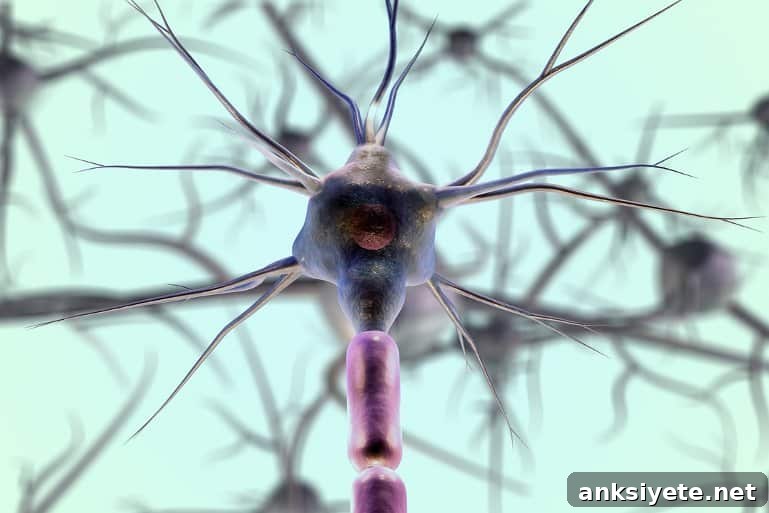
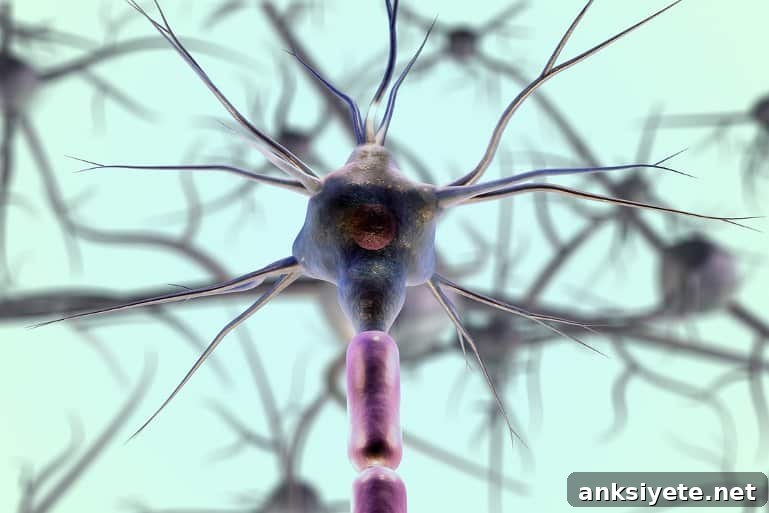
Neurons are distinctive cells with branching axons and dendrites that transmit electrical signals to regulate everything from movement to cognition. Dopaminergic neurons in the midbrain control motor function and influence mood and cognition. When these cells degenerate, Parkinson’s disease emerges, producing symptoms such as rigidity, tremor, postural instability, depression, anxiety, memory problems, hallucinations, and in later stages, dementia.
With an aging global population, Parkinson’s disease cases are projected to rise substantially in coming decades. Current symptomatic treatments, including levodopa (L-DOPA), relieve some motor symptoms but often lead to diminishing benefits and adverse effects after years of use. There is currently no therapy that reliably stops or reverses neuronal loss in Parkinson’s disease, highlighting the urgent need for innovative approaches such as cell replacement therapy.
A (pluri) potent weapon against Parkinson’s
Replacing damaged neurons is an attractive concept, but implanting viable, functional neurons that integrate into the brain poses multiple technical challenges. Progress accelerated after the discovery that mature cells can be reprogrammed into induced pluripotent stem cells, which are capable of differentiating into many cell types, including midbrain dopaminergic (mDA) neurons. These pluripotent cells behave similarly to fetal stem cells, which in development migrate and transform into heart, nerve, lung, and other tissues.
Neural alchemy
The study focuses on iPSCs generated from adult blood cells through a two-step process. First, mature blood cells are reprogrammed to a pluripotent state. Second, these iPSCs are guided with specific factors to differentiate into dopamine-producing neuronal progenitors and neurons. Timing and developmental stage during this second phase proved critical to producing cells that survive, grow, and function after transplantation.
“The major finding is that the timing of differentiation matters,” Kordower explains. “Cells cultured for 17 days before halting division and guiding their maturation performed best in our experiments.”
Pitch-perfect neurons
The researchers compared cells differentiated for 17, 24, and 37 days. Progenitors cryopreserved at day 17 (D17) outperformed cells matured longer: they survived in higher numbers, extended longer axonal projections, and produced more robust innervation of target brain regions. In rats with experimentally induced Parkinsonism, grafts of D17 progenitors produced substantial, dose-dependent recovery of motor function. Small grafts produced little benefit, while larger grafts resulted in extensive neural branching and complete reversal of symptoms in treated animals.
The initial clinical trial will target patients with Parkin mutations — a subgroup that typically presents with classic motor features of Parkinson’s but less cognitive decline — making them an ideal group to evaluate cell replacement therapy. Positive outcomes could lead to broader clinical trials for the idiopathic forms of Parkinson’s disease affecting most patients.
Combining cell therapy with existing treatments could further improve outcomes. By seeding the brain with dopamine-producing cells, clinicians may be able to reduce dosages of medications like L-DOPA, lowering side effects while preserving or enhancing therapeutic benefit.
Beyond Parkinson’s disease, this approach could inform strategies to replace or support neurons affected in other neurodegenerative conditions. “Patients with Huntington’s disease, multiple system atrophy, or certain aspects of Alzheimer’s disease might also benefit from targeted cell replacement in the future,” Kordower notes.
About this Parkinson’s disease research news
Author: Press Office
Source: Arizona State University
Contact: Press Office – Arizona State University
Image: The image is in the public domain
Original Research: Open access.
Title: “Optimizing maturity and dose of iPSC-derived dopamine progenitor cell therapy for Parkinson’s disease” by Benjamin M. Hiller et al. Nature Regenerative Medicine
Abstract
Optimizing maturity and dose of iPSC-derived dopamine progenitor cell therapy for Parkinson’s disease
Differentiated induced pluripotent stem cells (iPSCs) are a promising source of midbrain dopaminergic (mDA) cells for cell replacement therapy in Parkinson’s disease. Building on prior protocols that produced post-mitotic mDA neurons capable of reversing experimental Parkinsonism in rats, this study adapts the iPSC starting material and refines the differentiation process for clinical translation.
The team tested the impact of cellular maturity on graft survival and functional efficacy by transplanting three developmental stages into immunocompromised hemiparkinsonian rats: mDA progenitors cryopreserved at day 17 (D17), immature neurons at day 24 (D24), and post-mitotic neurons at day 37 (D37). D17 progenitors showed superior survival, fiber outgrowth, and restoration of motor function compared with D24 and D37 cells. When implanted into the ventral midbrain, D17 cells more effectively innervated distant forebrain targets, including the striatum.
Across a wide dose range (7,500–450,000 cells injected per striatum), D17 grafts produced a clear dose–response in surviving neuron numbers, innervation density, and functional recovery. Notably, no teratomas or substantial growth of non-neuronal cells were observed. These results support the use of human iPSC-derived D17 mDA progenitors for clinical development and upcoming transplantation trials in patients with Parkinson’s disease.