
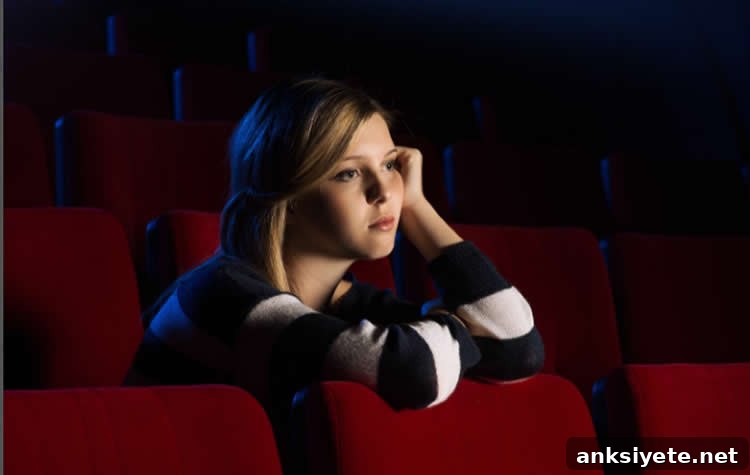
Summary: Why do we find pleasure in films, music, and artworks that evoke sadness, fear or horror? Researchers at the Max Planck Institute propose a psychological model that helps explain this apparent paradox.
Source: Max Planck Institute.
Why we enjoy sad and negative emotions in movies and art
Researchers at the Max Planck Institute for Empirical Aesthetics have proposed a new psychological model explaining why people often take pleasure in art that provokes sadness, fear or horror.
Recent advances in the psychology of emotion show that negative feelings capture attention more effectively, are experienced with greater intensity, and gain privileged access to memory. These properties match the goals of many artistic practices, which aim to secure attention, generate strong subjective responses and create lasting impressions. The Max Planck research team, led by Winfried Menninghaus, asked whether negative emotions might be not merely tolerated in art but actually function as useful resources for aesthetic experience.
Published in Behavioral & Brain Sciences, their answer is affirmative. The Distancing-Embracing model explains why artworks that engage us in negative emotions often feel more intense, interesting and emotionally moving—and why many people even describe such works as more beautiful than works that avoid negative affect.
Two core mechanisms: distancing and embracing
The model rests on two central factors. The first, well-established in aesthetics research, is emotional distancing: when we encounter art we mentally place the experience in a different category from everyday life. This cognitive frame creates a protective space, a safe context where negative emotions can be felt without the real-world consequences that normally accompany them.
The second factor, which is the heart of the model, explains how negative emotions can be positively integrated into aesthetic pleasure. Several mechanisms under this “embracing” component make negative feelings enriching rather than simply aversive.
Variation, mixed feelings and narrative tension
Variation and dynamic interplay of emotions play a crucial role in aesthetic experience. Artworks that combine positive and negative affect are perceived as more varied, exciting and engaging. Mixed emotions—complex blends of sadness with beauty, fear with exhilaration, or grief with meaning—allow negative feelings to be woven into an overall pleasurable response. This is why being deeply moved can be experienced as positive even when sadness is part of the reaction.
Moreover, narrative tension depends on felt uncertainty, worry or fear for characters; without these uneasy states, the rewarding release of resolution and triumph would be diminished. In other words, anxiety and concern are essential ingredients for dramatic payoff.
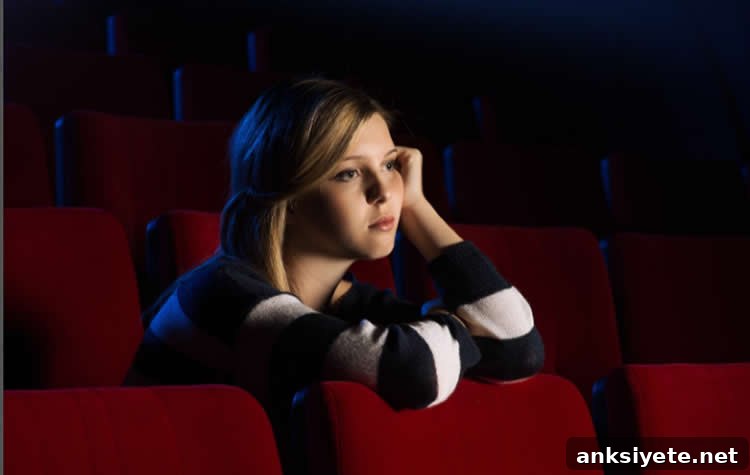
Form, meaning and aesthetic appreciation
The aesthetic qualities of a work—its music, language, imagery, composition and color—also transform negative feelings. Formal beauty and expressive skill can intensify negative emotions while simultaneously making them pleasurable. At the same time, the search for meaning helps viewers and readers discover positive insight or felt significance within otherwise painful content. This cognitive integration explains how encountering sorrow in art can lead to reflection, catharsis and renewed perspective.
Taken together, the Distancing-Embracing model integrates recent discoveries in affective science with established principles of aesthetic perception. It resolves the long-standing “paradox of tragedy” by showing that negative emotions are not accidental or merely tolerated in art; they are often central drivers of attention, memorability and profound emotional impact. The model applies broadly across genres—tragedy, horror, melodrama and beyond—and identifies psychological mechanisms that shape responses to art and media in general.
Study lead: Winfried Menninghaus, Max Planck Institute for Empirical Aesthetics.
Publisher: Organized by NeuroscienceNews.com (reporting on the research).
Image source: Image adapted from the Max Planck press release.
Original research: Menninghaus, W., Wagner, V., Hanich, J., Wassiliwizky, E., Jacobsen, T., & Koelsch, S. (2017). “Negative emotions in art reception: Refining theoretical assumptions and adding variables to the Distancing-Embracing model.” Behavioral & Brain Sciences. Published online November 29, 2017. DOI: 10.1017/S0140525X17001947.
Max Planck Institute. Beautifully Sad: Why We Enjoy Negative Emotions in Movies and Art. NeuroscienceNews, December 4, 2017. (Report summarizing research by Winfried Menninghaus and colleagues.)
Abstract
Negative emotions in art reception: Refining theoretical assumptions and adding variables to the Distancing-Embracing model
This response focuses on key questions raised by commentary on the model: How can emotional distancing coexist with strong felt negative emotions during art reception? What is the concept of pleasurable mixed emotions implied by the model? And how might mechanisms such as predictive coding, social sharing, and immersion augment the model’s explanatory power? The authors refine theoretical assumptions and propose additional variables that clarify how distancing and embracing together shape why negative emotions are often experienced as meaningful and enjoyable in aesthetic contexts.