
Summary: Researchers report that restoring the function of lymphatic vessels that surround the brain significantly improves learning and memory in aged mice, offering a potential new strategy to prevent or treat Alzheimer’s disease and age-related cognitive decline.
Source: University of Virginia Health System.
Aging lymphatic vessels that connect the brain to the immune system play a critical role in both Alzheimer’s disease and the cognitive decline associated with normal aging, new research reveals. Scientists at the University of Virginia School of Medicine found that improving meningeal lymphatic function dramatically enhanced learning and memory in aged mice. These findings point to a promising, previously unexplored therapeutic direction for preventing or slowing neurodegenerative disease and age-related memory loss.
The study comes from the laboratory of neuroscientist Jonathan Kipnis, PhD, whose team first reported in 2015 that the brain is encased in lymphatic vessels—structures that textbooks had long denied. That discovery reshaped thinking about brain-immune system interactions and is now extended by results demonstrating that meningeal lymphatic health directly affects cognition. Kipnis commented, “When you take naturally aging mice and you make them learn and remember better, that is really exciting. If we can make old mice learn better, that tells me there is something that can be done.”
How the Brain Clears Waste
The meningeal lymphatic vessels, once overlooked, are essential for the brain’s waste-clearance pathways. The new work provides the most comprehensive view to date of how these vessels influence brain homeostasis and cognitive function during aging.
Kipnis and colleagues used a compound to boost lymphatic drainage from the brain into the cervical lymph nodes of aged mice. Treatment enlarged the vessels and improved their drainage capacity, which translated into marked improvements in learning and memory tests. “This is the first time we can enhance cognitive ability in an old mouse by targeting the lymphatic vasculature around the brain,” Kipnis said. The result prompted the team to ask whether similar processes could influence Alzheimer’s disease.
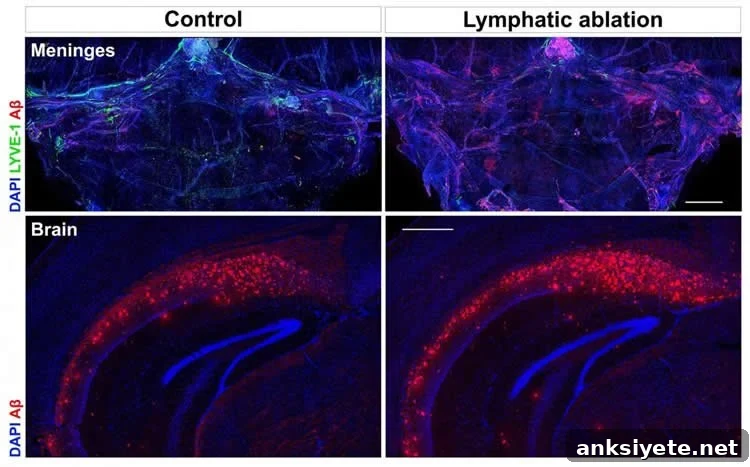
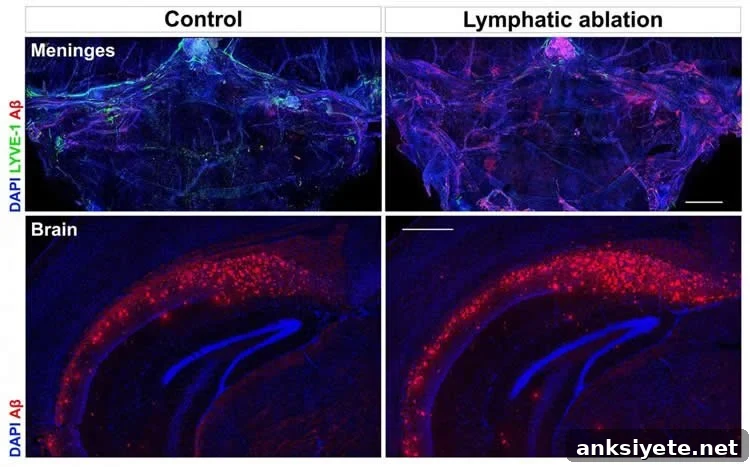
The researchers found that experimentally obstructing meningeal lymphatic vessels in mice accelerated the buildup of amyloid-β plaques, a hallmark of Alzheimer’s pathology. This observation suggests that compromised lymphatic clearance with age may contribute to plaque accumulation in humans, a process that has been poorly understood. “In human Alzheimer’s disease, most cases are not familial, so it’s a matter of what is affected by aging that gives rise to this disease,” said Sandro Da Mesquita, PhD. “Identifying the specific changes in human meningeal lymphatics could help us develop targeted approaches to treat age-related brain disorders.”
Kipnis added that impairing lymphatic function in mouse models made the disease features look more like human Alzheimer’s, with greater amyloid aggregation in both brain tissue and the meningeal membranes. This alignment with human pathology strengthens the case that meningeal lymphatic decline is a meaningful contributor to disease progression.
Treating or Preventing Alzheimer’s
Building on these results, the research team aims to develop therapies that enhance meningeal lymphatic performance in people. Improving lymphatic flow could be pursued either as a stand-alone strategy or in combination with other Alzheimer’s therapies. The investigators believe that restoring vessel function might overcome barriers that have limited the effectiveness of some past treatments, possibly making previously unsuccessful approaches viable again.
Da Mesquita emphasized the need for clinically practical ways to measure meningeal lymphatic function in humans so that therapies can be targeted and monitored. Kipnis suggested that, even if reversing advanced Alzheimer’s proves difficult, maintaining robust lymphatic drainage could delay onset and preserve cognitive function well into advanced age.
The team also notes the possibility that strengthening meningeal lymphatic function could delay Alzheimer’s onset beyond a typical human lifespan, potentially reducing the need for aggressive interventions later in life. “It may be very difficult to reverse Alzheimer’s, but maybe we would be able to maintain a very high functionality of this lymphatic vasculature to delay its onset to a very old age,” Kipnis said.
Findings Published
The study’s results were published in the journal Nature. Antoine Louveau and Sandro Da Mesquita are among the lead authors on the paper, which includes contributions from a large multidisciplinary team spanning neuroscience, imaging, genomics, neurosurgery and biomedical engineering. Kipnis highlighted the collaborative nature of the work and the value of combining expertise across labs and disciplines to address complex problems in brain aging and disease.
Funding: The work was supported by grants from the National Institute on Aging (NIH), the Cure Alzheimer’s Fund, the Hobby Foundation, the Owens Family Foundation, the Thomas H. Lowder Family Foundation, and the American Cancer Society.
Source: Josh Barney – University of Virginia Health System
Publisher: Organized by NeuroscienceNews.com
Image Source: Courtesy Kipnis lab
Original Research: “Functional aspects of meningeal lymphatics in ageing and Alzheimer’s disease,” published July 25, 2018, in Nature. doi: 10.1038/s41586-018-0368-8
University of Virginia Health System. “Brain Discovery Could Block Aging’s Terrible Toll on the Mind.” NeuroscienceNews. July 25, 2018.
Abstract
Functional aspects of meningeal lymphatics in ageing and Alzheimer’s disease
Ageing is a major risk factor for many neurological disorders, but the mechanisms are not fully understood. Unlike other tissues, the brain parenchyma lacks classical lymphatic vessels and removes waste in part via paravascular routes. The (re)discovery and characterization of meningeal lymphatic vessels prompted an investigation of their role in central nervous system (CNS) waste clearance. The study shows that meningeal lymphatic vessels drain macromolecules from cerebrospinal and interstitial fluids into cervical lymph nodes in mice. Impairing meningeal lymphatic function slows paravascular influx and efflux of macromolecules, induces cognitive deficits, and accelerates amyloid-β accumulation in mouse models of Alzheimer’s disease. Conversely, treatment of aged mice with vascular endothelial growth factor C enhances drainage, improves brain perfusion, and rescues learning and memory. Meningeal lymphatic dysfunction may therefore aggravate Alzheimer’s pathology and age-related cognitive decline, and augmentation of meningeal lymphatic function could represent a therapeutic strategy to prevent or delay neurological disease associated with aging.