
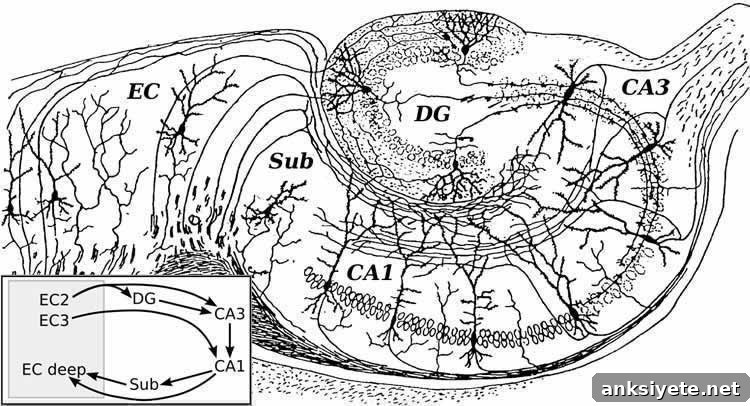
Hippocampal Replay Strengthens Memory for Highly Rewarded Locations
Summary: Hippocampal replay selectively enhances memory for highly rewarded locations in a familiar environment.
Source: VIB
A team of researchers at NeuroElectronics Research Flanders (NERF), supported by imec, KU Leuven and VIB, found that highly demanding and highly rewarding experiences produce stronger long-term memories. By studying spatial navigation in rats, the team traced this selective memory enhancement to replay processes in the hippocampus, a central brain region for memory processing. These results shed light on memory consolidation, a fundamental but still mysterious brain function.
Reward, Difficulty, and Memory
We tend to remember important experiences better than mundane ones. Enhanced memory can arise from stronger encoding during the original experience or from consolidation that occurs afterward. Prior research has shown that highly rewarding experiences often lead to stronger and longer-lasting memories. The researchers at NERF investigated whether reward-driven changes in hippocampal replay after learning contribute to this selective strengthening of memory.
“One of the ways in which our brains consolidate memories is by mentally reliving the experience,” explains Prof. Fabian Kloosterman, who leads research into memory processing. Biologically, this process corresponds to the reactivation, or replay, of neuronal activity patterns associated with a specific experience. Replay takes place in hippocampal-cortical networks during periods of rest or sleep.
Experimental Design: Two Rewarded Locations
To explore how reward affects memory consolidation, the researchers trained rats in a familiar spatial task with two goal locations. One location delivered a large reward (nine food pellets) while the other gave a small reward (one pellet). The team tested how well rats remembered each location and how memory depended on the complexity of the task and on hippocampal replay following learning.
As expected, rats demonstrated stronger memory for the location offering the larger reward. Importantly, the reward-related advantage was most pronounced when the rewarded location required more complex memory formation—when finding the reward involved more challenging navigational demands or higher cognitive load.
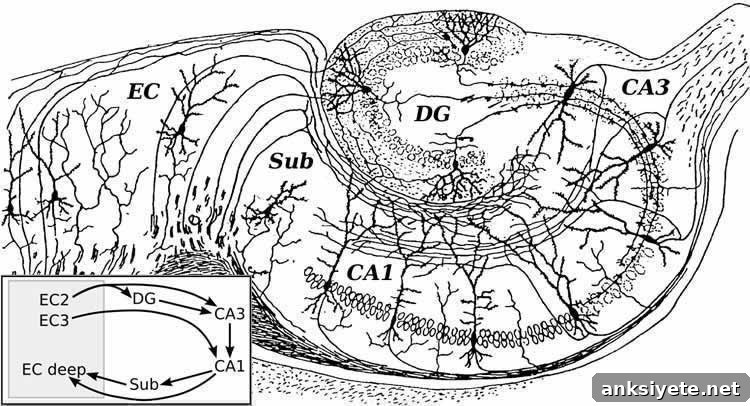
Disrupting Replay Reveals Its Role
To determine whether post-learning replay actually contributes to memory consolidation for highly rewarded locations, the team selectively disrupted hippocampal replay after the animals had the opportunity to learn the reward locations. This targeted disruption did not affect all memories equally: it specifically impaired memory for the highly rewarded locations, and the impairment was most evident when rewards were located in places that demanded more complex navigation or learning.
These findings indicate that replay occurring after initial learning plays a causal role in consolidating memories for locations associated with high reward. The effect depends on task difficulty: replay appears to be especially important when the brain must form more detailed or complex spatial representations.
Mechanisms and Broader Implications
The study supports a model in which hippocampal replay preferentially reactivates neural sequences linked to salient, highly rewarding experiences, thereby strengthening those memory traces during offline periods of rest. Replay events were biased toward trajectories associated with higher reward and their frequency correlated with both reward size and task demands. In short, hippocampal replay selectively reinforces spatial memory for highly rewarded locations in a familiar context.
Understanding how replay contributes to selective consolidation has implications beyond basic neuroscience. Insights into the mechanisms that prioritize important memories could help guide future strategies to strengthen memory in clinical settings or mitigate memory decline in conditions such as dementia. While this research used a relatively simple behavioral paradigm—rats navigating for food pellets—it provides a controlled model for studying how reward, difficulty and offline neural activity interact to shape long-term memory.
Study Details and Highlights
Key findings
- Rats showed stronger memory performance for locations associated with large rewards.
- Disrupting hippocampal sharp-wave ripple activity after learning selectively impaired memory for the highly rewarded locations.
- Post-learning hippocampal replay events were biased toward trajectories linked to higher reward and correlated with task difficulty.
Conclusion
Post-learning hippocampal replay makes a targeted contribution to memory consolidation by reinforcing spatial representations tied to highly rewarding experiences, particularly when forming those memories is cognitively demanding. These results clarify an important role for replay in the selective prioritization of memories based on their significance and the demands of the task.
Source:
VIB
Media contact:
Sooike Stoops – VIB
Image source:
The image is in the public domain.
Original research:
“Post-learning Hippocampal Replay Selectively Reinforces Spatial Memory for Highly Rewarded Locations.” Frédéric Michon, Jyh-Jang Sun, Chae Young Kim, Davide Ciliberti, Fabian Kloosterman. Current Biology. Open access.