
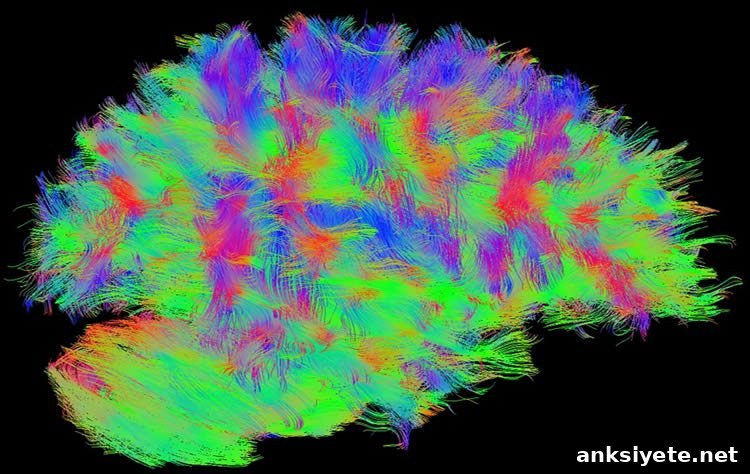
Summary: Researchers at the University of Pittsburgh have secured NIH funding to advance a new neuroimaging system based on ultrahigh-field 7 Tesla MRI technology.
Source: University of Pittsburgh.
The University of Pittsburgh operates a whole-body 7 Tesla magnetic resonance imager (7T MRI), one of the most powerful human MRI systems in the world. This ultrahigh-field scanner gives researchers exceptional sensitivity and resolution for studying brain structure and function. Tamer Ibrahim, associate professor of bioengineering at Pitt’s Swanson School of Engineering, directs the Radiofrequency (RF) Research Facility and leads both experimental and human imaging studies on this device—one of roughly five dozen 7T human MRI systems worldwide.
Over the past two years, Ibrahim and collaborators in Pitt’s Departments of Psychiatry and Epidemiology have received nearly $5 million in direct funding as part of NIH grants that together exceed $18 million and extend through 2022. These awards support the development and clinical application of innovative 7T human imaging technologies designed to improve neuroimaging precision and to enable new clinical studies.
Ibrahim and his team of bioengineering students designed and optimized a distinctive RF coil array known as the “Tic‑Tac‑Toe” RF coil system for 7T human MRI. The system combines tightly arranged transmit and receive antenna elements configured to surround the human head, producing improved radiofrequency excitation and reception. The coil design evolved through extensive computational modeling using full-wave electromagnetic simulations developed in Ibrahim’s laboratory.
Despite progress, ultrahigh-field neuroimaging at 7T still faces important technical and logistical challenges: lengthy scan preparation and acquisition times for each subject; radiofrequency excitation inefficiencies and intensity losses; risks of local RF heating; and variability in RF safety and performance between individuals. Addressing these issues is essential to translate 7T MRI advances into routine clinical and research use.
“The Tic‑Tac‑Toe RF coil system is a novel approach that addresses many of the technical challenges associated with ultrahigh-field human MRI,” said Ibrahim. “By producing consistent and homogeneous RF excitation across different patients, our design yields clearer, more reliable images that can reveal features not visible with lower-field systems.”
In a recent NIH R01 award where Ibrahim serves as principal investigator, his group is applying the Tic‑Tac‑Toe coil and new 7T RF hardware to study cerebral small vessel disease in older adults with depression. Small vessel disease and its signature brain changes have been linked to late-life depression, but conventional imaging often lacks the resolution and specificity required to identify the underlying mechanisms. High-field 7T imaging promises to reveal finer structural and microvascular detail that can improve understanding of disease processes, treatment response, and clinical management.
This $3.1 million project will use the lab’s existing Tic‑Tac‑Toe coil and will also further develop a new 7T RF coil system to improve sensitivity and safety for targeted studies of white matter hyperintensities (WMH) and other markers of small vessel disease. “White matter hyperintensities in the brain are a hallmark of small vessel disease and are associated with depression in older adults,” Ibrahim explained. “Traditional MRI does not always provide enough detail to distinguish the specific lesion components and microstructural changes. Ultrahigh-field MR imaging allows for greater specificity of WMH and related features, which gives us a more complete picture of the neurobiology of depression.”
Beyond studies of late-life depression and small vessel disease, the RF technology developed in Ibrahim’s lab has contributed to research on a range of neurological disorders, including Alzheimer’s disease, schizophrenia, sickle cell disease, and major depressive disorder. Improved coil design and higher-field imaging enable researchers to visualize subtle structural and microstructural differences that can inform diagnosis, prognosis, and therapy development.
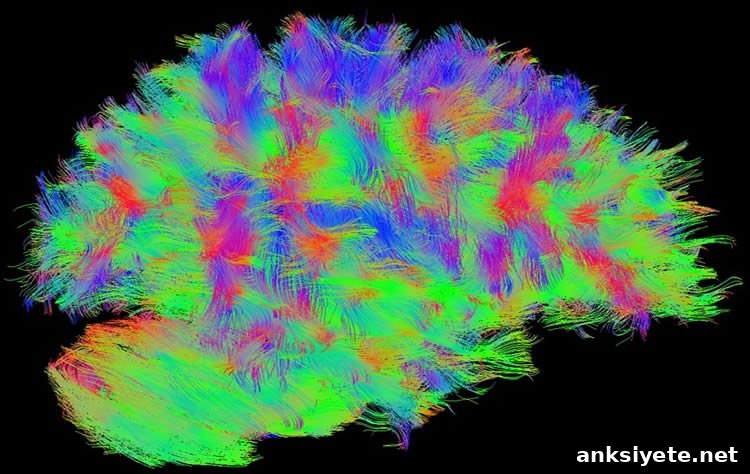
Ibrahim’s laboratory is staffed primarily by graduate and undergraduate students who design, build, and validate advanced RF devices and then implement them in clinical imaging studies. “Our lab applies engineering and physics-based innovations directly to patient-level research,” said Ibrahim. “It’s rewarding to see concepts we develop in the Swanson School of Engineering translate into experiments that can have real clinical impact.”
Work in the RF Research Facility emphasizes rigorous engineering principles, comprehensive safety testing, and close collaboration with clinical investigators to ensure that coil performance and 7T imaging protocols meet the needs of complex neuroimaging studies. Continued NIH support enables the team to refine RF hardware, reduce acquisition times, mitigate RF heating risks, and standardize procedures so that high-field MRI can be used safely and effectively across diverse patient populations.
Source: Leah Russell — University of Pittsburgh
Publisher: Organized by NeuroscienceNews.com.
Image Source: Image adapted from the University of Pittsburgh news release.
This summary highlights the development and clinical application of novel 7T MRI RF coil technology at the University of Pittsburgh, recent NIH-funded projects led by Tamer Ibrahim, and the potential impact of ultrahigh-field neuroimaging on research into small vessel disease, depression, and other neurological disorders.