
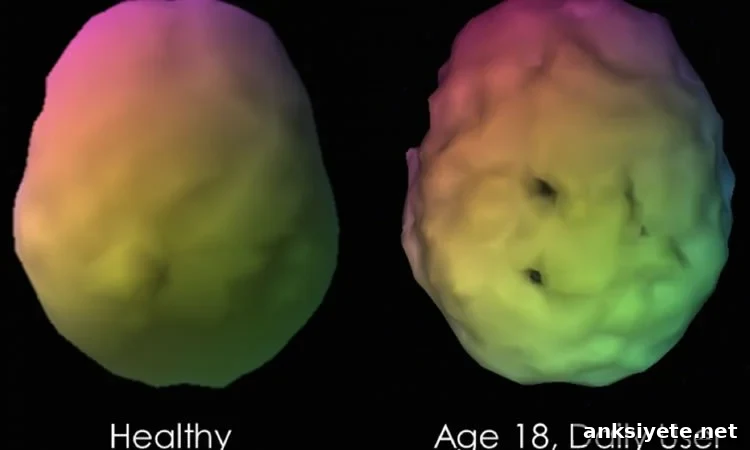
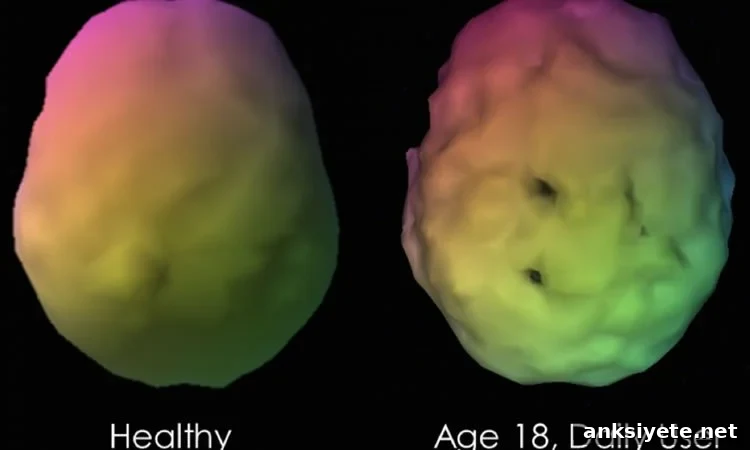
Summary: A large brain imaging study finds that marijuana users show reduced blood flow to the hippocampus, the brain region critical for memory and learning, which could indicate increased vulnerability to Alzheimer’s disease.
Source: IOS Press.
Hippocampus, the brain’s key memory and learning center, shows the lowest blood flow in marijuana users, suggesting greater vulnerability to Alzheimer’s disease.
As legalization of marijuana expands across the United States for both medical and recreational use, new large-scale neuroimaging research urges caution. Published in the Journal of Alzheimer’s Disease, the study used single photon emission computed tomography (SPECT) to evaluate cerebral blood flow and activity patterns. Researchers found abnormally low perfusion across nearly every brain region examined in close to 1,000 current or former marijuana users compared with healthy controls, including brain areas commonly affected by Alzheimer’s pathology such as the hippocampus.
All data were gathered from a multisite clinical database comprising 26,268 patients who sought evaluation for complex, treatment-resistant neuropsychiatric concerns at nine outpatient clinics across the United States (Newport Beach, Costa Mesa, Fairfield, and Brisbane, CA; Tacoma and Bellevue, WA; Reston, VA; Atlanta, GA; and New York, NY) between 1995 and 2015. From this pool, 982 individuals identified as current or former marijuana users underwent resting-state and concentration-task SPECT imaging and were compared to nearly 100 healthy controls. Predictive analytics including discriminant analysis tested whether regional SPECT perfusion could reliably distinguish marijuana users from non-users. Low hippocampal blood flow consistently differentiated marijuana users from controls, with hypoperfusion of the right hippocampus during a concentration task emerging as the single most predictive region. Marijuana use is believed to impair memory formation in part by reducing activity in this region of the brain.
Elisabeth Jorandby, M.D., a co-author of the study, noted: “As a clinician who regularly evaluates patients who use marijuana, I was struck by the widespread reduction in cerebral blood flow among marijuana users, and particularly by the prominent impact on the hippocampus, which plays a central role in memory and is a primary target of Alzheimer’s disease. Our findings show lower overall cerebral perfusion in marijuana users compared to non-users, and the most distinguishing feature separating these groups was reduced hippocampal blood flow during concentration tasks. These results suggest marijuana use may exert harmful effects on brain regions critical for memory and learning.”
George Perry, Editor-in-Chief of the Journal of Alzheimer’s Disease, commented: “As marijuana becomes more widely used and legally accessible, its full range of benefits and risks will become clearer. This study raises concerns about effects on the hippocampus that could foreshadow long-term brain injury.”
Daniel Amen, M.D., founder of Amen Clinics and a co-author of the study, added: “Our research provides evidence that marijuana can have significant negative effects on brain function. Popular perception often treats marijuana as a benign recreational drug, but these findings challenge that assumption. Other recent work has also linked marijuana use with elevated psychosis risk, underlining the need for caution.”
Source: Natalie Buchoz – IOS Press
Image Source: NeuroscienceNews.com image credited to the researchers / IOS Press.
Original Research: Abstract for “Discriminative Properties of Hippocampal Hypoperfusion in Marijuana Users Compared to Healthy Controls: Implications for Marijuana Administration in Alzheimer’s Dementia” by Daniel G. Amen, Borhan Darmal, Cyrus A. Raji, Weining Bao, Lantie Jorandby, Somayeh Meysami, and Cauligi S. Raghavendra, Journal of Alzheimer’s Disease, November 24, 2016, DOI: 10.3233/JAD-160833.
IOS Press. “Low Hippocampal Blood Flow and Higher Alzheimer’s Vulnerability in Marijuana Users.” NeuroscienceNews, November 28, 2016.
Abstract
Discriminative Properties of Hippocampal Hypoperfusion in Marijuana Users Compared to Healthy Controls: Implications for Marijuana Administration in Alzheimer’s Dementia
Background: Few studies have thoroughly examined how marijuana use affects regional cerebral blood flow.
Objective: To determine whether perfusion in specific brain regions on functional neuroimaging—including regions targeted by Alzheimer’s disease pathology—is abnormal in marijuana users compared to controls.
Methods: Individuals meeting DSM-IV and DSM-5 criteria for cannabis use disorder (n = 982) were compared with controls (n = 92) using SPECT perfusion imaging at rest and during a concentration task. Perfusion estimates were quantified against a standardized brain atlas. Group differences used one-way ANOVA. Diagnostic separation was assessed with discriminant analysis on the full sample. Feature selection using minimum redundancy maximum relevancy (mRMR) identified the most predictive regions in a subset of marijuana users (n = 436) who had fewer psychiatric co-morbidities.
Results: Marijuana users demonstrated significantly lower cerebral perfusion on average (p < 0.05). Discriminant analysis correctly classified 96% of subjects with leave-one-out cross-validation accuracy of 92% when using resting SPECT regions, and showed 95% correct classification with 90% cross-validation accuracy using concentration-task SPECT regions. Area under the curve (AUC) analysis for concentration SPECT regions indicated 95% accuracy, 90% sensitivity, and 83% specificity. The mRMR feature selection identified right hippocampal hypoperfusion during the concentration task as the single most predictive marker distinguishing marijuana users from controls.
Conclusion: Multiple brain regions display reduced perfusion on SPECT in marijuana users, with the hippocampus—the brain’s key memory structure and a primary site of Alzheimer’s pathology—being the most discriminative. These findings raise the possibility that marijuana use may have deleterious effects on brain regions critical for memory and learning.