
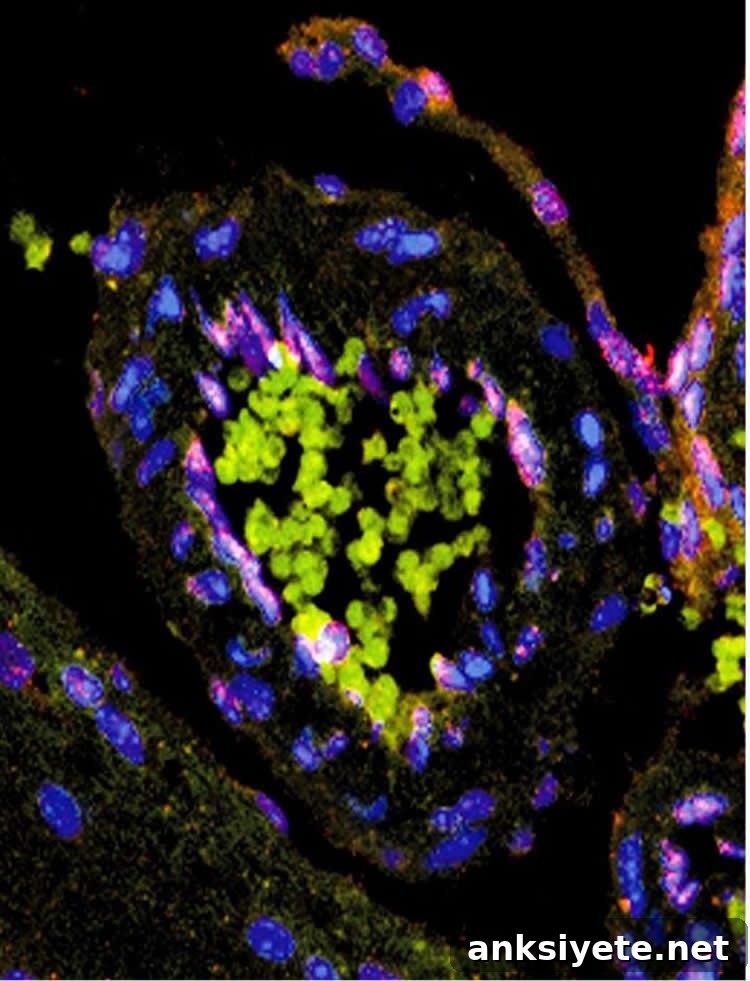
The flu and other viral infections are well known to produce physical symptoms like fever and sore throat, but they also commonly cause mood and cognitive changes. A 2016 study in Immunity investigated how antiviral immune responses affect brain function and identified a specific pathway linking peripheral interferon signals to altered neuronal activity in the hippocampus — a region essential for learning, memory, and mood regulation.
Researchers led by Thomas Blank and Marco Prinz at the University of Freiburg found that, after viral infection, cells that line brain blood vessels and ventricles secrete the chemokine CXCL10. That CXCL10 acts on the neuronal receptor CXCR3 and reduces neuronal firing in the hippocampus, producing depressive-like behavior and impaired synaptic plasticity in mice.
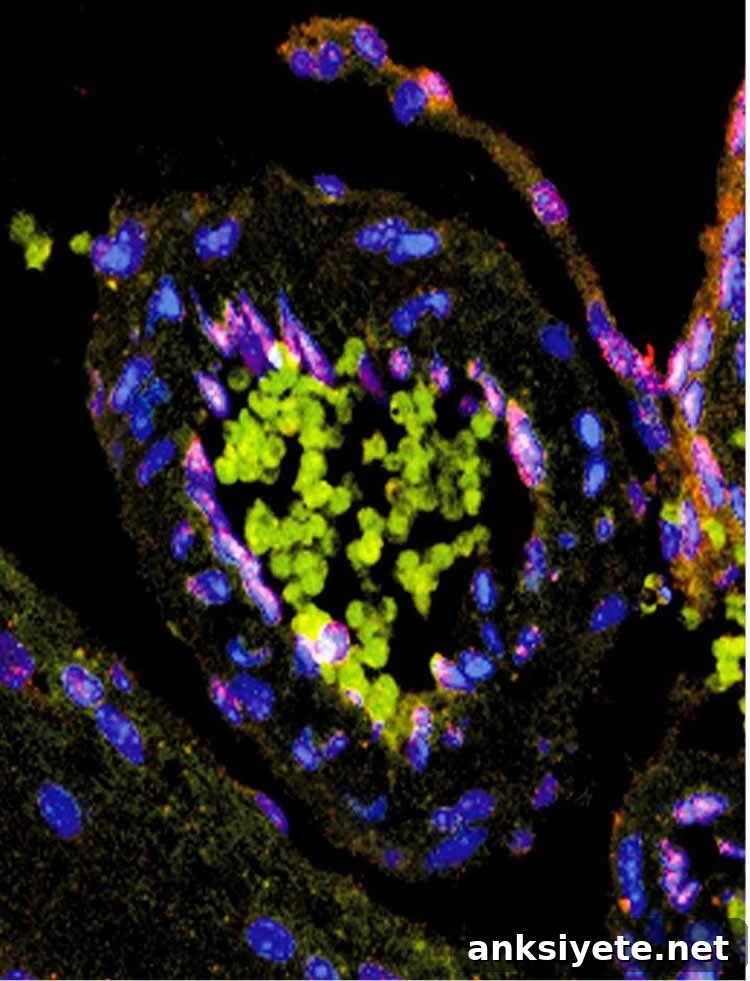
Viral infections and treatments with type I interferons (used for conditions such as hepatitis C, certain cancers, and multiple sclerosis) can produce symptoms beyond the immune response: depressive feelings, fatigue, sleep disruption, irritability, loss of appetite, headaches, and cognitive decline. Although clinical observations have long linked immune activation with behavioral and cognitive changes, the precise cell types and signaling mechanisms that translate peripheral antiviral responses into altered brain function were not fully understood until this study.
To explore the mechanism, Blank, Prinz, and colleagues infected mice with vesicular stomatitis virus, a single-stranded RNA virus that elicits flu-like responses. They evaluated depressive-like behavior using the forced swim test, in which increased immobility time is interpreted as a behavioral sign of despair. Infected mice displayed longer immobility, indicating depressive-like behavior. Detailed molecular analysis showed that this behavioral shift depended on the CXCL10/CXCR3 signaling axis: CXCL10 released from brain endothelial and epithelial cells bound neuronal CXCR3 receptors and reduced hippocampal neuronal activity.
The study highlights brain endothelial and epithelial cells as critical gatekeepers that translate peripheral antiviral signals into central nervous system responses. Specifically, type I interferons produced during infection engage interferon receptor chain 1 (IFNAR1) on these non-neuronal brain cells, which in turn trigger expression and release of CXCL10 at the blood-brain barrier and ventricular surfaces. The CXCL10 then acts on CXCR3-expressing neurons to impair synaptic plasticity and neuronal firing, linking systemic immune activation to mood and cognitive disturbances.
“Cognitive dysfunction frequently accompanies RNA virus infection and can also emerge during type I interferon treatment for autoimmune disorders or cancer,” says Thomas Blank. “We identified brain endothelial and epithelial cells as natural gatekeepers for virus-induced sickness behavior and established CXCL10/CXCR3 signaling as a potential target to prevent the behavioral changes that accompany viral infection or interferon therapy.”
The findings suggest a therapeutic strategy: interfering with CXCL10 release or blocking CXCR3 signaling early in the course of infection or interferon treatment could prevent or reduce the initial stages of sickness behavior and cognitive impairment. Future research will further dissect the molecular and cellular events downstream of this pathway and test whether targeted interventions can preserve hippocampal function during antiviral immune responses.
Source: Joseph Caputo, Cell Press
Image credit: Thomas Blank
Original research: Full open access research published in Immunity (April 19, 2016) titled “Brain Endothelial- and Epithelial-Specific Interferon Receptor Chain 1 Drives Virus-Induced Sickness Behavior and Cognitive Impairment” by Thomas Blank et al., DOI: 10.1016/j.immuni.2016.04.005.
Abstract
Brain Endothelial- and Epithelial-Specific Interferon Receptor Chain 1 Drives Virus-Induced Sickness Behavior and Cognitive Impairment
Highlights
• Viruses induce depressive-like behavior and expression of interferon-stimulated genes at the blood-brain barrier.
• IFNAR1 expression on neurons is not required for IFN-β-induced sickness behavior.
• IFNAR1 expression on brain endothelial and epithelial cells is necessary for behavioral changes during viral infection.
• CXCL10 secreted by brain endothelia and epithelia inhibits hippocampal synaptic plasticity via neuronal CXCR3.
Summary
Sickness behavior and cognitive dysfunction are common during viral infections and in patients receiving type I interferon therapy, but the mechanisms were previously unclear. This study shows that single-stranded RNA viruses, double-stranded RNA ligands, and type I interferons activate intracellular antiviral sensors (such as MDA5 and RIG-I) and mitochondrial antiviral signaling pathways, which induce interferon responses specifically in brain endothelial and epithelial cells. Behavioral changes depended on IFNAR1 expressed on these non-neuronal brain cells. Gene profiling identified CXCL10 as a key mediator released from these cells that impairs hippocampal synaptic plasticity through CXCR3 on neurons. The results position brain endothelial and epithelial cells as critical communicators between the immune system and the central nervous system and identify the CXCL10–CXCR3 axis as a promising target to prevent virus- or interferon-induced mood and cognitive disturbances.