
Summary: New research identifies an unexpected interaction between a synaptic scaffold protein and the endocannabinoid pathway, suggesting the endocannabinoid system may contribute to a range of psychiatric disorders, including bipolar disorder, schizophrenia and autism spectrum disorder (ASD).
Source: Northwestern University
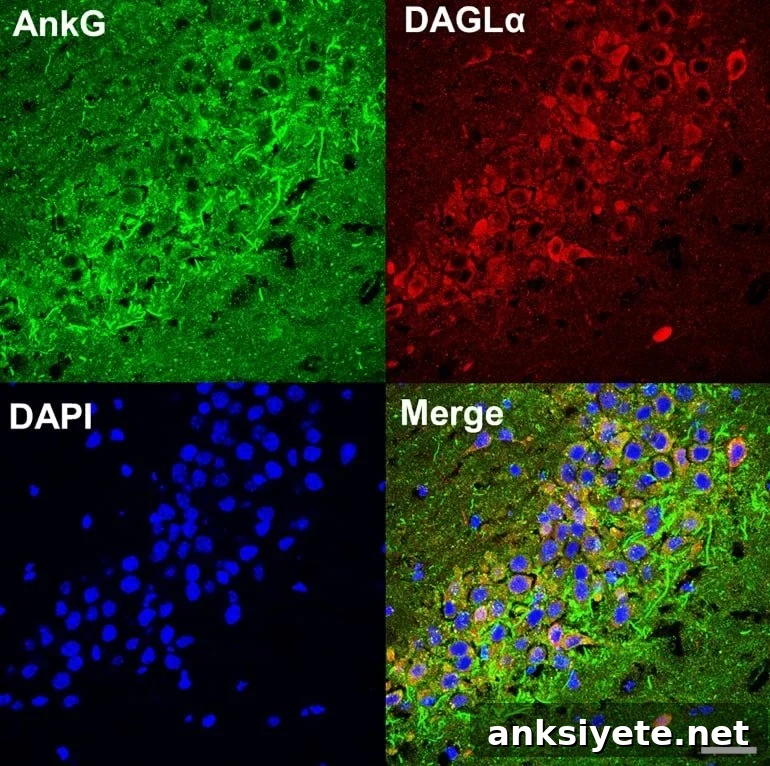
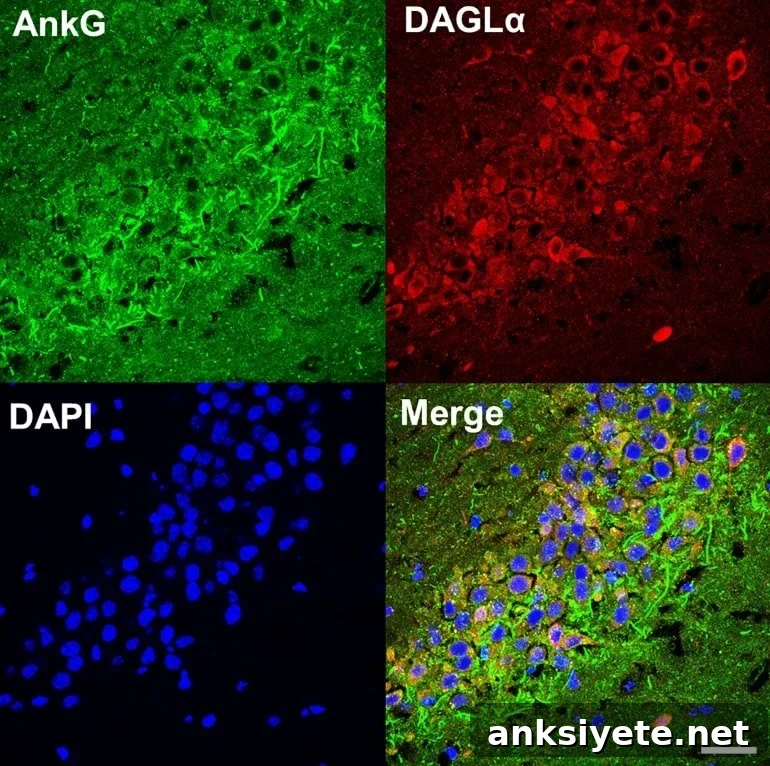
Researchers at Northwestern Medicine have identified a previously unrecognized link between ankyrin-G, a synaptic scaffold protein implicated in neuropsychiatric conditions, and the endocannabinoid signaling enzyme diacylglycerol lipase α (DAGLα), according to a study published in Biological Psychiatry.
The study indicates that the endocannabinoid system, which is influenced by endogenous cannabinoids and mimicked by cannabis, may play a role in psychiatric illnesses such as bipolar disorder. Peter Penzes, PhD, the Ruth and Evelyn Dunbar Professor of Psychiatry and Behavioral Sciences and senior author of the paper, notes that these findings open new lines of inquiry into whether disruption of endocannabinoid signaling contributes to disease, or whether modulation of that system could offer therapeutic benefit.
Endocannabinoids are naturally occurring signaling lipids that act at synapses to reduce synaptic strength, a mechanism that helps explain the calming effects of cannabis. DAGLα is the primary enzyme that produces the endocannabinoid 2-arachidonoylglycerol (2-AG) and is concentrated at synaptic sites, where it regulates local lipid signaling.
Previous work from the Penzes laboratory and others has shown that ankyrin-G (encoded by ANK3) regulates synaptic transmission and dendritic spine structure. Abnormal expression or function of ankyrin-G has been associated with psychiatric conditions including bipolar disorder, schizophrenia and autism spectrum disorder. In the current study, investigators used genetic and cellular approaches to probe how ankyrin-G and DAGLα might interact at synapses.
Using ankyrin-G conditional knockout mice and cellular models, the team found that ankyrin-G helps stabilize DAGLα at synaptic sites, enhancing its localization and functional effectiveness. Loss of ankyrin-G reduced the presence of DAGLα in forebrain neurons and altered dendritic spine morphology, revealing a structural and functional dependence between these proteins.
“It’s a delicate mechanism that regulates dendritic spine morphology,” said Sehyoun Yoon, PhD, research assistant professor of Physiology and lead author of the study. The authors describe how changes in DAGLα levels or activity can differentially influence spine size and density through both 2-AG–dependent signaling and protein-protein interactions.
The molecular findings align with large-scale human genetics. A recent genome analysis identified both ANK3 and DAGLA as risk loci for bipolar disorder, reinforcing the clinical relevance of the ankyrin-G/DAGLα interaction and its potential contribution to psychiatric risk.
Penzes likened ankyrin-G’s dual roles to “Dr. Jekyll and Mr. Hyde,” noting that the protein functions both as a structural scaffold and as a regulator of lipid signaling through interactions with DAGLα. This convergence of a psychiatric risk gene with the endocannabinoid pathway expands potential avenues for understanding disease mechanisms and for developing targeted therapies.
The study also highlights a complex relationship between cannabis, endocannabinoid signaling and mental health. While cannabis use has been associated with increased risk for certain disorders such as schizophrenia, modulation of endocannabinoid signaling could conceivably be helpful in other contexts; this complexity underlies ongoing clinical interest in medical cannabis and endocannabinoid-targeted treatments for conditions including autism.
Looking ahead, the investigators plan to map the downstream consequences of ankyrin-G and DAGLα interactions in healthy and disease models to better define how this pathway influences synaptic structure, signaling and behavior.
Funding: This research was supported by the National Institute of Mental Health (grant R01MH107182).
About this mental health research news
Source: Northwestern University
Contact: Marla Paul – Northwestern University
Image: The image is credited to the researchers
Original Research: Closed access. “cAMP Signaling–Mediated Phosphorylation of Diacylglycerol Lipase α Regulates Interaction With Ankyrin-G and Dendritic Spine Morphology” by Peter Penzes et al., Biological Psychiatry.
Abstract
cAMP Signaling–Mediated Phosphorylation of Diacylglycerol Lipase α Regulates Interaction With Ankyrin-G and Dendritic Spine Morphology
Background
Diacylglycerol lipase α (DAGLα) is a key enzyme in the biosynthesis of endogenous cannabinoid signaling molecules and has emerged from genetic studies as a potential risk gene for several psychiatric disorders. How DAGLα contributes to dendritic spine plasticity and synaptic organization has remained unclear.
Methods
The authors examined wild-type and point-mutant forms of DAGLα expressed in primary cortical neurons and HEK293T cells. They assessed protein interactions, dendritic spine morphology and the mobility of DAGLα using proximity ligation assays and fluorescence recovery after photobleaching (FRAP). Behavioral analyses and immunohistochemistry were conducted in ankyrin-G conditional knockout and control male mice to assess the in vivo relevance of the molecular findings.
Results
DAGLα influenced spine size and density, with distinct outcomes depending on whether protein levels or enzymatic activity were altered, implicating both 2-AG–dependent and –independent mechanisms. The 2-AG–independent effects were mediated by direct interaction with ankyrin-G. Super-resolution microscopy showed that ankyrin-G and DAGLα colocalize within specific nanodomains whose properties correlate with spine size. Forskolin-induced cAMP signaling increased phosphorylation of DAGLα, strengthened its interaction with ankyrin-G in spines, enlarged spine size and reduced DAGLα surface diffusion. Ankyrin-G conditional knockout mice had fewer DAGLα-positive neurons in the forebrain and failed to show forskolin-dependent reversal of depression-related behavior, supporting a functional role for ankyrin-G in this signaling cascade.
Conclusions
The study demonstrates that ANK3 (ankyrin-G) and DAGLA (DAGLα), both genes linked to neuropsychiatric disorders, form a functional complex that regulates dendritic spine morphology. These findings reveal novel synaptic signaling mechanisms and highlight potential therapeutic targets within the endocannabinoid pathway for conditions involving synaptic dysfunction.