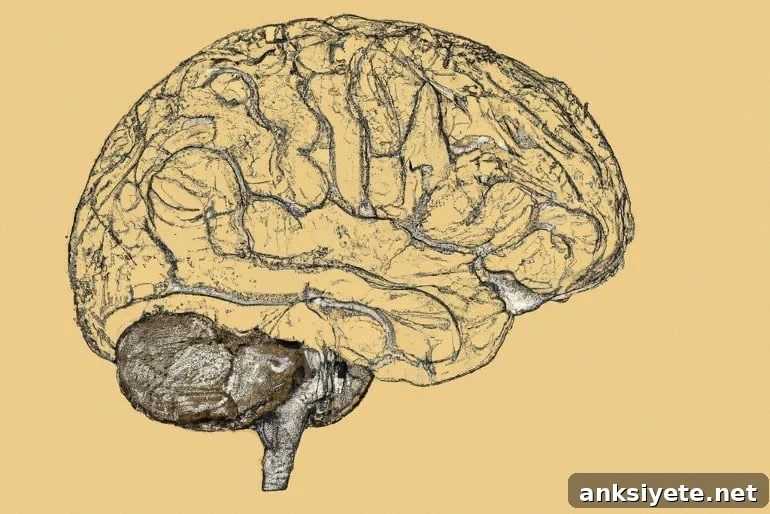
Summary: School-aged children with Autism Spectrum Disorder (ASD) who experience language impairment show reduced gray matter volume and increased cortical folding (gyrification) in frontal and temporal brain regions that are critical for language. These structural brain differences, revealed by MRI, help explain language difficulties in ASD and can inform targeted educational and therapeutic strategies.
Source: HSE
Researchers from Russia and the United States report that language impairment in children with Autism Spectrum Disorder (ASD) is linked to lower gray matter volume and greater cortical gyrification in the temporal and frontal lobes—areas vital for speech and language processing.
Understanding the brain structures that underlie language deficits can guide the development of specialized education plans and interventions for children with ASD. The study appears in Scientific Reports.
Autism Spectrum Disorder is marked by persistent challenges in social communication and by repetitive or restrictive behaviors. Many children with ASD also have language difficulties, ranging from mild speech delays to a near-complete absence of verbal communication, which can hinder social interaction and learning. While genetic and developmental factors are known contributors, the specific neurobiological mechanisms behind language impairment in ASD remain unclear and previous findings have been inconsistent.
A collaborative team from HSE University, the Moscow State University of Psychology and Education, and the Seattle Children’s Research Institute examined structural brain features associated with language impairment in school-aged children with ASD. The study included 36 children total: 18 with ASD and 18 typically developing controls matched for age and sex (13 boys in each group). Each child underwent whole-brain structural MRI and standardized behavioral assessments to evaluate language skills.
Structural MRI allows researchers to measure multiple anatomical characteristics of the brain, including volumes of gray and white matter, cortical thickness, sulcal depth, and measures of cortical folding such as gyrification and fractal dimension.
Gray matter consists of neuronal cell bodies and local processing regions, while white matter contains myelinated axonal tracts that enable communication between brain areas. In this study, white matter volumes did not differ significantly between the ASD and control groups across brain regions. In contrast, children with ASD showed reduced gray matter thickness and increased gyrification of the cerebral cortex.
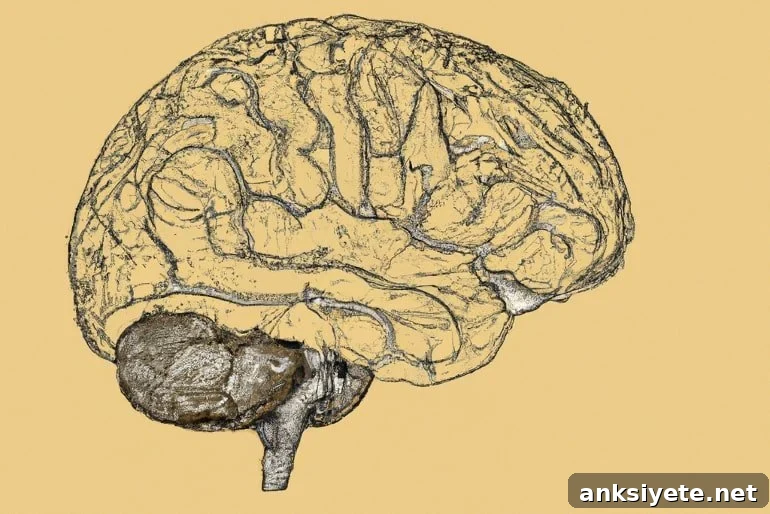
Further analyses focused on language-related cortical regions and found that both gray matter thickness and cortical gyrification in frontal and temporal language areas were significantly associated with measured language abilities in children with ASD. Specifically, lower gray matter volume in language-related regions correlated with more severe language impairment. Increased gyrification—more pronounced cortical folding—also related to greater severity of autistic traits in this sample.
These findings suggest that in children with ASD, disruptions in the growth or maintenance of neuronal cell bodies and local cortical architecture may contribute more to language deficits than do differences in long-range white matter connections. In other words, the organization and thickness of gray matter in core language regions appear to be particularly important for language functioning in school-aged children with autism.
The study challenges the idea that atypical brain development in children with autism fully normalizes by middle childhood (around 7–10 years). “To determine the age at which the nervous system may recover or reorganize, we need longitudinal and cross-sectional studies that include not only toddlers and preschoolers but also school-aged children and adults with ASD,” says Alina Minnigulova, Junior Research Fellow at the HSE Language and Brain Centre. Research on older children and adults with ASD remains limited, and developmental trajectories may differ across age ranges.
Identifying specific structural brain characteristics tied to behavioral deficits such as language impairment can help clinicians and educators design more effective, individualized intervention plans. Tailored therapies that account for the underlying neuroanatomical profile may improve communication outcomes and support better educational placement and instruction for children with ASD.
About this autism and language research news
Author: Press Office
Source: HSE
Contact: Press Office – HSE
Image: The image is credited to Neuroscience News.
Original Research: Open access. “Structural brain abnormalities and their association with language impairment in school-aged children with Autism Spectrum Disorder” by Vardan Arutiunian et al., Scientific Reports.
Abstract
Structural brain abnormalities and their association with language impairment in school-aged children with Autism Spectrum Disorder
Language impairment commonly co-occurs with Autism Spectrum Disorder, yet its neural basis is not fully understood. This study used structural magnetic resonance imaging (MRI) to compare whole-brain volume- and surface-based features between school-aged children with and without ASD and to examine relationships between these brain characteristics and standardized measures of language ability.
The sample included 36 children: 18 diagnosed with ASD and 18 age- and sex-matched typically developing controls. Multiple cortical regions differed between groups in gray matter volume, cortical thickness, gyrification, and cortical complexity (fractal dimension). By contrast, white matter volume and sulcal depth did not differ between groups in any region. Importantly, gray matter thickness and gyrification in language-related cortical areas were related to language performance in children with ASD. These results provide new insight into structural brain abnormalities associated with language impairment in Autism Spectrum Disorder.