
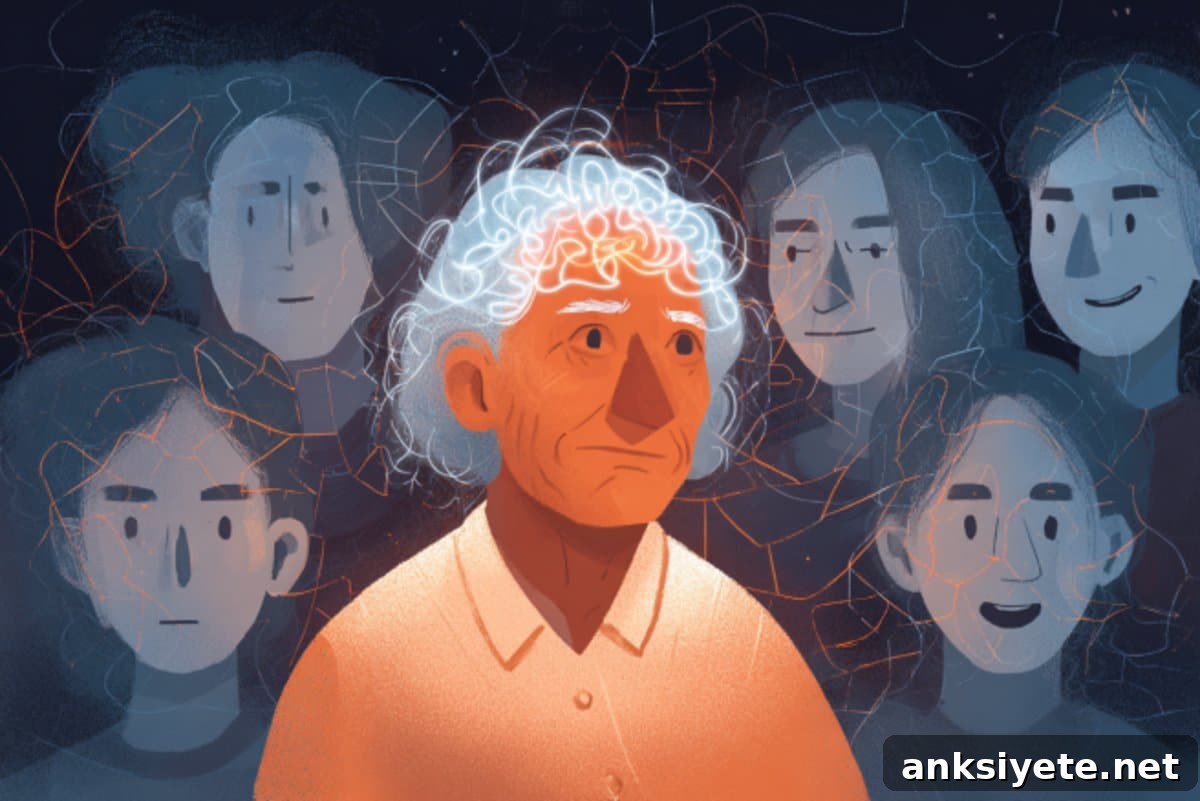
Summary: New research indicates that a tendency for older adults to interpret neutral or negative facial expressions as positive — an age-related positivity bias in emotion recognition — may signal early cognitive decline. In a large study of 665 adults, the bias was linked to lower cognitive test performance and to measurable changes in brain structure and connectivity, but it was not associated with nonclinical depressive symptoms.
Using behavioral testing and multimodal brain imaging, researchers identified specific alterations in regions involved in emotion processing and social decision-making. These results suggest that the positivity bias commonly observed in later life could serve as a subtle clinical marker of emerging neurodegeneration and dementia risk.
Key Facts
- Positivity bias: Older adults frequently label neutral or negative facial expressions as positive.
- Association with cognition: The bias correlated with poorer cognitive performance on standardized assessments, rather than with increased depressive symptoms.
- Brain changes: The bias corresponded with reduced grey matter in emotion-related regions and altered functional connectivity to orbitofrontal cortex.
Source: SfN
Introduction
Researchers have long observed that emotional perception shifts with age. Older adults often display a “positivity bias,” characterized by relatively preserved recognition of positive expressions and a higher tendency to label ambiguous, neutral, or negative faces as positive. Some theories propose this pattern reflects adaptive emotion regulation that supports well-being in later life. However, the new research led by Noham Wolpe (Tel Aviv University) and colleagues at the University of Cambridge offers evidence that, in some cases, this bias may instead indicate cognitive weakening associated with brain changes.
Study design and participants
The study analyzed data from a population-derived cohort spanning the adult lifespan (n = 665, including 333 females). Participants completed a facial emotion recognition task that measured how readily they identified different expressions, alongside standardized cognitive assessments. The investigators combined these behavioral measures with multimodal neuroimaging to examine brain structure and functional connectivity linked to variation in emotion labeling.
Behavioral findings
Beyond an overall decline in expression recognition accuracy with age, older adults showed a distinct pattern in perceptual thresholds: they required stronger negative cues to label an expression as negative, while showing a lower threshold for labeling expressions as positive. Importantly, this shift toward positive labeling correlated strongly with lower performance on cognitive tests. The positivity bias did not track with nonclinical depressive symptoms, suggesting the effect is distinct from mood-related changes.
Neuroimaging results
Structural imaging revealed decreased grey matter volume in bilateral anterior hippocampus–amygdala regions among participants showing greater positivity bias. Functional connectivity analyses found increased communication between these emotion-related regions and the orbitofrontal cortex, a network implicated in evaluating social information and guiding decisions. Together, these structural and functional alterations point to measurable brain changes that accompany the behavioral bias.
Clinical implications
Because the positivity bias was associated with lower cognitive performance and specific brain alterations, the authors propose it may serve as an early behavioral marker of age-related neurodegeneration. If validated in longitudinal studies, simple emotion-recognition tasks could become a noninvasive tool to flag individuals at increased risk for cognitive decline, prompting more detailed assessment or monitoring.
Next steps
Wolpe and colleagues are following up to determine how these findings relate to older adults who already show early cognitive symptoms, including apathy — a common early sign of dementia. Longitudinal work will be essential to test whether the positivity bias predicts subsequent cognitive decline or neurodegenerative change over time.
About this aging and cognitive decline research news
Author: SfN Media
Source: SfN
Contact: SfN Media – SfN
Image: The image is credited to Neuroscience News
Original Research: Closed access.
“Age-Related Positivity Bias in Emotion Recognition is Linked to Lower Cognitive Performance and Altered Amygdala–Orbitofrontal Connectivity” by Noham Wolpe et al., Journal of Neuroscience. DOI: 10.1523/JNEUROSCI.0386-25.2025
Abstract (condensed)
Emotion recognition changes with ageing, and similar alterations are observed in dementia and following brain lesions. Older adults often demonstrate a positivity bias: relatively preserved recognition of positive expressions and an elevated tendency to label expressions as positive. While this pattern can support emotional well-being, it has also been associated with cognitive dysfunction and neural damage.
Using psychometric analysis of facial emotion recognition in a large adult sample (n = 665) alongside multimodal brain imaging, researchers found that ageing is linked to higher perceptual thresholds for negative emotions and lower thresholds for positive emotions, even after accounting for general face recognition ability. This age-related positivity bias correlated with poorer cognitive test performance but not with subclinical depression.
Neuroanatomically, the bias was associated with reduced grey matter volume in bilateral anterior hippocampus–amygdala regions and with increased functional connectivity between these regions and orbitofrontal cortex. These structural and connectivity changes suggest the positivity bias may reflect early neural changes related to cognitive decline. Future longitudinal studies are needed to evaluate whether emotion-recognition biases can predict progression to neurodegenerative conditions.